USAID DEC
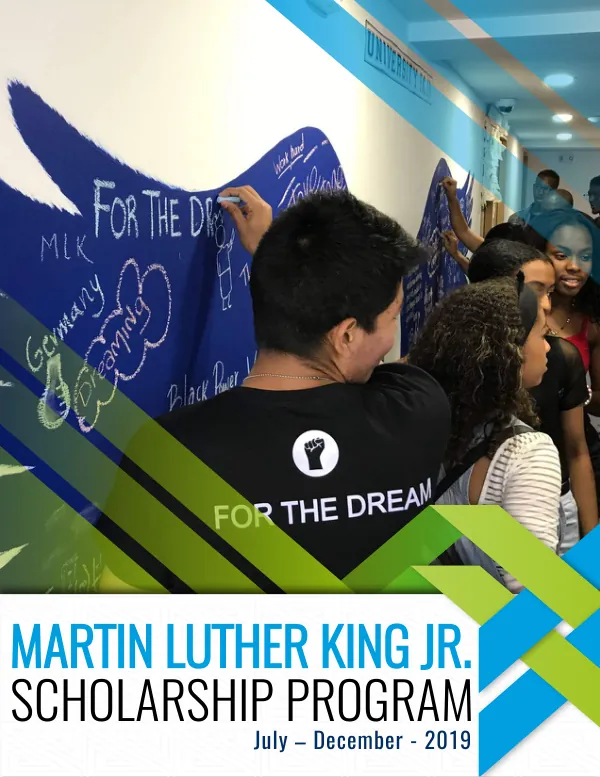
Martin Luther King Jr. Scholarship Program Report: July – December 2019
The Martin Luther King Jr.
2019 · 97 pages
Sign in to readA free account is required to download.
Abstract
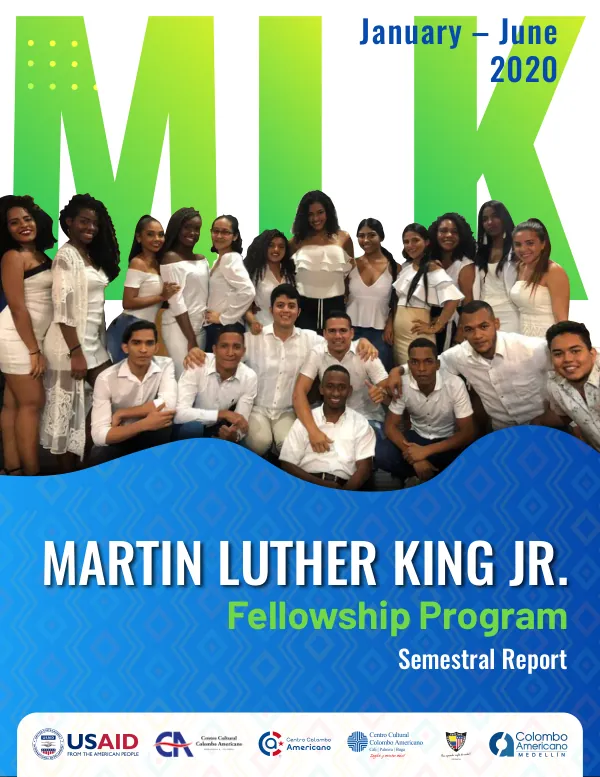
Scholarship Program in Colombia began in 2018 with the goal of providing English language and cultural interaction to high school students from vulnerable communities. The program is sponsored by the U.S. Embassy in Colombia and implemented by the Bi-National Centers (BNCs) in eight cities, including Apartadó, Barranquilla, Bogotá, Buenaventura, Cali, Cartagena, Medellín, and Quibdó. By the end of 2019, 200 university students from indigenous or Afro descent actively participated in English classes and social initiatives of great community impact. The program nationwide aimed to graduate 190 students in the present cohort, but 10 additional students were selected as part of the cost-share of the BNCs. Overall, 71% of beneficiaries nationwide were female and 29% were male university students who come from the Pacific, the Caribbean, and the central region of the country. The majority of students, 83%, belonged to Afro communities, while 17% represented Colombian indigenous groups. MLK groups in the cities of Barranquilla and Quibdó tended to be more gender-balanced, while female students were the majority in the rest of the cities where the program was active. In Apartadó, all beneficiaries were Afro-Colombian. The program's progress was reported in a comparative analysis based on data collected from all BNCs through monthly and quarterly reports submitted to the National Coordination throughout 2019. The report showed that fellows in Apartadó were able to take 6 additional courses during the second semester of 2019, moving on to a B1 level. One of these courses was specially designed to review and strengthen the language competences corresponding to the A2 level. Fellows in Apartadó had taken 10 courses since the program started in February 2019. The academic report showed that the average grade was 4.1, with 44% of the grades ranging between 3.5 and 4.0. Students with academic difficulties were assigned extracurricular activities to work out the contents and notions studied during the semester, and they joined the tutoring program, which involved face-to-face academic sessions with a teacher and conversation clubs on a weekly basis. The leadership program in Apartadó during the second semester was oriented to foster fellows' reflection on their community's needs. The mentor of the program, Juan Carlos Ruiz, and Ana María Carmona, Coordinator of social projects at the Colombo Americano, conducted the sessions of this semester, where fellows could also work out their leadership skills while mentoring students of the Success program.