USAID DEC
Maternal and Child Survival Program (MCSP) - Empowering Women and Girls for Better Health Outcomes
Sign inJHPIEGO
Maternal and Child Survival Program (MCSP) - Empowering Women and Girls for Better Health Outcomes
The Maternal and Child Survival Program (MCSP) is a global initiative aimed at reducing preventable maternal and child deaths.
2016 · 2 pages
Sign in to readA free account is required to download.
Abstract
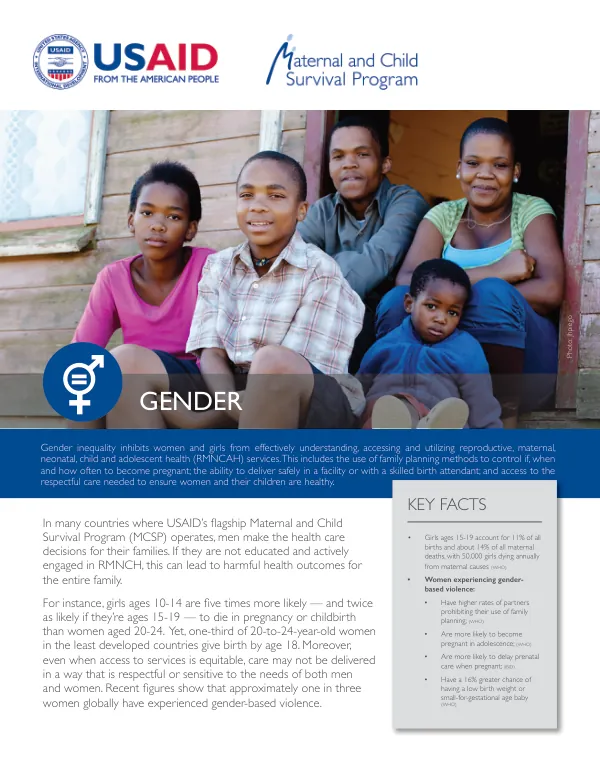
The program operates in 24 high-priority countries, with a focus on ensuring equitable access to quality health care services for women, newborns, and children in need. MCSP supports programming in various areas, including maternal, newborn, and child health, immunization, family planning, reproductive health, nutrition, health systems strengthening, water and sanitation, malaria, and pediatric care. One of the primary challenges in achieving optimal health outcomes for women and girls is gender inequality. Women and girls often face barriers to accessing reproductive, maternal, neonatal, child, and adolescent health (RMNCAH) services due to lack of empowerment, gender-based violence, and limited male engagement. Studies have shown that when women are empowered to make decisions about their health and well-being, they are more likely to experience better health outcomes. MCSP addresses these challenges through several key interventions. The program aims to improve the quality of care for RMNCAH by ensuring respectful and sensitive services across the continuum of care. This includes engaging men in RMNCAH services at both the community and facility levels, mitigating the risks posed by gender-based violence, and promoting women's agency in decision-making for uptake of RMNCAH services. Research has highlighted the importance of addressing gender-based violence in achieving optimal health outcomes for women and girls. Women who experience GBV are more likely to become pregnant in adolescence, delay prenatal care, and have a higher chance of having a low birth weight or small-for-gestational age baby. In fact, approximately one in three women worldwide have experienced GBV, which can have severe consequences for their health and well-being. MCSP's efforts to address GBV include providing high-quality post-GBV care and promoting women's empowerment through programs such as the Mada Saving Club in Nigeria. These initiatives aim to create a supportive environment that enables women to make informed decisions about their health and well-being. The program's impact is evident in the statistics. Girls aged 15-19 account for 11% of all births and 14% of all maternal deaths, with 50,000 girls dying annually from maternal causes. Women who experience GBV are more likely to have higher rates of prohibited family planning, delayed prenatal care, and a greater chance of having a low birth weight or small-for-gestational age baby. By addressing the root causes of these challenges, MCSP aims to create a more equitable and supportive environment for women and girls, ultimately reducing preventable maternal and child deaths. The program's focus on empowering women and promoting respectful care has the potential to transform the lives of millions of people worldwide.
Related documents