JHPIEGO
Maternal and Child Survival Program (MCSP) Strategic Approach for Family Planning
The Maternal and Child Survival Program (MCSP) is a global initiative focused on reducing preventable child and maternal deaths.
2015 · 2 pages
Sign in to readA free account is required to download.
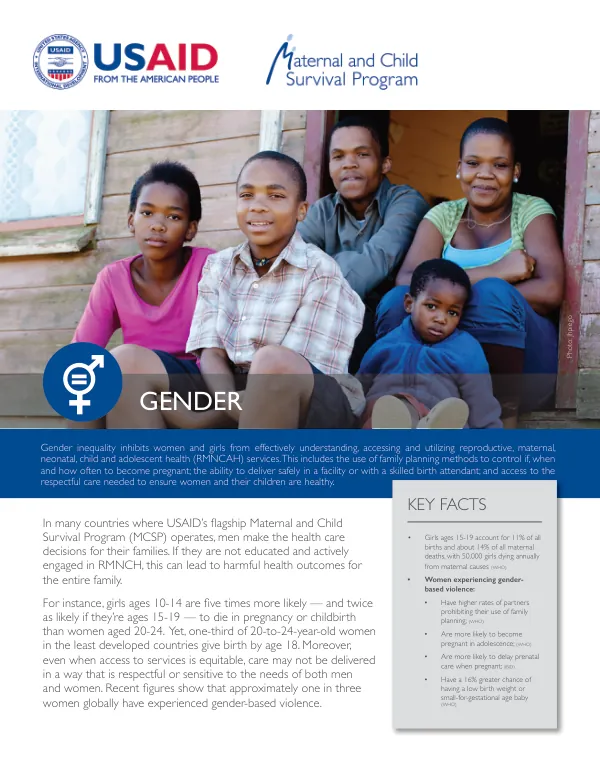
Abstract
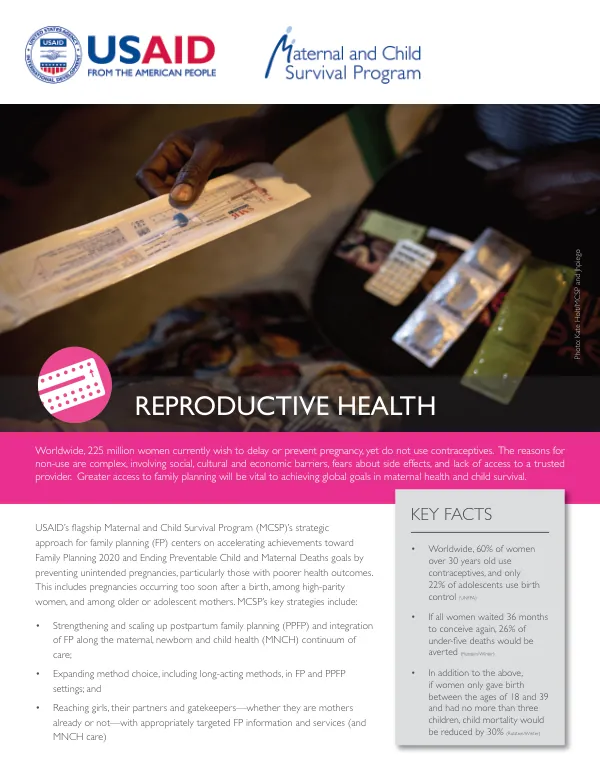
MCSP's strategic approach for family planning centers on accelerating achievements toward Family Planning 2020 and Ending Preventable Child and Maternal Deaths goals by preventing unintended pregnancies, particularly those with poorer health outcomes. Key findings indicate that 60% of women over 30 years old use contraceptives worldwide, while only 22% of adolescents use birth control. If all women waited 36 months to conceive again, 26% of under-five deaths would be averted. Additionally, if women only gave birth between the ages of 18 and 39 and had no more than three children, child mortality would be reduced by 30%. These statistics highlight the importance of greater access to family planning in achieving global goals in maternal health and child survival. MCSP's key strategies include strengthening and scaling up postpartum family planning and integration of family planning along the maternal, newborn, and child health continuum of care. The program also aims to expand method choice, including long-acting methods, in family planning and postpartum family planning settings. Furthermore, MCSP seeks to reach girls, their partners, and gatekeepers with targeted family planning information and services. Innovative approaches to increase service availability, access, quality, demand, equity, and utilization cross-cut family planning interventions and build on prior learning regarding effective integration of family planning with delivery of other health services. MCSP provides leadership to expand access to high-quality contraceptive services and serves as a global convening authority for documentation of best practices in family planning and reproductive health programs. The program advocates for evidence around successful models that ensure every contact with a woman triggers a conversation about her reproductive intentions. At both health facility and community levels, MCSP aims to link women to services whenever an unmet need is identified. This includes developing interventions for adolescent and first-time parents and equipping providers to serve these women in their care. The goal is to prevent pregnancies and closely spaced births in this age group, which are linked with more adverse outcomes for both mothers and infants.