HELLEN KELLER INTERNATIONAL
MC Niger Sawki Quarterly Report FY 16 Q2
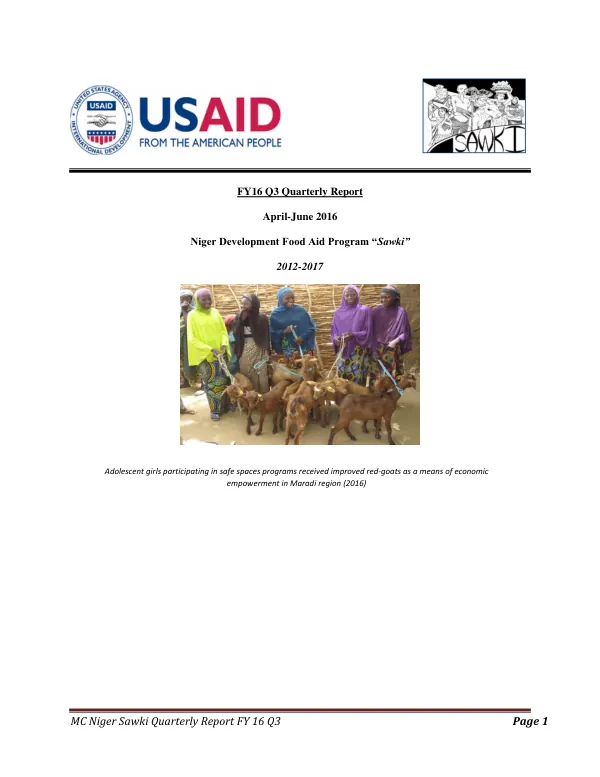
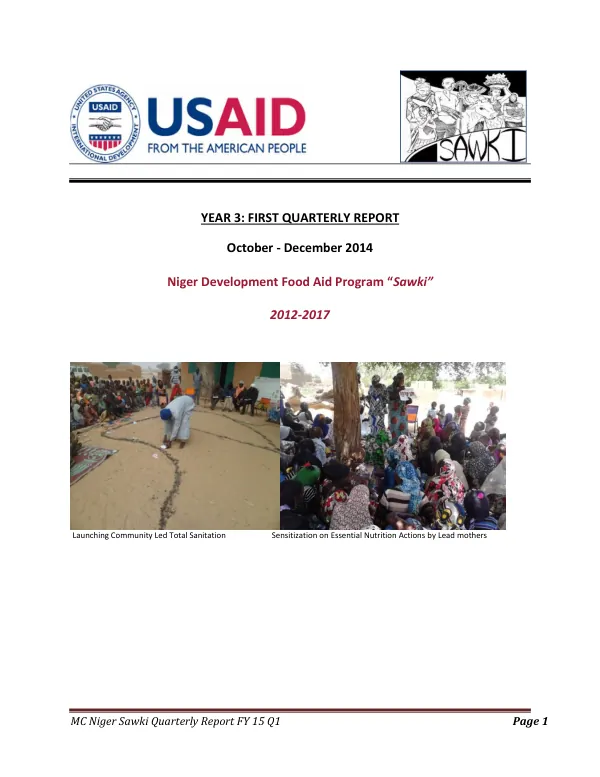
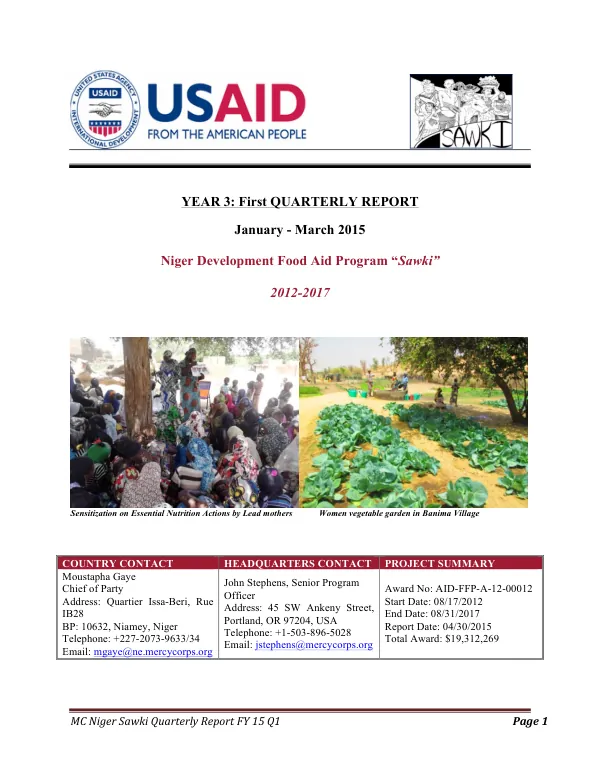
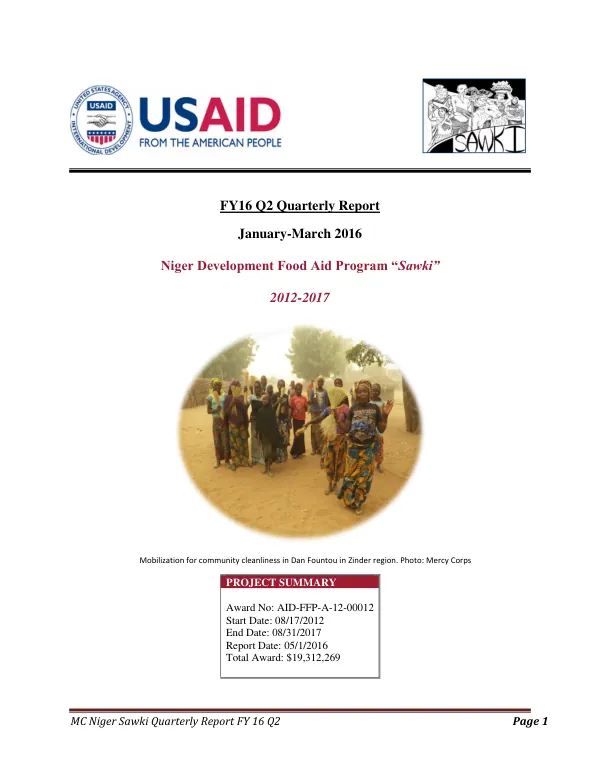
The Niger Development Food Aid Program "Sawki" is a five-year initiative implemented by Mercy Corps and Helen Keller International, with funding from the United States Agency for International Development (USAID)/Food for Peace (FFP).
2016 · 21 pages
Sign in to readA free account is required to download.
Abstract
The program aims to address food security needs in Maradi and Zinder regions of Niger, two of the most food insecure areas in the country. The program targets 62 villages based on criteria of social vulnerability, economic opportunities, and agro-pastoral linkages, with a focus on reducing chronic malnutrition among pregnant and lactating women and children under five. The program is structured around two strategic objectives: SO1, which focuses on reducing chronic malnutrition among pregnant and lactating women and children under five, and SO2, which aims to increase the local availability of and households' access to nutritious food by diversifying agricultural productivity, rural households' income, and increasing resilience to shocks. To achieve these objectives, the program has implemented various activities, including promoting appropriate nutrition practices during a child's first 1,000 days, conducting culinary demonstrations to promote the consumption of nutrient-rich foods and animal products, and training para-vets in target communities. Under SO1, the program has made significant progress in promoting appropriate nutrition practices, with 780 lead mothers receiving refresher training on Essential Nutrition Actions (ENA) and 96 lead mothers being trained on the signs of danger during pregnancy, exclusive breastfeeding, and the pre-and post-natal care referral system for pregnant women. The program has also conducted 390 cooking demonstration sessions to promote the consumption of locally-available nutrient-rich foods and animal protein, and has screened 15,032 children, of which 1,190 were classified as moderately malnourished and 250 were classified as severely malnourished. Under SO2, the program has continued to advance its activities, including the evaluation of Farmer Field Schools, promotion of vegetable gardening, monitoring the interventions of small ruminants, and training of para-vets in target communities. The program has also constructed 65 vegetable garden wells in Zinder region and 45 boreholes in Maradi region, including 40 for small irrigation. Additionally, the program has structured and organized Village Saving and Loan Association (VSLA) groups, with 94 groups already meeting the knowledge and skills required to move from phase 1 to phase 2. The program has also made progress in cross-cutting gender activities, including training 188 mentors on gender equity, gender-based violence, and women's rights, conducting two start-up trainings on adolescent literacy, and developing action plans in 29 communities to address gender-related problems. The program continues to build collaborative relationships between consortium partners to improve outcomes, and has established partnerships with the private sector to support the program's objectives. The program's progress has been monitored through regular coordination meetings with partners, including the Ministry of Agriculture, Public Health, Planning, and INRAN, as well as cluster meetings organized by the Department of Nutrition and UNICEF at the regional and national levels. The program has also discussed Memoranda of Understanding (MoUs) with REGIS-ER and REGIS-AG to ensure sustainability and increased reach.