GOVERNMENT OF LIBERIA
MC Niger Sawki Quarterly Report FY 15 Q1
The Niger Development Food Aid Program "Sawki" is a comprehensive initiative designed to address food security needs in Maradi and Zinder, two of the most food insecure regions of Niger.
2015 · 26 pages
Sign in to readA free account is required to download.
Abstract
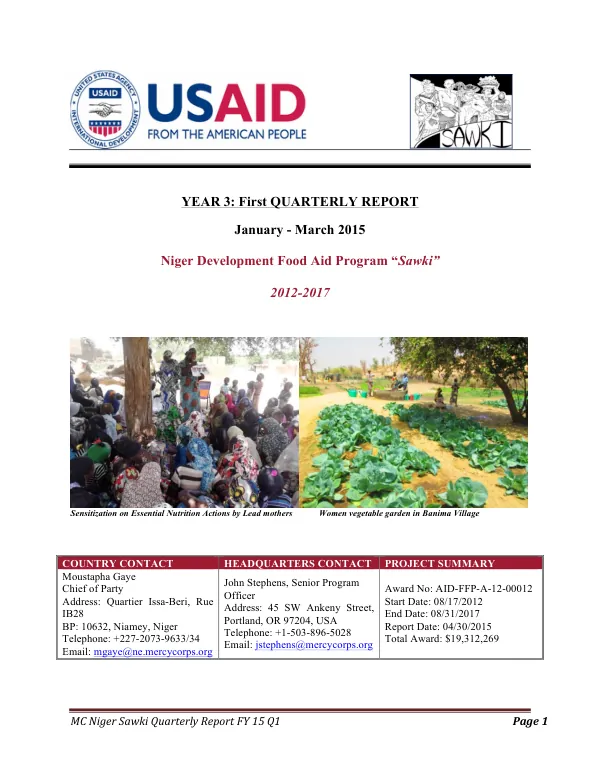
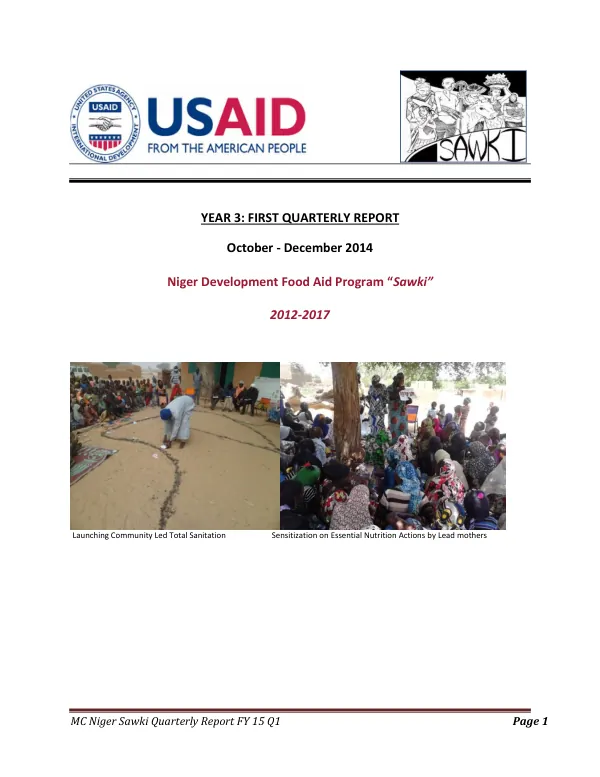
The program targets 62 villages based on criteria of social vulnerability, economic opportunities, and agro-pastoral linkages. The overall goal of Sawki is to reduce food insecurity and malnutrition among vulnerable populations, with a special emphasis on empowering women and adolescent girls. During the first quarter of FY 15, the program accomplished a range of activities aimed at improving health and nutrition, agriculture and livelihoods, and gender outcomes. In the health and nutrition sector, 252 lead mothers in Zinder were trained in family planning, and 376 members of Husbands' Schools were trained in Essential Nutrition Actions (ENA). Additionally, 4,711 sensitization sessions on ENA were delivered to 55,773 participants, including 4,513 men and 51,260 women. Community granary committees were established in 15 pilot villages, and 3,311 pregnant and lactating women and 7,350 children under two received Complementary Supplementary Feeding (CSB+) as part of the program. In the agriculture and livelihoods sector, 33 Farmer Field Schools (FFS) out of 48 were assessed, and 15 Sawki staff and 21 seed production farmers were trained on conservation and storage of agricultural food products. Farmers in 13 villages contributed 7 metric tons of millet to procure fertilizers for the coming cropping season, and 37 vegetable gardening sites were set up, involving 2,954 women, including 168 garden coordinators. Value chain studies for cowpea and small ruminants were conducted, and 6 rehabilitated pastoral lands using FFA were evaluated. The program also made significant progress in the gender sector, with the completion of a gender action plan to ensure attention to gender in program implementation. Installation of 200 rickshaws in Maradi and training of 11 management committees on issues related to the reduction of women's workload were also undertaken. Discussions with and sensitization of communities on proper management of community equipment provided by the program to reduce women's workload were conducted. In terms of commodities, ration distribution to 10,661 beneficiaries out of 10,962 planned for the quarter was completed, including to 2,804 adolescent girls and mentors out of 2,989 planned and to 828 leader mothers and health promoters out of 831 planned. Rehabilitation of Sawki warehouses to fit best standards was also undertaken, and recruitment of additional staff, including an Assistant Commodity Manager and 3 Distribution Agents, was completed. The program management unit (PMU) plays a crucial role in the functioning of the program, comprising senior Sawki staff from Mercy Corps and Helen Keller International. The PMU represents the decision-making body of the program and is led by the Chief of Party (COP). All members of the PMU are based in Maradi and participate in all programmatic and administrative meetings. To ensure a better balance in program implementation between the two regions, there has been intensive movement of the PMU to Zinder, estimated at over 50% attendance in Zinder. The program has also strengthened coordination among consortium partners and externally, with the PMU playing a crucial role in the functioning of the program. Weekly, monthly, quarterly, and ad-hoc coordination meetings are held with the presence of all Sawki staff from Mercy Corps and HKI, as well as partners from the Ministry of Agriculture, Public Health, Planning, the 3N Initiative, and INRAN. The quarterly program coordination meeting is an open forum for all the program's implementing partners, and the most recent one was held on 16 and 17 October in Zinder.