ELIZABETH GLASER PEDIATRIC AIDS FOUNDATION
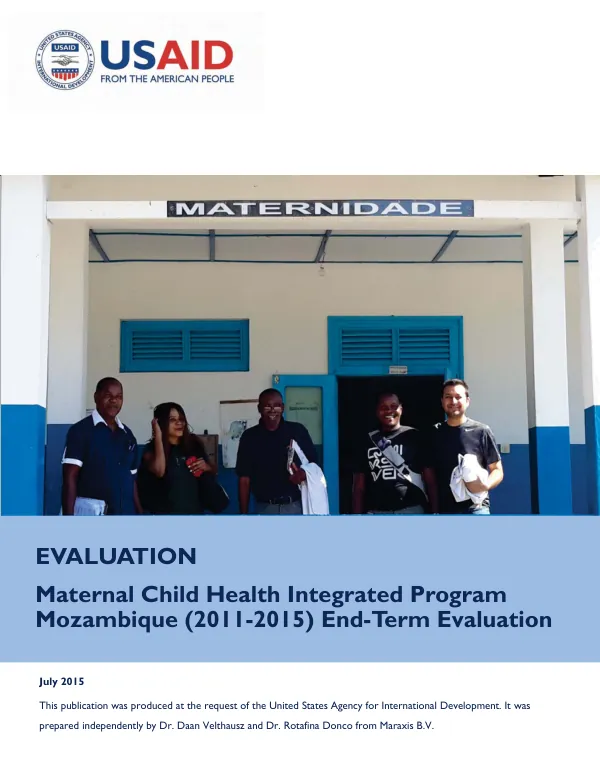
MCHIP Evaluation Mozambique 2015
The Maternal and Child Health Integrated Program (MCHIP) was implemented in Mozambique from April 2011 to June 2015.
2015 · 128 pages
Sign in to readA free account is required to download.
Abstract
The program's overall objective was to scale-up key Maternal, Neonatal and Child Health (MNCH) interventions through an integrated approach aligned with the government of Mozambique's efforts to reduce maternal, neonatal and infant mortality. MCHIP assumed a humanized and women-centered methodology in the four program components: Enabling environment, Model Maternity Initiative (MMI), Family Planning (FP), and Cervical Cancer Program (CECAP). One hundred and fifty-nine (159) health facilities of the country's 1,300 facilities received specific Technical Assistance (TA) to support the implementation of MNCH interventions. The program's objectives were to improve maternal and child health outcomes, increase access to quality health services, and strengthen the health system. To achieve these objectives, MCHIP implemented a range of interventions, including training for health workers, provision of equipment and supplies, and support for community-based initiatives. The evaluation of MCHIP's performance was conducted from April 2014 to June 2015, and the findings are presented in this report. The evaluation assessed the program's contribution to the integrated health results framework and identified key lessons and recommendations for future similar programs. The evaluation found that MCHIP made significant contributions to improving maternal and child health outcomes in Mozambique. The program's interventions led to an increase in the number of women receiving antenatal care, skilled delivery care, and postpartum care. The program also contributed to a reduction in maternal and neonatal mortality rates. The evaluation also identified several challenges and limitations of the program, including limited resources, inadequate infrastructure, and insufficient capacity of health workers. The evaluation recommended that future programs should prioritize the strengthening of the health system, improve access to quality health services, and increase the capacity of health workers. The evaluation team used a mixed-methods approach, combining both quantitative and qualitative data collection and analysis methods. The team collected data from a range of sources, including health facilities, health workers, and community members. The evaluation team also conducted a review of existing literature and policies related to maternal and child health in Mozambique. The evaluation found that the program's interventions had a positive impact on the health outcomes of women and children in Mozambique. The program's contributions to improving maternal and child health outcomes are a critical component of the country's efforts to achieve the Millennium Development Goals (MDGs) and the Sustainable Development Goals (SDGs). The evaluation team identified several key lessons and recommendations for future similar programs. The team recommended that future programs should prioritize the strengthening of the health system, improve access to quality health services, and increase the capacity of health workers. The team also recommended that future programs should focus on addressing the social and economic determinants of health, including poverty, education, and gender inequality. The evaluation team also recommended that future programs should prioritize the use of evidence-based interventions and should be designed to be sustainable and scalable. The team also recommended that future programs should prioritize the involvement of community members and health workers in the design and implementation of the program. The evaluation team's findings and recommendations are critical to informing future maternal and child health programs in Mozambique and other countries. The evaluation's findings highlight the importance of a humanized and women-centered approach to improving maternal and child health outcomes, and the need for a comprehensive and integrated approach to addressing the social and economic determinants of health.