JSI RESEARCH & TRAINING INSTITUTE, INC
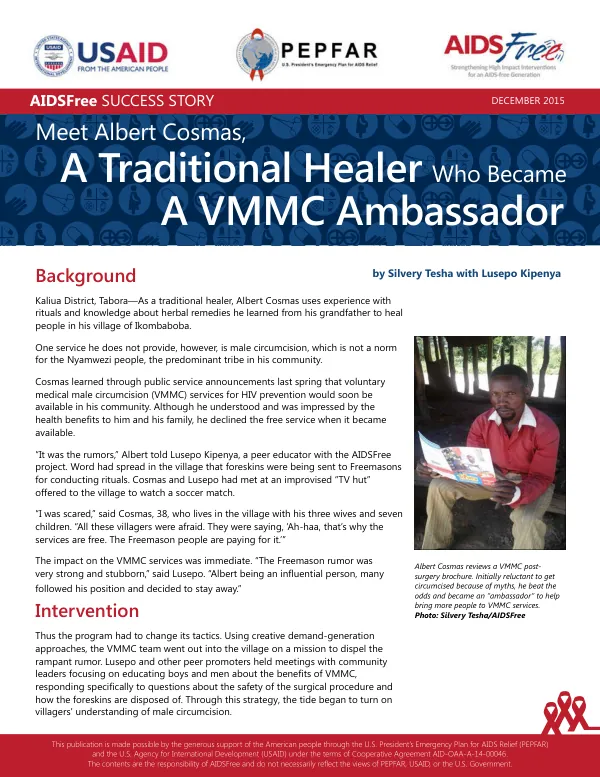
Meet Albert Cosmas, A Traditional Healer Who Became A VMMC Ambassador
Albert Cosmas, a traditional healer from Kaliua District in Tabora, Tanzania, initially declined voluntary medical male circumcision (VMMC) services due to rumors circulating in his community.
2015 · 2 pages
Sign in to readA free account is required to download.
Abstract
The rumors claimed that foreskins were being sent to Freemasons for conducting rituals, leading to widespread fear and reluctance among villagers to undergo the procedure. The AIDSFree program, working with the Tabora regional health administration, implemented creative demand-generation approaches to dispel the rumors and educate boys and men about the benefits of VMMC. Peer educators, including Lusepo Kipenya, held meetings with community leaders and provided information about the safety of the surgical procedure and the disposal of foreskins. Albert Cosmas, who had been initially hesitant to get circumcised, eventually underwent the procedure after being educated by Lusepo and other peer promoters. He became an influential advocate for VMMC services, encouraging other men to make the right decision. In the same week Cosmas was circumcised, the flow of clients turned from a trickle to a steady average of 20 to 28 adult men circumcised per day at the Ikombaboba outreach site and Limbula Dispensary. The success of the VMMC campaign in Kaliua District is attributed to the efforts of peer educators and community leaders, including Albert Cosmas, who helped to dispel misconceptions and encourage men to take advantage of the free HIV prevention services. Research has shown that circumcision is an effective HIV prevention strategy, reducing a man's risk of acquiring HIV by approximately 60 percent. The AIDSFree program is working to scale up high-quality VMMC services in Kaliua and six other councils, with an HIV prevalence of 5.1% and a VMMC prevalence of 40%. The campaign's success has also led to increased awareness and adoption of VMMC services among men and boys in the community. Albert Cosmas, now a VMMC ambassador, has taken it upon himself to spread the word about the benefits of VMMC and encourage others to undergo the procedure. His transformation from a hesitant individual to a vocal advocate for VMMC services serves as a testament to the effectiveness of the program's approach in addressing misconceptions and promoting HIV prevention.
Related documents