USAID DEC
Mid-term Performance Evaluation of the Afghanistan Workforce Development Program (AWDP)
Sign inCHECCHI AND COMPANY, CONSULTING, INC.
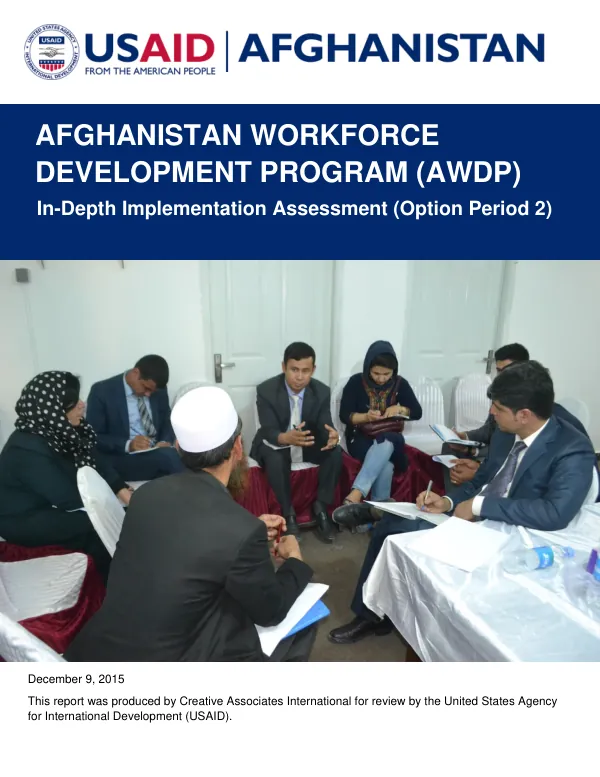
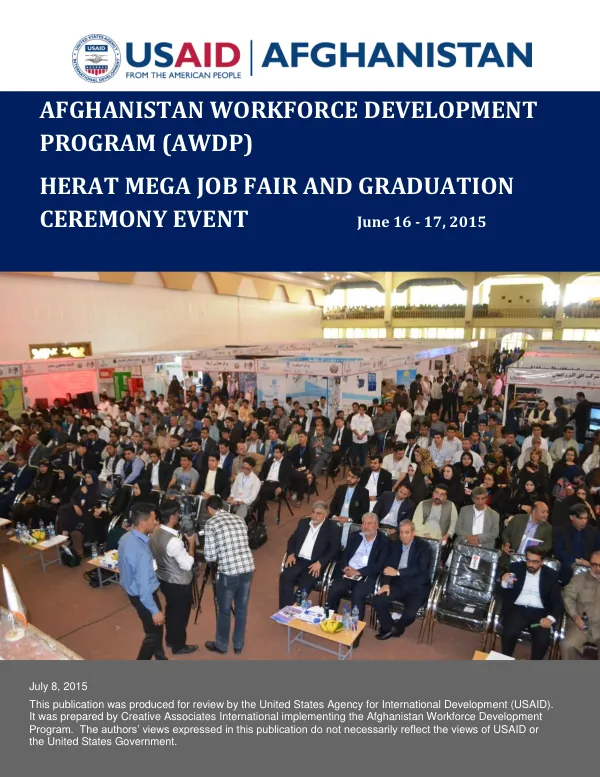
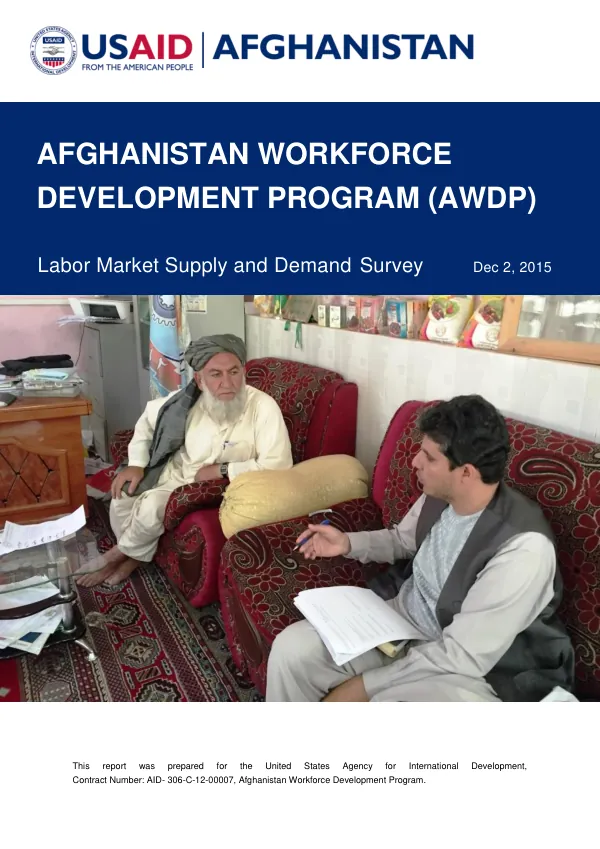
Mid-term Performance Evaluation of the Afghanistan Workforce Development Program (AWDP)
The Afghanistan Workforce Development Program (AWDP) aims to increase job placements, salaries/wages, and self-employment opportunities for 25,000 Afghans, with at least 25 percent being women.
2014 · 88 pages
Sign in to readA free account is required to download.
Abstract
Funding for AWDP consists of both "off-budget" and "on-budget" funding. The off-budget funding was used to directly award grants to private sector training providers in the technical and vocational education and training (TVET) and business and employment skills training (BEST) sectors. AWDP grantees operated in six cities: Kabul, Kandahar, Kunduz, Herat, Jalalabad, and Mazar-e-Sharif. The program's goal was to facilitate employment for job-seeking participants or encourage promotion through demand-driven training. The evaluation of AWDP's mid-term performance covers the 18-month base period from April 2012 to October 2013. Progress towards AWDP's goals and objectives was analyzed through a review of reports, documentation, and data collected from key stakeholders, including training providers, employers, participants, trainers, and curriculum developers. The evaluation aimed to answer four key questions: whether the program was meeting its goals and objectives, whether quality labor market-determined training programs were provided, whether methods employed to determine labor market requirements were effective, and what steps had been taken to improve technical capacity and skills of participants. The evaluation found that AWDP grantees had made progress towards their goals, with a significant number of participants completing training programs. However, the quality of training programs varied, with some grantees providing high-quality training while others struggled to meet the required standards. The evaluation also found that the methods employed to determine labor market requirements were effective, with many businesses reporting improved labor market outcomes. Technical capacity and skills of participants were also assessed, with the evaluation finding that many participants had improved their skills and knowledge. However, there were concerns about the sustainability of new practices and learning formats, with some grantees struggling to maintain momentum after the completion of the training programs. The evaluation made several recommendations to improve the effectiveness of AWDP, including the need for more rigorous quality assurance processes, improved monitoring and evaluation systems, and increased support for grantees to improve their technical capacity and skills. Overall, the evaluation found that AWDP had made significant progress towards its goals, but there were areas for improvement to ensure the program's long-term sustainability and effectiveness.