USAID DEC
Misoprostol Insert Home-birth directions
Misoprostol for Postpartum Haemorrhage Prevention is a critical intervention aimed at reducing maternal mortality and morbidity associated with excessive bleeding after childbirth.
1 pages
Sign in to readA free account is required to download.
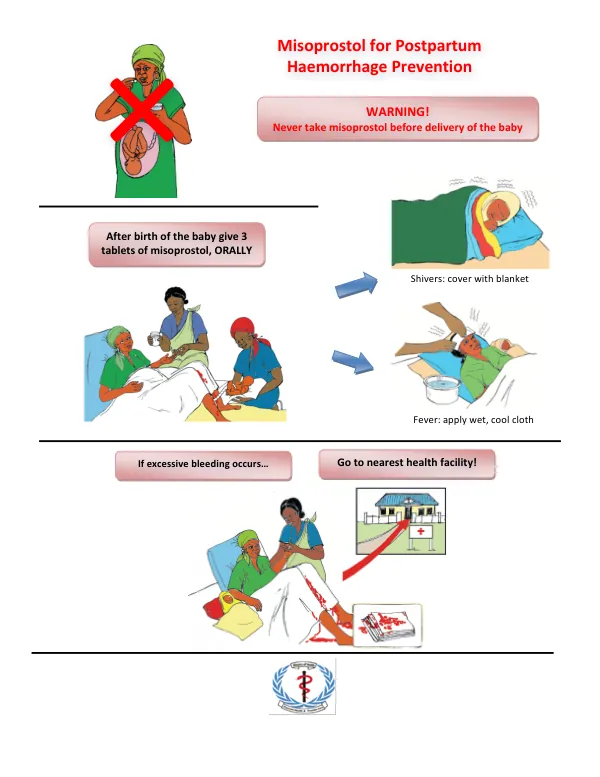
Abstract
The administration of misoprostol, a synthetic prostaglandin E1 analogue, has been widely adopted as a first-line treatment for postpartum hemorrhage prevention. According to guidelines, after the birth of the baby, three tablets of misoprostol should be given orally. Prompt action is essential in the event of excessive bleeding. Women are advised to seek immediate medical attention at the nearest health facility. In cases of severe bleeding, medical professionals may administer additional doses of misoprostol or other treatments as necessary. The importance of timely intervention cannot be overstated, as postpartum hemorrhage is a leading cause of maternal mortality worldwide. Misoprostol is contraindicated before the delivery of the baby. Administration of the medication prior to childbirth can increase the risk of complications and is not recommended. The correct administration of misoprostol for postpartum hemorrhage prevention involves giving three tablets orally after the birth of the baby. In addition to misoprostol administration, women may experience symptoms such as shivering or fever. To manage these symptoms, healthcare providers recommend covering the woman with a blanket to alleviate shivering and applying a wet, cool cloth to the forehead to reduce fever. These interventions are crucial in maintaining the woman's comfort and stability during the postpartum period.