USAID DEC
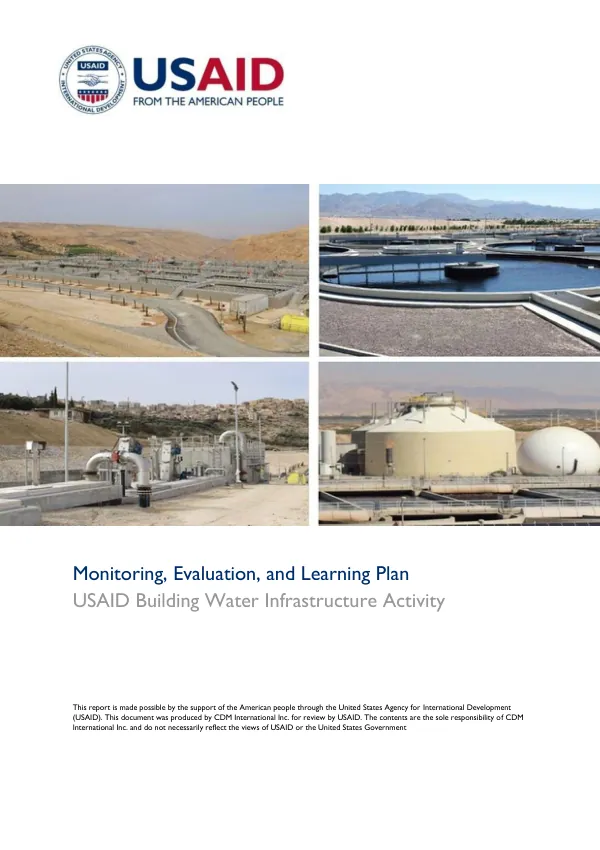
Monitoring, Evaluation, and Learning Plan for USAID Building Water Infrastructure Activity
Sign inCDM INTERNATIONAL, INC.
Monitoring, Evaluation, and Learning Plan for USAID Building Water Infrastructure Activity
The USAID Building Water Infrastructure Activity aims to improve the water infrastructure in Jordan by increasing the availability and reliability of water services.
2024 · 73 pages
Sign in to readA free account is required to download.
Abstract
The activity focuses on the following objectives: 1.1.1: Increase the availability of water services to at least 90% of the population in the target areas. 1.1.2: Improve the reliability of water services to at least 95% of the population in the target areas. 1.1.3: Increase the efficiency of water use by at least 20% in the target areas. To achieve these objectives, the activity will implement the following interventions: 1.2.1: Improve the water infrastructure in the target areas by rehabilitating and upgrading existing water treatment plants, transmission, and distribution systems, and constructing new water treatment plants and transmission lines. 1.2.2: Increase the capacity of the water sector to manage and operate the water infrastructure, including the development of a water management plan and the training of water sector staff. 1.2.3: Improve the water sector's ability to collect and analyze data on water use and water losses, and to use this data to inform decision-making. The activity will also focus on the following cross-cutting issues: 1.4.1: Gender equality and social inclusion, by ensuring that the activity's interventions are accessible and beneficial to all members of the target population, regardless of their gender or social status. 1.4.2: Climate change, by incorporating climate change considerations into the activity's interventions and ensuring that the activity's interventions are resilient to the impacts of climate change. The activity will be implemented over a period of five years, from 2020 to 2025. The activity's budget is $100 million, and it will be implemented by a team of international and local staff, led by CDM International Inc. The activity's monitoring and evaluation plan will be based on the following approach: 2.1.1: The activity will use a combination of quantitative and qualitative data to monitor and evaluate its progress. 2.1.2: The activity will collect data on the following indicators: * The percentage of the population with access to improved water services * The percentage of the population with reliable access to water services * The percentage of water use that is efficient * The percentage of water losses * The percentage of the population that is served by water services The activity will also collect data on the following cross-cutting issues: 2.1.3: Gender equality and social inclusion, by collecting data on the following indicators: * The percentage of women and men who have access to improved water services * The percentage of women and men who have reliable access to water services * The percentage of women and men who are served by water services The activity will also collect data on climate change, by collecting data on the following indicators: 2.1.4: The percentage of the population that is affected by climate change * The percentage of the population that is vulnerable to climate change * The percentage of the population that is resilient to climate change The activity will use the following methodology to collect and analyze data: 2.2.1: The activity will use a combination of surveys, focus groups, and data analysis to collect data on the indicators listed above. 2.2.2: The activity will use a combination of quantitative and qualitative data analysis techniques to analyze the data collected. The activity will also use the following tools to collect and analyze data: 2.3.1: The activity will use a Management Information System (MIS) to collect and analyze data on the indicators listed above. 2.3.2: The activity will use a Geographic Information System (GIS) to collect and analyze data on the indicators listed above. The activity will also use the following indicators to measure its progress: The activity will also use the following indicators to measure its progress on cross-cutting issues: The activity will also use the following indicators to measure its progress on climate change: 2.7.1: Climate change