INTERNATIONAL ORGANIZATION FOR MIGRATION
Monthly Highlights: Community Stabilization Activity
The Community Stabilization Activity, implemented by the International Organization for Migration (IOM) with funding from the United States Agency for International Development (USAID), aims to support the integration of Venezuelan migrants, Colombian returnees, and host communities in Colombia.
2020 · 1 pages
Sign in to readA free account is required to download.
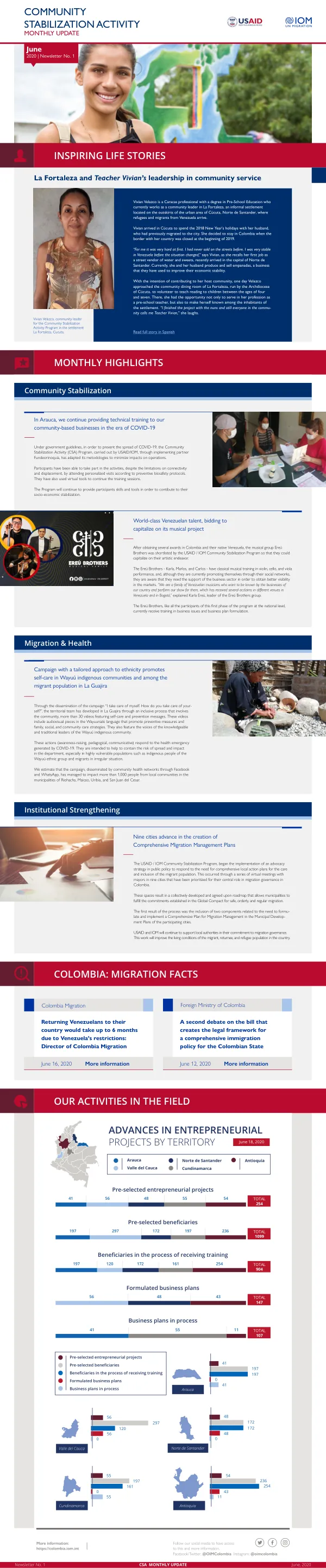
Abstract
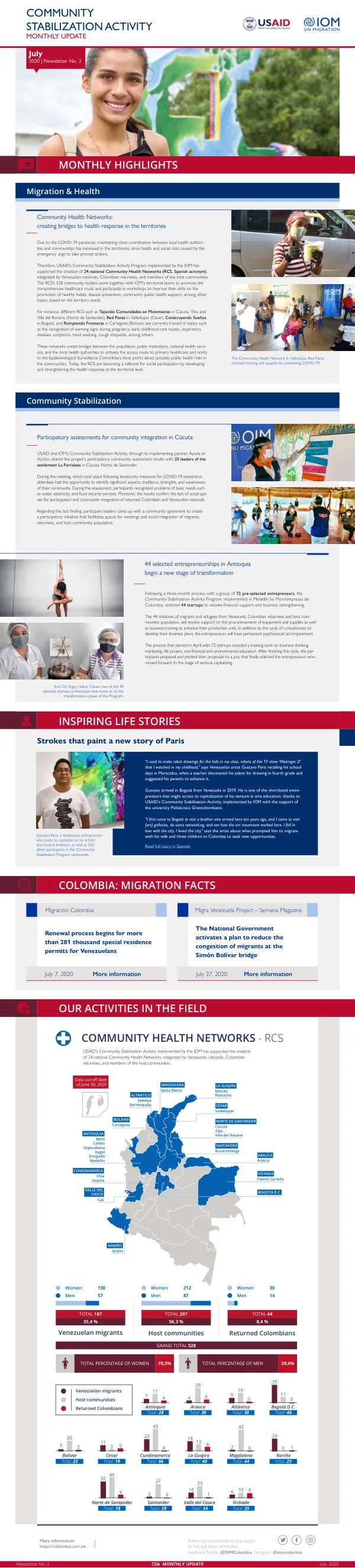
The program focuses on promoting community health, economic stability, and social cohesion. Community Health Networks, also known as Redes de Salud Comunitaria (RCS), have been established in 24 national locations, including Cartagena, Cali, Medellín, and Bogotá. These networks are composed of 528 community leaders, including Venezuelan nationals, Colombian returnees, and members of host communities. The RCS work together with IOM's territorial teams to promote comprehensive healthcare, disease prevention, and community public health support. The RCS have received training on various topics, including the recognition of warning signs during pregnancy, early childhood care routes, respiratory diseases symptoms, hand washing, and cough etiquette. These networks have created bridges between the population, public institutions, national health services, and local health authorities to activate access to primary healthcare and notify the Epidemiological Surveillance Committee's focal points about possible public health risks in the communities. The Community Stabilization Activity has also supported the creation of 44 startups in Medellín, which will receive financial support and business strengthening. These initiatives are led by migrants and refugees from Venezuela, Colombian returnees, and host communities. The selected entrepreneurs will receive support on the procurement of equipment and supplies, as well as business training to enhance their productive units. In addition, the program has implemented participatory assessments for community integration in Cúcuta, Norte de Santander. The results of the assessment identified significant aspects, traditions, strengths, and weaknesses of the community, including problems of basic needs such as water, electricity, and food security services. The community leaders came up with a community agreement to create a participatory initiative that facilitates spaces for meetings and social integration of migrants, returnees, and host community population. The Community Health Network in Valledupar, Red Panas, received training and supplies for preventing COVID-19. The program has also supported the creation of 24 national Community Health Networks, integrated by Venezuelan nationals, Colombian returnees, and members of the host communities. The Community Stabilization Activity has made significant progress in promoting community health, economic stability, and social cohesion in Colombia. The program has supported the creation of Community Health Networks, startups, and participatory assessments for community integration. The program's efforts have contributed to the improvement of healthcare services, economic opportunities, and social cohesion in the communities. The Community Stabilization Activity has a strong focus on community participation and engagement. The program has established Community Health Networks, which are composed of community leaders who work together with IOM's territorial teams to promote comprehensive healthcare and disease prevention. The program has also supported the creation of startups, which are led by migrants and refugees from Venezuela, Colombian returnees, and host communities. The Community Stabilization Activity has a geographic focus on Colombia, with a particular emphasis on the regions of Cartagena, Cali, Medellín, and Bogotá. The program has also supported the creation of Community Health Networks in 24 national locations, including Cúcuta, Norte de Santander. The Community Stabilization Activity has a time frame of July 2020, with a focus on supporting the integration of Venezuelan migrants, Colombian returnees, and host communities in Colombia. The program has made significant progress in promoting community health, economic stability, and social cohesion in Colombia.