THE MORGANTIE GROUP, INC.
Monthly Progress Report No. 4: North East Jenin Component I
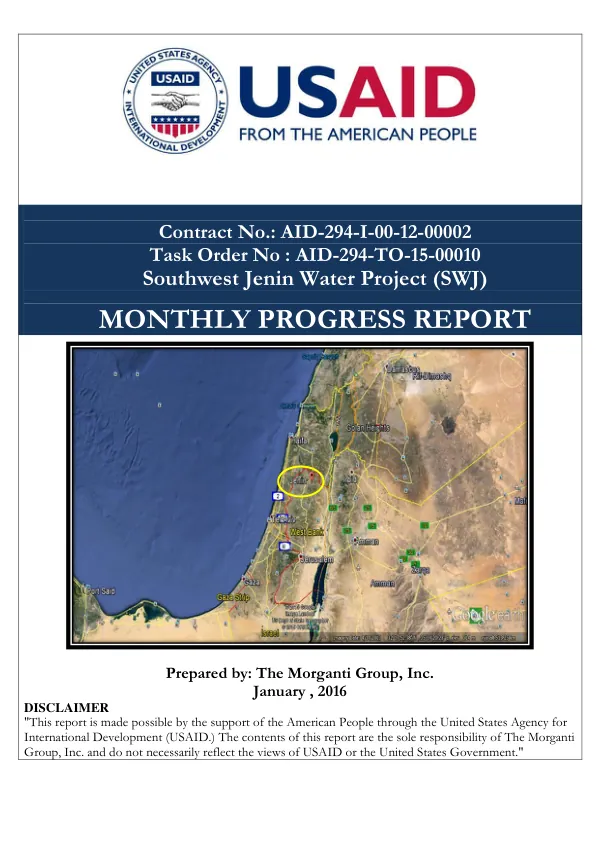
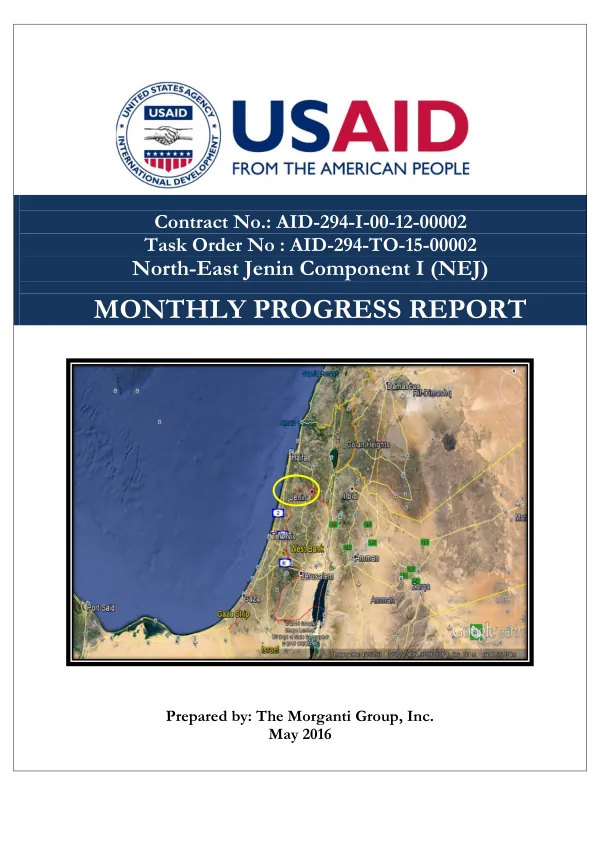
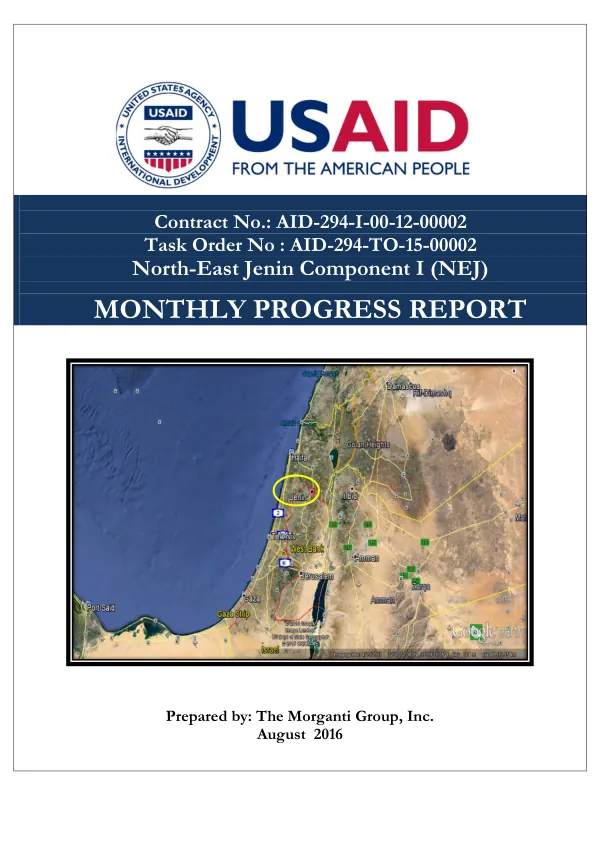
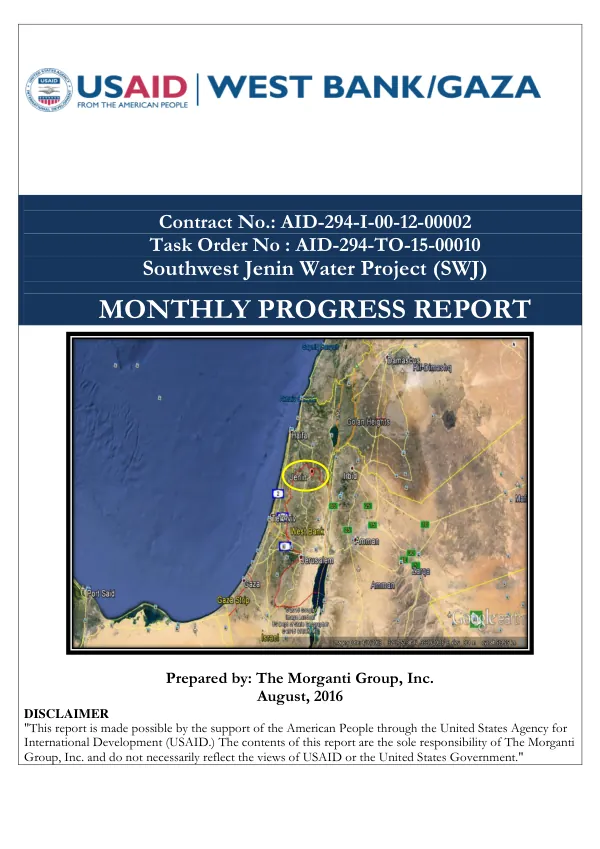
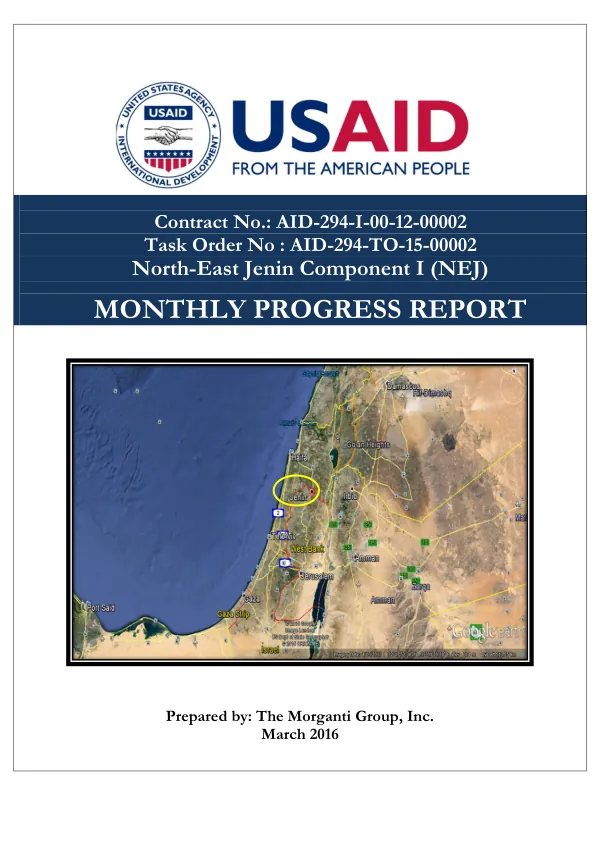
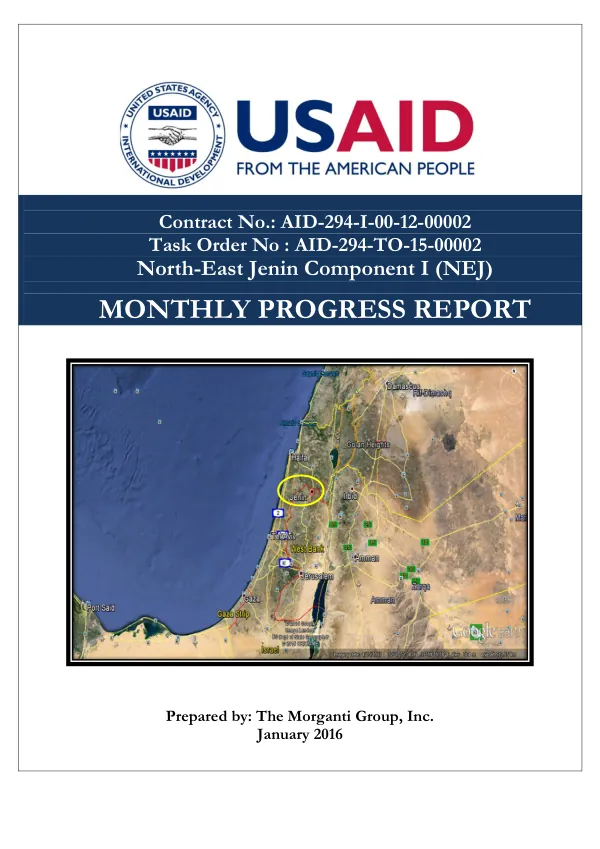
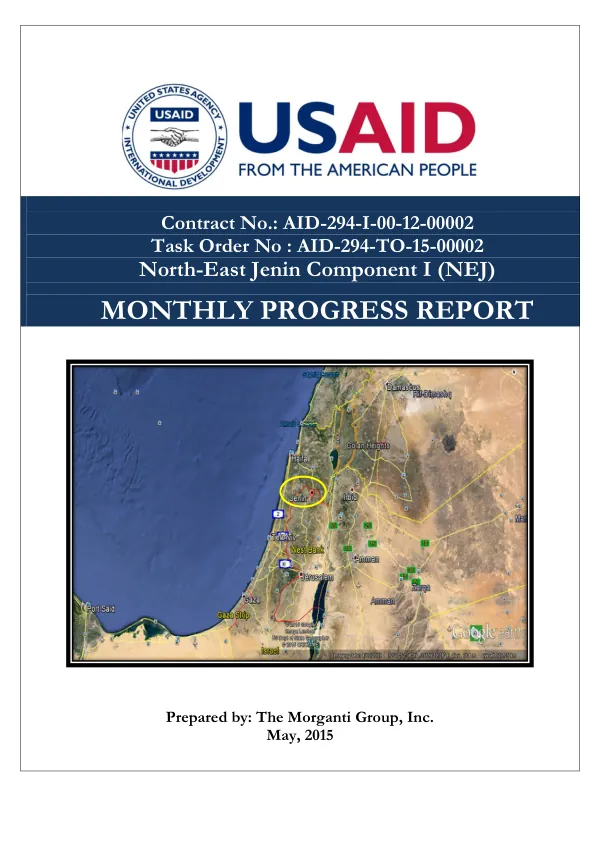
The North East Jenin Component I project aims to provide a reliable, safe, and affordable water supply to eight villages in the northeast part of the Jenin Governorate in the West Bank.
2015 · 76 pages
Sign in to readA free account is required to download.
Abstract
The project is part of the USAID Mission Infrastructure Needs Program II, which focuses on the rehabilitation and construction of roads, schools, water, and wastewater projects to improve Palestinians' access to basic infrastructure and services. The project scope includes connecting to the existing Kadim pipeline, constructing approximately 24 km of transmission pipelines with bulk filling stations, building a booster pumping station, and a reservoir. Key project elements include the construction of new facilities, such as the Faqqua and Jalbun Booster Station and the Faqqua Reservoir, as well as the construction of new transmission mains, including the Kadim connection to Beit Qad. The project's objective is to provide a reliable water supply to the eight villages, which currently rely on purchasing water from tankers or private wells. The project's scope of work is defined in the Statement of Work (SOW), which outlines the project's objectives, scope, and deliverables. The project's progress is reported on a monthly basis, with the current report covering the period from May 1 to May 31, 2015. The report provides an overview of the project's progress, including safety, environmental compliance, traffic control measures, community outreach, and gender action plan. The project's safety record is satisfactory, with no major incidents reported during the reporting period. Environmental compliance is also satisfactory, with no non-compliance notices issued during the reporting period. Traffic control measures are in place to ensure the safety of workers and the public, and community outreach efforts are ongoing to engage with local stakeholders and promote the project's benefits. The project's gender action plan is also being implemented, with a focus on promoting gender equality and empowering women in the project's workforce. The plan includes training and capacity-building programs for women workers, as well as measures to promote women's participation in the project's decision-making processes. The project's progress is being monitored and reported on a regular basis, with the next report due in June 2015. The project's indicators, including the number of villages connected to the water supply system, the number of households benefiting from the project, and the project's overall progress, will be reported on in the next report. The project's procurement process is also being monitored, with a focus on ensuring transparency and accountability. The project's procurement log, which outlines all procurement activities, including tendering, contracting, and payment, is maintained and updated regularly. The project's quality control and assurance processes are also being implemented, with a focus on ensuring that the project's deliverables meet the required standards. The project's quality control and test results are reported on a regular basis, with any non-compliance issues addressed promptly. The project's financial management is also being monitored, with a focus on ensuring that the project's budget is managed effectively and efficiently. The project's payment schedule, which outlines all payments made to contractors and suppliers, is maintained and updated regularly. Overall, the North East Jenin Component I project is making good progress, with a focus on providing a reliable, safe, and affordable water supply to the eight villages in the northeast part of the Jenin Governorate. The project's safety, environmental compliance, traffic control measures, community outreach, and gender action plan are all being implemented effectively, and the project's procurement, quality control, and financial management processes are being monitored and reported on regularly.