USAID DEC
Multi-Stakeholder Co-Design Planning Workshop Summary: USAID Biodiversity in Karnali Conservation Landscape
Sign inUSAID DEC
Multi-Stakeholder Co-Design Planning Workshop Summary: USAID Biodiversity in Karnali Conservation Landscape
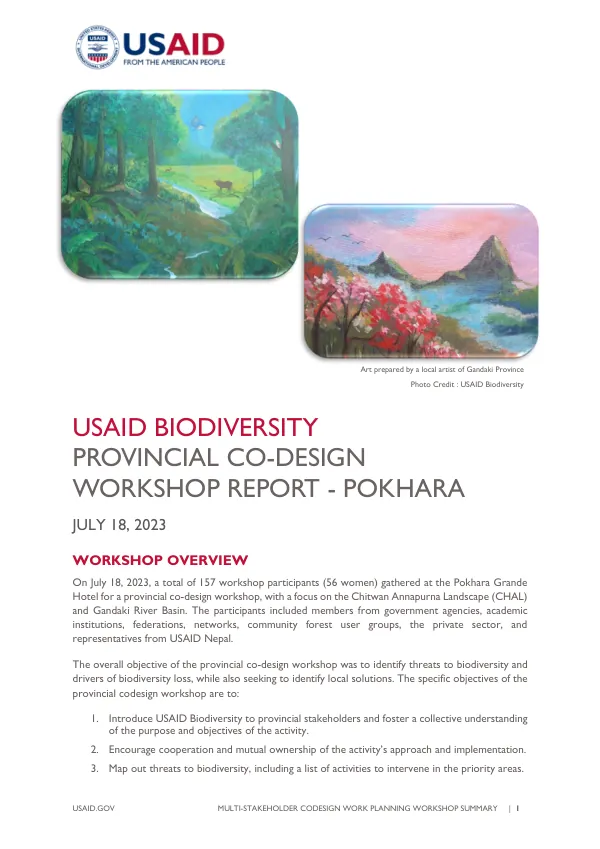
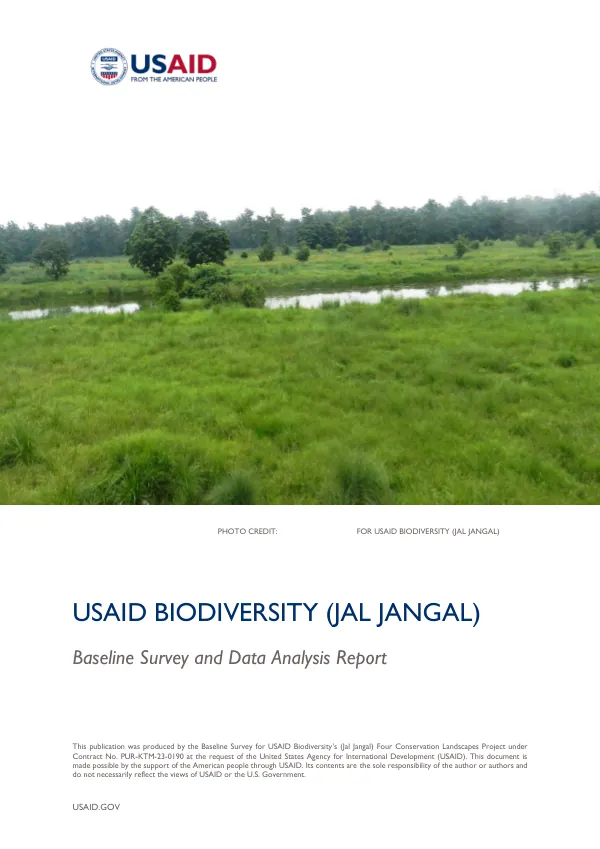
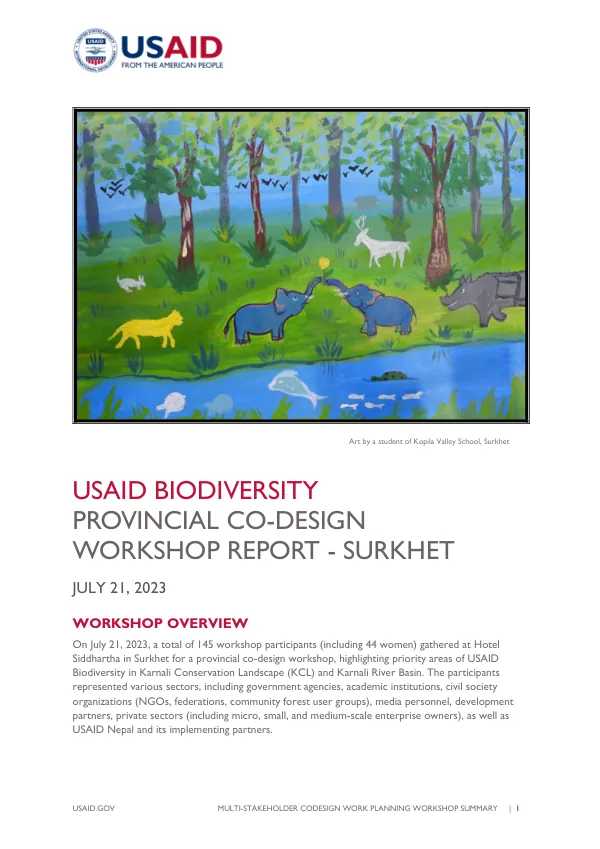
The Karnali Conservation Landscape (KCL) and Karnali River Basin in Nepal were the focus of a provincial co-design workshop held on July 21, 2023.
2023 · 25 pages
Sign in to readA free account is required to download.
Abstract
The workshop brought together 145 participants from various sectors, including government agencies, academic institutions, civil society organizations, media personnel, development partners, private sectors, and USAID Nepal and its implementing partners. The participants represented 44 women, and the event was facilitated by an Officer of the Ministry of Industry, Tourism, Forests and Environment (MoITFE). The workshop aimed to introduce USAID Biodiversity with provincial stakeholders, map out threats to biodiversity, and develop recommended activities for the priority areas. The objectives of the workshop were to prepare an integrated landscape-level work plan that reflects both community and government-proposed activities under 11 Priority Areas for Year 2. The workshop provided a platform for stakeholders across the landscape to achieve a common understanding of USAID Biodiversity's objectives and supported the preparation of an integrated landscape work plan that reflects both community and government priorities. The workshop was structured for participants to form ten different groups and engage in discussions on ten priority areas. Each group received relevant context and questions for their group discussions, led by designated facilitators. The groups brainstormed ideas and later presented their findings to the plenary, with questions and input taken from the floor. The Secretary of MoITFE and representatives from USAID Nepal actively provided their feedback and guidance during the group discussions and presentations. The co-design component of the workshop focused on strengthening natural resource governance capacity at municipal and provincial levels. A breakout session was conducted to discuss natural resource governance, identifying the status of natural resource governance, including issues and challenges. The participants proposed activities to address the identified issues and challenges, including formulating inclusive policies, laws, and guidelines in the participation of wide range of stakeholders as per the jurisdiction of local governments in line with the mandate of the Constitution of Nepal. The workshop also highlighted the importance of conservation, sustainable use, and equitable sharing of the benefits derived from the province's natural resources and the Karnali River Basin. The Honorable Minister of MoITFE emphasized the significance of such projects for the province, which faces various challenges. He urged both Conservation and Development Partners to prioritize Karnali Province in their projects, assuring them of full support from the provincial government and his ministry. The workshop was a crucial step in achieving the objectives of USAID Biodiversity, which aims to improve the health of ecosystems, strengthen environmental crime control and natural resource safeguards, and enhance climate resilience of natural and human systems. The workshop provided a platform for stakeholders to share diverse perspectives and approaches in pursuit of common goals and expanding their networks. The event was concluded with brief remarks from the Secretary of MoITFE, who expressed gratitude to all the guests and participants for attending the workshop and encouraged active contributions during the technical sessions to propose activities aligned with contextual needs. The workshop's recommendations and ideas focused on strengthening natural resource governance capacity at municipal and provincial levels, including formulating inclusive policies, laws, and guidelines in the participation of wide range of stakeholders as per the jurisdiction of local governments in line with the mandate of the Constitution of Nepal. The workshop's outcomes will inform the development of an integrated landscape-level work plan that reflects both community and government-proposed activities under 11 Priority Areas for Year 2.