AFRICAN-AMERICAN SCHOLARS COUNCIL
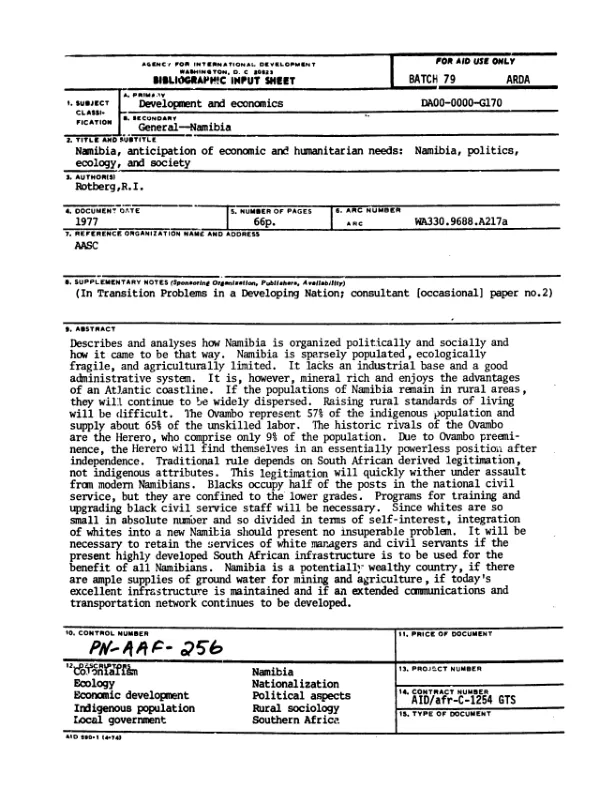
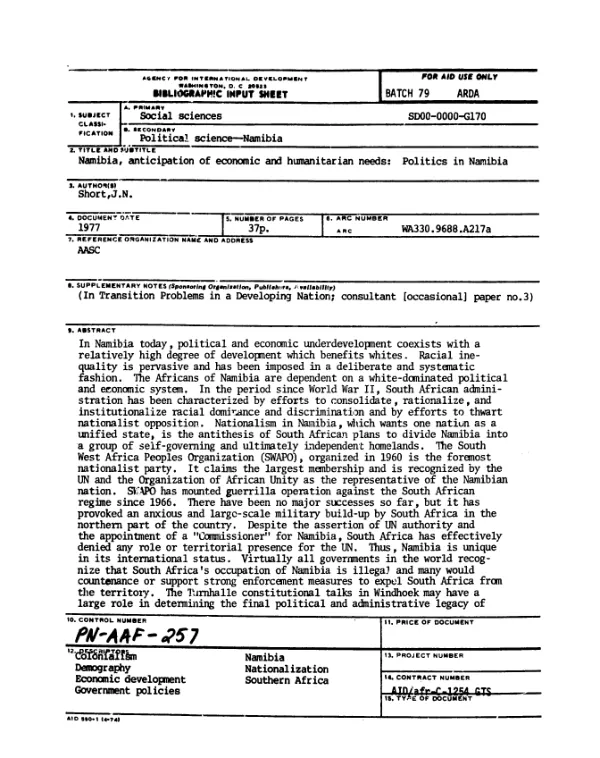
Namibia, anticipation of economic and humanitarian needs : politics in Namibia
In Namibia today, political and economic underdevelopment coexists with a relatively high degree of development which benefits whites.
Short, J. N. · 1970
Sign in to readA free account is required to download.
Abstract
Racial inequality is pervasive and has been imposed in a deliberate and systematic fashion. The Africans of Namibia are dependent on a white-dominated political and economic system. In the period since World War II, South African administration has been characterized by efforts to consolidate, rationalize, and institutionalize racial dominance and discrimination and by efforts to thwart nationalist opposition. Nationalism in Namibia, which wants one nation as a unified state, is the antithesis of South African plans to divide Namibia into a group of self-governing and ultimately independent homelands. The South West Africa Peoples Organization (SWAPO), organized in 1960 is the foremost nationalist party. It claims the largest membership and is recognized by the UN and the Organization of African Unity as the representative of the Namibian nation. SWAPO has mounted guerrilla operation against the South African regime since 1966. There have been no major successes so far, but it has provoked an anxious and large-scale military build-up by South Africa in the northern part of the country. Despite the assertion of UN authority and the appointment of a "Commissioner" for Namibia, South Africa has effectively denied any role or territorial presence for the UN. Thus, Namibia is unique in its international status. Virtually all governments in the world recognize that South Africa"s occupation of Namibia is illegal and many would countenance or support strong enforcement measures to expel South Africa from the territory. The Turnhalle constitutional talks in Windhoek may have a large role in determining the final political and administrative legacy of South Africa in Namibia. The 156 delegates to the conference represent the 11 ethnic groups within the homelands political system. Nationalist parties have been barred from the talks.