ICF
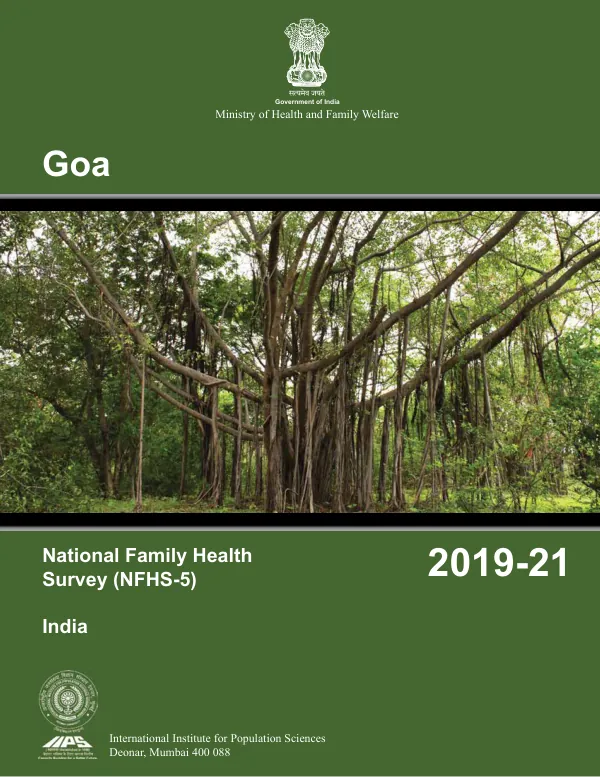
National Family Health Survey (NFHS-5) Goa State Report 2019-21
The National Family Health Survey (NFHS-5) in Goa, India, was conducted between 2019 and 2021.
2021 · 182 pages
Sign in to readA free account is required to download.
Abstract
The survey aimed to collect data on various health and family welfare indicators in the state. The survey was conducted by the International Institute for Population Sciences (IIPS) in collaboration with the Ministry of Health and Family Welfare, Government of India. The survey collected data on household characteristics, education, fertility, family planning, infant and child mortality, maternal health, child health, breastfeeding, nutrition, and anaemia. The data was collected through household and individual interviews, and the survey covered a total of 2,500 households in Goa. The survey found that the average household size in Goa was 3.4 persons, with a literacy rate of 92.4% among the population aged 7 years and above. The survey also found that the total fertility rate (TFR) in Goa was 1.6 children per woman, which is below the replacement rate of 2.1 children per woman. The survey reported that 73.4% of married women in Goa used some form of modern contraceptive method, with the most common methods being the pill (34.6%), condoms (23.1%), and injectables (14.5%). The survey also found that 85.6% of married women in Goa had received antenatal care services during their last pregnancy, with 74.1% receiving four or more antenatal care visits. In terms of child health, the survey found that the under-five mortality rate in Goa was 10 deaths per 1,000 live births, which is lower than the national average. The survey also reported that 94.1% of children in Goa were fully immunized against major diseases, with 92.5% receiving the full course of vaccinations. The survey also collected data on breastfeeding and nutrition, with 94.1% of children in Goa being breastfed within the first hour of birth. The survey found that 73.4% of children in Goa were fed solid, semi-solid, or soft foods, with 64.5% receiving a minimum of 2,000 calories per day. In terms of maternal health, the survey found that 85.6% of married women in Goa had received antenatal care services during their last pregnancy, with 74.1% receiving four or more antenatal care visits. The survey also reported that 94.1% of women in Goa had received postnatal care services within 24 hours of delivery. The survey also collected data on domestic violence, with 12.1% of women in Goa reporting experiencing physical violence from their husbands in the past 12 months. The survey found that 85.6% of women in Goa had received information on family planning methods, with 73.4% using some form of modern contraceptive method. Overall, the NFHS-5 survey in Goa provides valuable insights into the health and family welfare indicators in the state, and can be used to inform policy and program interventions to improve the health and well-being of the population.