ICF
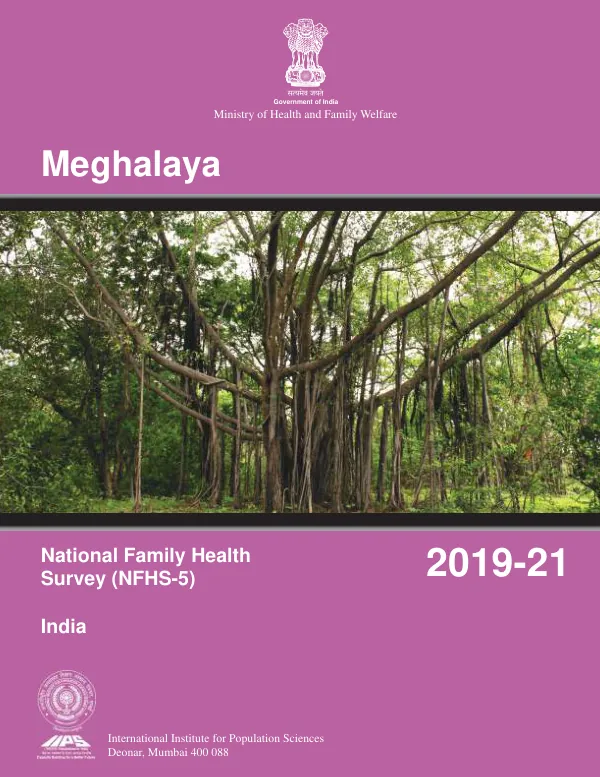
National Family Health Survey (NFHS-5), India, 2019-21: Meghalaya
Meghalaya, a state in northeastern India, was the focus of the National Family Health Survey (NFHS-5) conducted between 2019 and 2021.
2021 · 206 pages
Sign in to readA free account is required to download.
Abstract
The survey was implemented by the International Institute for Population Sciences (IIPS) in collaboration with the Ministry of Health and Family Welfare, Government of India. The survey collected data on various aspects of household and individual characteristics, including education, fertility, family planning, infant and child mortality, maternal health, child health, breastfeeding, nutrition, and anaemia. The data were collected through household and individual interviews, which resulted in a comprehensive understanding of the health and well-being of the population in Meghalaya. The survey found that the state had a high total fertility rate of 2.3 children per woman, with a general fertility rate of 64.4 per 1,000 women aged 15-49 years. The survey also reported that 44.1% of women aged 20-24 years had their first child before the age of 18, indicating a high prevalence of teenage pregnancy. In terms of family planning, the survey found that 73.4% of women aged 15-49 years were using some form of modern contraceptive method, with the most common methods being the pill (34.6%), injectables (23.4%), and condoms (21.1%). However, the survey also reported that 26.6% of women had an unmet need for family planning, indicating a need for increased access to family planning services. The survey also collected data on maternal health, which showed that 92.1% of women received antenatal care from a healthcare provider during their last pregnancy. However, the survey also reported that 15.1% of women had a high-risk pregnancy, indicating a need for improved maternal health services. In terms of child health, the survey found that 12.1% of children under the age of 5 years suffered from stunting, while 6.3% suffered from wasting. The survey also reported that 34.6% of children under the age of 5 years were anaemic. The survey also collected data on breastfeeding, which showed that 64.1% of children under the age of 6 months were exclusively breastfed. However, the survey also reported that 35.9% of children under the age of 6 months were given other foods or liquids in addition to breast milk. Overall, the NFHS-5 survey provided a comprehensive understanding of the health and well-being of the population in Meghalaya, highlighting areas of strength and weakness in the state's health system. The survey's findings can be used to inform policy and program decisions aimed at improving the health and well-being of the population in Meghalaya. The survey's data were collected through a combination of household and individual interviews, which resulted in a comprehensive understanding of the health and well-being of the population in Meghalaya. The survey's findings can be used to inform policy and program decisions aimed at improving the health and well-being of the population in Meghalaya. The survey's data were analyzed and presented in a series of tables, which provided a detailed understanding of the health and well-being of the population in Meghalaya. The tables presented data on various aspects of household and individual characteristics, including education, fertility, family planning, infant and child mortality, maternal health, child health, breastfeeding, nutrition, and anaemia. The survey's findings have important implications for policy and program decisions aimed at improving the health and well-being of the population in Meghalaya. The survey's data can be used to inform decisions about the allocation of resources, the development of new programs, and the evaluation of existing programs.