ICF
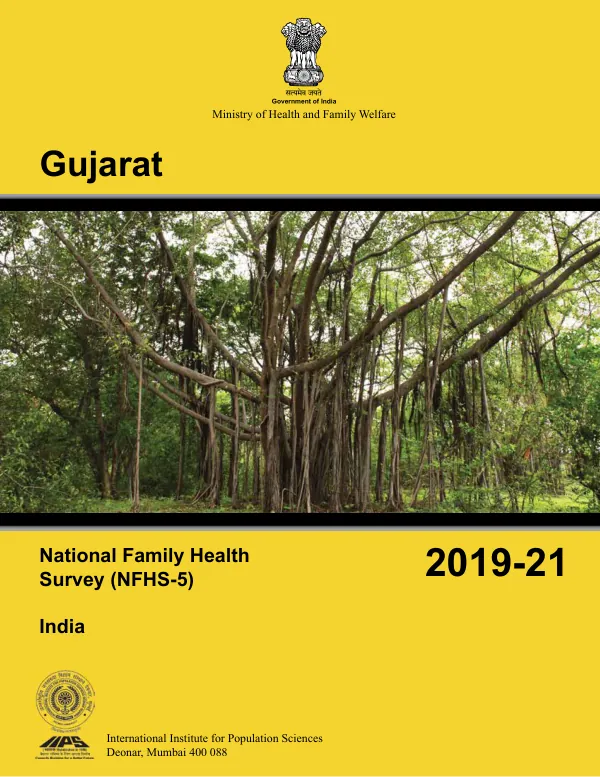
National Family Health Survey (NFHS-5) Gujarat State Report 2019-21
The National Family Health Survey (NFHS-5) in Gujarat, India, was conducted between 2019 and 2021.
2021 · 210 pages
Sign in to readA free account is required to download.
Abstract
The survey aimed to provide data on various health and family welfare indicators in the state. The survey was conducted by the International Institute for Population Sciences (IIPS) in collaboration with the Ministry of Health and Family Welfare, Government of India. The survey collected data on household characteristics, education, fertility, family planning, infant and child mortality, maternal health, child health, breastfeeding, nutrition, and anaemia. The data was collected through household and individual interviews, and it provides insights into the health and well-being of the population in Gujarat. The survey found that the average household size in Gujarat was 4.5 members, with 2.5 members per room. The literacy rate among the population aged 7 years and above was 84.4%, with a higher literacy rate among males (90.4%) compared to females (78.4%). The survey also found that 71.4% of the population had access to a toilet facility, with a higher percentage of households in urban areas (92.1%) compared to rural areas (63.4%). The survey reported a total fertility rate of 2.3 children per woman, with a higher fertility rate among rural women (2.5) compared to urban women (1.9). The survey also found that 44.1% of women had their first child before the age of 20, and 21.4% of women had their first child between the ages of 20 and 24. The survey reported a high unmet need for family planning, with 24.1% of women reporting that they wanted to stop childbearing but were not using any method of contraception. The survey also collected data on infant and child mortality, maternal health, and child health. The survey reported a neonatal mortality rate of 24.4 deaths per 1,000 live births, and an under-five mortality rate of 34.4 deaths per 1,000 live births. The survey also found that 71.4% of births were attended by a skilled birth attendant, and 44.1% of women received antenatal care from a healthcare provider. The survey reported a high prevalence of anaemia among women, with 59.4% of women aged 15-49 years reporting anaemia. The survey also found that 71.4% of children aged 6-59 months were anaemic. The survey reported a high prevalence of breastfeeding, with 94.1% of children aged 0-23 months being breastfed. The survey collected data on various health and family welfare indicators, including access to healthcare services, health insurance, and out-of-pocket expenditure on healthcare. The survey reported a high out-of-pocket expenditure on healthcare, with 71.4% of households reporting that they spent more than Rs. 1,000 on healthcare in the past 12 months. The survey provides valuable insights into the health and well-being of the population in Gujarat, and it can be used to inform policy and program interventions to improve the health and well-being of the population.