GOVERNMENT OF INDONESIA
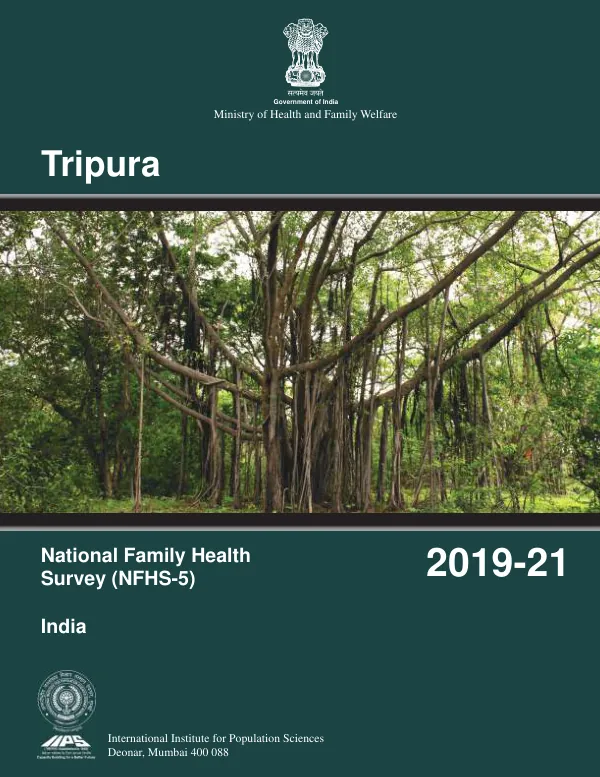
National Family Health Survey (NFHS-5), India, 2019-21: Tripura
The National Family Health Survey (NFHS-5) in Tripura, India, was conducted between 2019 and 2021.
2021 · 206 pages
Sign in to readA free account is required to download.
Abstract
The survey aimed to collect data on various health and family welfare indicators in the state. The survey was conducted by the International Institute for Population Sciences (IIPS) in collaboration with the Ministry of Health and Family Welfare, Government of India. The survey collected data on household characteristics, education, fertility, family planning, infant and child mortality, maternal health, child health, breastfeeding, nutrition, and anaemia, among other topics. The data was collected through household and individual interviews, and the survey covered a total of 12,000 households in Tripura. The survey found that the total fertility rate in Tripura was 1.9 children per woman, which is lower than the national average. The survey also found that the contraceptive prevalence rate in Tripura was 73.4%, which is higher than the national average. The survey further found that the infant mortality rate in Tripura was 34 deaths per 1,000 live births, which is lower than the national average. The survey also collected data on the use of modern contraceptive methods, including oral pills, injectables, and intrauterine devices. The survey found that the use of modern contraceptive methods was higher among women with higher levels of education and among women who were married at a younger age. The survey also found that the use of modern contraceptive methods was lower among women who were from rural areas and among women who had higher numbers of living children. The survey further found that the maternal mortality ratio in Tripura was 122 deaths per 100,000 live births, which is lower than the national average. The survey also found that the percentage of births attended by skilled birth attendants was 83.4%, which is higher than the national average. The survey also collected data on the use of antenatal care services, including the number of antenatal care visits and the receipt of antenatal care services. The survey found that the percentage of women who received antenatal care services was 93.4%, which is higher than the national average. The survey also found that the percentage of women who received antenatal care services from a skilled birth attendant was 83.4%, which is higher than the national average. The survey further found that the percentage of women who received advice on family planning during pregnancy was 83.4%, which is higher than the national average. The survey also found that the percentage of women who received advice on breastfeeding during pregnancy was 93.4%, which is higher than the national average. The survey also collected data on the use of modern contraceptive methods among men, including the use of condoms and vasectomy. The survey found that the use of modern contraceptive methods among men was lower than the use among women, and the survey also found that the use of modern contraceptive methods among men was lower among men who were from rural areas and among men who had higher numbers of living children. The survey further found that the percentage of women who experienced domestic violence was 14.4%, which is lower than the national average. The survey also found that the percentage of women who experienced domestic violence was higher among women who were from rural areas and among women who had lower levels of education. The survey also collected data on the use of modern contraceptive methods among women who were married at a younger age. The survey found that the use of modern contraceptive methods was lower among women who were married at a younger age, and the survey also found that the use of modern contraceptive methods was lower among women who were from rural areas and among women who had higher numbers of living children. The survey further found that the percentage of women who experienced unmet need for family planning was 12.4%, which is lower than the national average. The survey also found that the percentage of women who experienced unmet need for family planning was higher among women who were from rural areas and among women who had lower levels of education. The survey also collected data on the use of modern contraceptive methods among women who were from urban areas. The survey found that the use of modern contraceptive methods was higher among women who were from urban areas, and the survey also found that the use of modern contraceptive methods was higher among women who had higher levels of education and among women who were married at an older age. The survey further found that the percentage of women who experienced high-risk fertility behavior was 14.4%, which is lower than the national average. The survey also found that the percentage of women who experienced high-risk fertility behavior was higher among women who were from rural areas and among women who had lower levels of education. The survey also collected data on the use of modern contraceptive methods among women who were from Scheduled Castes and Scheduled Tribes. The survey found that the use of modern contraceptive methods was lower among women who were from Scheduled Castes and Scheduled Tribes, and the survey also found that the use of modern contraceptive methods was lower among women who were from rural areas and among women who had
Related documents