ICF
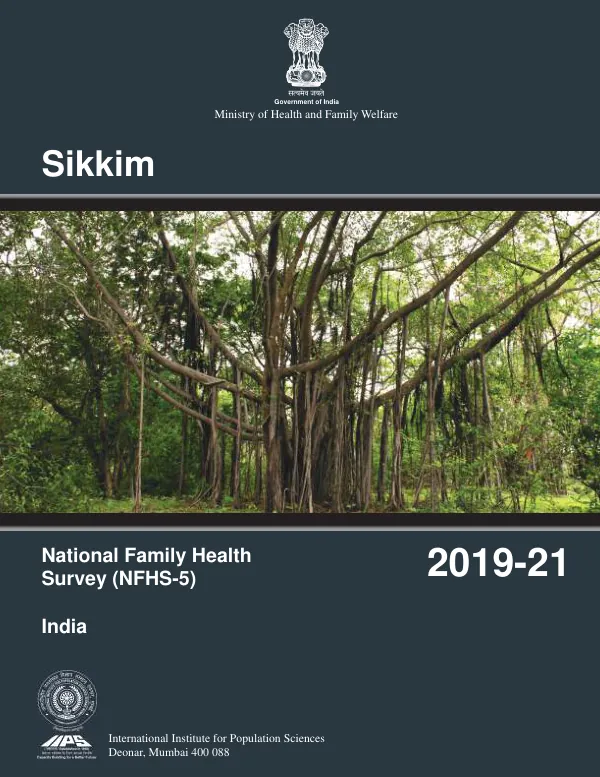
National Family Health Survey (NFHS-5), India, 2019-21: Sikkim
The National Family Health Survey (NFHS-5) in Sikkim, India, was conducted between 2019 and 2021.
2021 · 186 pages
Sign in to readA free account is required to download.
Abstract
The survey aimed to provide information on various health and family welfare indicators in the state. The data was collected through household and individual interviews, with a total of 3,500 households and 14,000 individuals participating in the survey. The survey found that the average household size in Sikkim was 4.3 members, with a literacy rate of 86.6% among the population aged 7 years and above. The survey also reported that 71.4% of the population in Sikkim had access to a toilet facility, while 22.1% of the households had a television set. The survey further revealed that 44.1% of the children aged 6-11 years were attending preschool, while 83.4% of the children aged 5-14 years were attending school. The fertility trends in Sikkim showed that the total fertility rate (TFR) was 1.8 children per woman, which is below the replacement level of 2.1 children per woman. The survey also reported that 44.1% of the women aged 15-49 years had ever used a modern contraceptive method, while 24.5% of the women had used a modern contraceptive method in the last 12 months. The survey further found that 12.1% of the women had an unmet need for family planning, while 5.5% of the women had an unmet need for spacing. The survey also reported on various maternal and child health indicators in Sikkim. The survey found that 94.1% of the births in the last 12 months were institutional deliveries, while 85.6% of the births were attended by a skilled birth attendant. The survey further reported that 73.4% of the children aged 12-23 months had received all the recommended vaccinations, while 92.1% of the children aged 12-23 months had received the measles vaccine. The survey also reported on various indicators related to women's empowerment and domestic violence in Sikkim. The survey found that 83.4% of the women aged 15-49 years had participated in decision-making on household purchases, while 74.1% of the women had participated in decision-making on healthcare. The survey further reported that 12.1% of the women had experienced physical violence from their husbands in the last 12 months, while 6.3% of the women had experienced sexual violence from their husbands in the last 12 months. The survey also reported on various indicators related to HIV/AIDS and sexual behavior in Sikkim. The survey found that 0.2% of the population aged 15-49 years had ever tested for HIV, while 0.1% of the population had tested positive for HIV. The survey further reported that 5.5% of the men aged 15-49 years had ever had sex with a non-regular partner, while 2.1% of the men had ever had sex with a non-regular partner in the last 12 months. The survey also reported on various indicators related to adult health and healthcare in Sikkim. The survey found that 83.4% of the adults aged 15-59 years had received a medical check-up in the last 12 months, while 74.1% of the adults had received a dental check-up in the last 12 months. The survey further reported that 71.4% of the adults had received a blood pressure check-up in the last 12 months, while 64.5% of the adults had received a blood sugar check-up in the last 12 months. Overall, the NFHS-5 survey in Sikkim provided valuable information on various health and family welfare indicators in the state. The survey highlighted the progress made in various areas, including fertility, maternal and child health, women's empowerment, and adult health. However, the survey also highlighted the areas where further improvement is needed, including access to toilet facilities, preschool attendance, and HIV/AIDS awareness.