USAID DEC
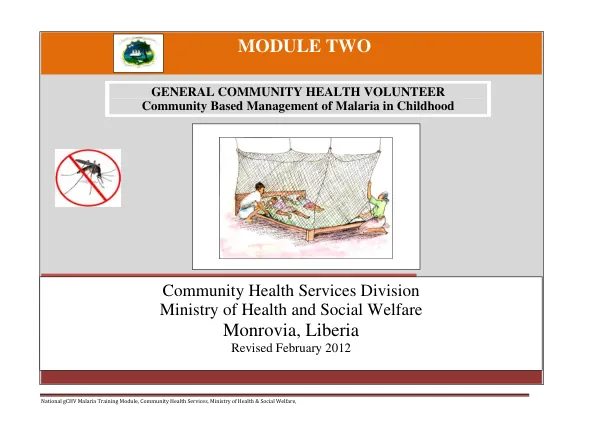
National gCHV Malaria Training Module: Community Based Management of Malaria in Childhood
Sign inJSI RESEARCH & TRAINING INSTITUTE, INC
National gCHV Malaria Training Module: Community Based Management of Malaria in Childhood
Malaria is a significant public health concern in Liberia, with an estimated 1 in 3 clinic visits attributed to malaria complaints.
2012 · 29 pages
Sign in to readA free account is required to download.
Abstract
Children under 5 years old are particularly vulnerable, with some experiencing malaria up to 5 times a year. The Community Case Management program aims to empower community members, particularly gCHVs, to take an active role in preventing and treating malaria in their communities. The program focuses on community-based management of malaria in childhood, with a strong emphasis on prevention and early treatment. gCHVs are trained to identify signs and symptoms of malaria, including fever, weakness, body or joint pains, poor appetite, vomiting, and chilling. They are also equipped to manage children with malaria, using a combination of paracetamol and ACT malaria medicine, and to provide follow-up care to ensure the child's recovery. Prevention is a critical component of the program, with a focus on the use of Insecticide Treated Nets (ITNs) and Indoor Residual Spraying (IRS). gCHVs are trained to educate community members on the importance of using ITNs correctly, caring for them properly, and making them available in the community. They also learn about the benefits of IRS, a method of spraying insecticides on walls and ceilings to kill mosquitoes. The program also emphasizes the importance of early treatment and referral. gCHVs are trained to identify danger signs of malaria, such as difficulty breathing, convulsions, and unconsciousness, and to make quick referrals to health facilities when necessary. They are also equipped to use Rapid Diagnostic Tests (RDTs) to diagnose malaria. In addition to their technical skills, gCHVs are also trained to provide counseling and support to mothers and caregivers. They learn how to educate community members on malaria prevention and control measures, including the use of ITNs, IRS, and mosquito repellents. They also learn how to counsel mothers on the importance of seeking early treatment and how to manage children with malaria at home. The program's goals are ambitious, with a focus on empowering community members to take ownership of malaria prevention and control. By training gCHVs to provide community-based management of malaria, the program aims to reduce the burden of malaria in Liberia and improve the health and well-being of children and pregnant women. The training module for gCHVs covers a range of topics, including the causes and symptoms of malaria, prevention and control measures, and management of children with malaria. The module emphasizes the importance of early treatment and referral, and provides gCHVs with the skills and knowledge they need to provide effective community-based management of malaria. In terms of implementation, the program relies on a network of gCHVs who are trained to provide community-based management of malaria. These gCHVs are volunteers who are not paid, but are supported by the community through work on their farms or other incentives. The program also relies on a supply chain for malaria medicines and equipment, including ITNs and RDTs. Overall, the National gCHV Malaria Training Module is a critical component of Liberia's efforts to control and prevent malaria. By empowering community members to take an active role in malaria prevention and control, the program aims to reduce the burden of malaria in Liberia and improve the health and well-being of children and pregnant women.
Related documents
Documents in this collection
 2012
2012USAID DEC
Re-analysis and interpretation of 2011 Liberia malaria indicator survey data to provide project-specific estimates for select malaria indicators
Open record 2012
2012USAID DEC
National gCHV Diarrhea Training Module, Community Health Services, Ministry of Health & Social Welfare, Liberia
Open record