USAID DEC
National gCHV Diarrhea Training Module, Community Health Services, Ministry of Health & Social Welfare, Liberia
Sign inJSI RESEARCH & TRAINING INSTITUTE, INC
National gCHV Diarrhea Training Module, Community Health Services, Ministry of Health & Social Welfare, Liberia
Community Health Volunteers (gCHVs) play a crucial role in managing diarrhea in childhood in Liberia.
2012 · 23 pages
Sign in to readA free account is required to download.
Abstract
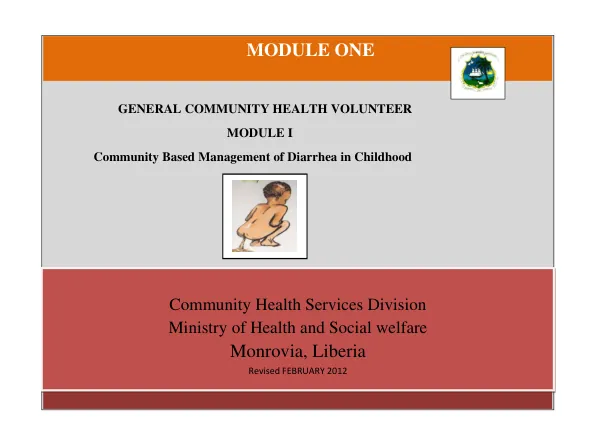
The National gCHV Diarrhea Training Module, developed by the Community Health Services Division of the Ministry of Health and Social Welfare, aims to equip gCHVs with the necessary knowledge and skills to identify, assess, and manage cases of diarrhea in children. The module emphasizes the importance of understanding the causes of diarrhea, which include drinking unsafe water, poor hygiene, and malnutrition. Germs, which are microscopic organisms that can be found in stool, urine, saliva, blood, and other bodily fluids, are a primary cause of diarrhea. These germs can be spread through contaminated food and water, as well as through direct contact with an infected person. The module outlines the signs and symptoms of diarrhea, including the passing of three or more water stools in one day. It also highlights the importance of identifying dehydration, which can be a life-threatening complication of diarrhea. Dehydration occurs when the body loses more fluids than it takes in, causing a decrease in blood volume and potentially leading to organ failure. The module provides a framework for gCHVs to assess a child with diarrhea, including asking questions, observing the child's condition, and classifying the severity of dehydration. It also outlines the four rules for home treatment of diarrhea, which include giving extra fluids, continuing to feed the child, giving zinc tablets, and knowing when to return to the health facility. In addition to managing cases of diarrhea, the module emphasizes the importance of prevention. It provides guidance on how to make water safe for drinking, including steps such as boiling, chlorination, and sand filtration. The module also highlights the importance of good hygiene practices, such as washing hands frequently, especially during important times like before eating and after using the toilet. The module's objectives include knowing the meaning of diarrhea, identifying causes of diarrhea, determining referral conditions, assessing a child with diarrhea, managing cases of diarrhea, and counseling caregivers on prevention. By equipping gCHVs with the necessary knowledge and skills, the module aims to improve the health outcomes of children in Liberia and reduce the burden of diarrhea on the healthcare system. The module's emphasis on community-based management of diarrhea is in line with the Ministry of Health and Social Welfare's strategy to strengthen community health services and improve access to healthcare for rural and underserved populations. By empowering gCHVs to manage cases of diarrhea in their communities, the module aims to reduce the number of children who die from diarrhea and improve the overall health and well-being of children in Liberia. The module's focus on prevention and community-based management is also in line with global efforts to reduce the burden of diarrhea on healthcare systems. The World Health Organization (WHO) and UNICEF have emphasized the importance of community-based management of diarrhea and the need for healthcare workers to be equipped with the necessary knowledge and skills to manage cases of diarrhea in their communities. Overall, the National gCHV Diarrhea Training Module is an important resource for gCHVs in Liberia, providing them with the necessary knowledge and skills to manage cases of diarrhea in children and improve the health outcomes of their communities.