TECHNOSERVE, INC.
Natural Resource Product Sector Analysis – Moringa, Tamarind, and Dawadawa
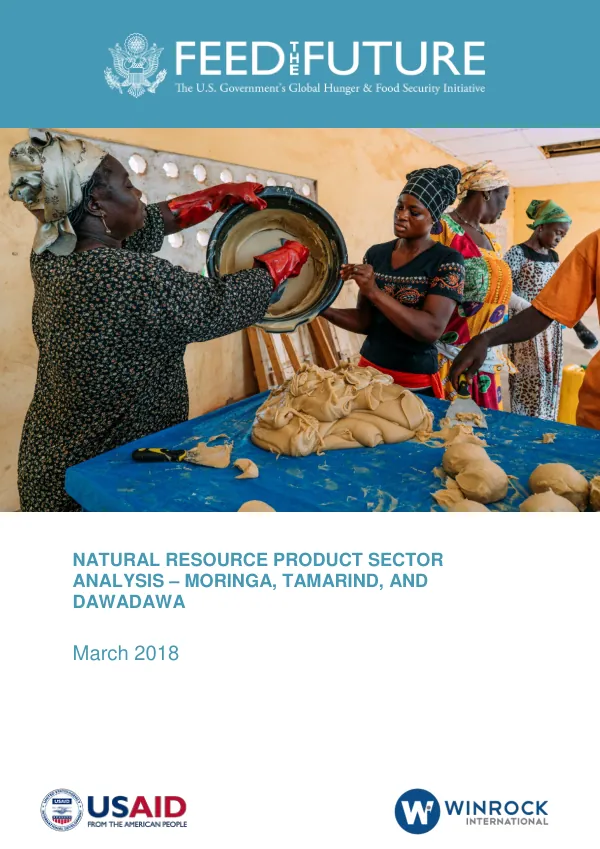
The Ghana Agriculture and Natural Resource Management Project initiated a sector analysis of the natural resource product (NRP) sector, focusing on moringa, tamarind, and dawadawa.
2018 · 51 pages
Sign in to readA free account is required to download.
Abstract
The analysis aimed to understand the role of NRPs in the Ghanaian economy, market dynamics, and constraints to the NRP trade. The NRPs play a significant role in the Ghanaian economy, with moringa, tamarind, and dawadawa being among the most traded products. Market dynamics indicate that the demand for these products is increasing, driven by growing consumer awareness of their health benefits and potential uses. However, the NRP trade faces several constraints, including limited access to markets, inadequate infrastructure, and lack of certification schemes. The moringa value chain is characterized by a diverse range of uses, including food, medicine, and cosmetics. The crop is grown in various parts of Ghana, with the CREMAs (Community Resource Management Areas) being the primary production areas. The value chain actors involved in the moringa trade include farmers, processors, and traders. The commercial potential of moringa is significant, with the crop being exported to several countries, including the United States and Europe. The tamarind value chain is also diverse, with the crop being used in various products, including food, beverages, and cosmetics. The crop is grown in several parts of Ghana, with the CREMAs being the primary production areas. The value chain actors involved in the tamarind trade include farmers, processors, and traders. The commercial potential of tamarind is also significant, with the crop being exported to several countries. The dawadawa value chain is characterized by a limited range of uses, primarily as a spice and ingredient in traditional dishes. The crop is grown in several parts of Ghana, with the CREMAs being the primary production areas. The value chain actors involved in the dawadawa trade include farmers, processors, and traders. The commercial potential of dawadawa is limited, with the crop being primarily traded within Ghana. A SWOT analysis of the moringa, tamarind, and dawadawa value chains reveals several strengths, weaknesses, opportunities, and threats. The strengths of the value chains include the potential for export growth, increasing demand for the products, and the presence of certification schemes. However, the weaknesses include limited access to markets, inadequate infrastructure, and lack of technology and knowledge. The opportunities include the potential for value addition and processing, while the threats include competition from other countries and the impact of climate change. The analysis concludes that the NRPs have significant commercial potential, with the moringa and tamarind value chains being the most promising. The dawadawa value chain is limited by its narrow range of uses and limited commercial potential. Recommendations include the development of certification schemes, improvement of infrastructure, and promotion of value addition and processing.