USAID DEC
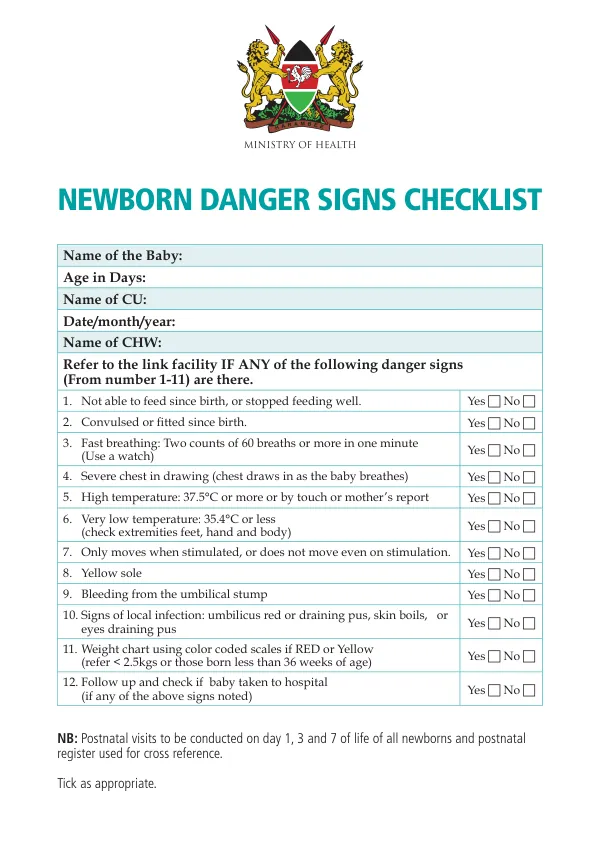
Newborn Danger Signs Checklist
The Newborn Danger Signs Checklist is a tool used to identify potential health risks in newborns.
2014 · 1 pages
Sign in to readA free account is required to download.
Abstract
The checklist includes 12 danger signs that may indicate a need for medical attention. These signs are categorized into several areas, including feeding, breathing, temperature, movement, and overall health. The checklist includes questions about the baby's ability to feed, such as whether the baby has stopped feeding well since birth. It also asks about convulsions or convulsions since birth, which can be a sign of a neurological issue. The checklist also includes questions about breathing, including high or low breathing rates, and whether the baby's chest draws in as they breathe. In addition to feeding and breathing, the checklist includes questions about the baby's temperature, such as whether the baby has a high or low temperature. It also asks about the baby's movement, including whether the baby moves when stimulated or not. The checklist also includes questions about the baby's skin and umbilical cord, such as whether the umbilical stump is bleeding or has signs of infection. The checklist also includes a question about the baby's weight, specifically whether the baby's weight chart is red or yellow on a scale. This is important for identifying babies who are underweight or at risk for malnutrition. Finally, the checklist includes a question about whether the baby has been taken to the hospital for any of the above signs. The Newborn Danger Signs Checklist is typically used during postnatal visits, which are conducted on day 1, 3, and 7 of the baby's life. These visits are an important opportunity for healthcare providers to assess the baby's health and identify any potential issues early on. The checklist is used to cross-reference the baby's health status and identify any babies who may need further medical attention. The checklist is designed to be simple and easy to use, with a yes or no answer for each question. This makes it easy for healthcare providers to quickly identify potential issues and take action to address them. By using the Newborn Danger Signs Checklist, healthcare providers can help identify and address potential health risks in newborns, which can improve health outcomes and improve the health and well-being of these vulnerable individuals.