USAID DEC
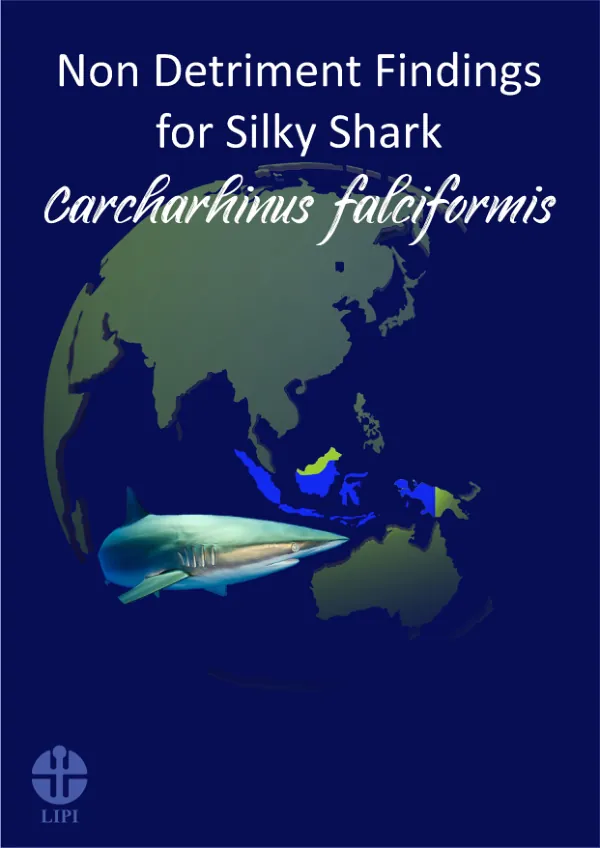
Non-Detriment Findings for Silky Shark (Carcharhinus falciformis)
The silky shark (Carcharhinus falciformis) is one of the most common shark species in Indonesia, with a large number captured every year for both local and international markets.
2019 · 88 pages
Sign in to readA free account is required to download.
Abstract
The species is well utilized for its body parts, including fins, meat, bones, skin, and teeth, as well as various derivative products. To address the utilization of this species in Indonesia, a management mechanism is necessary according to the CITES rules. The silky shark has a complex life history, with varying estimates of age at maturity, size at maturity, and pup size. Studies have reported different values for these characteristics, including age at maturity ranging from 5-6 years to 14-16 years, size at maturity ranging from 200-206 cm to 232-245 cm, and pup size ranging from 55-72 cm to 76 cm. The maximum age and size of the silky shark have also been reported to vary, with estimates ranging from 20-35.8 years and 245-332 cm, respectively. The silky shark is a species of concern due to its slow growth rate, long life span, and slow advance to sexual maturity. These biological characteristics make the species susceptible to high mortality rates due to fishing activities. Over-exploitation of the silky shark can lead to its extinction, making it essential to implement management measures to control the level of capture. The Indonesian government has issued the National Plan of Action for Sharks (NPOA-Sharks) since 2010, adopting the International Plan of Action for Conservation and Management of Sharks (IPOA Sharks) developed by FAO. The NPOA addresses key aspects of management measures, including reviewing the status of elasmobranch fisheries, managing data collection, research improvement, and public awareness for conservation. The silky shark is listed in CITES Appendix II, and its international trade is regulated by the Convention. The Indonesian Institute of Sciences (LIPI) is the scientific authority delegated to provide the Non-Detriment Findings (NDF) document for the silky shark, which is an instrument endorsed by CITES convention used as the basis for managing the fishery and trades of this species. The NDF document for the silky shark contains up-to-date information about the status of the species in Indonesia, including biological aspects, fisheries, socio-economics, and management options or recommendations based on the latest relevant data. The data presented in the document were taken from various literatures, catch data, and research findings in Indonesia. The silky shark is an important species in Indonesian waters, with a significant impact on the country's fisheries and economy. However, its over-exploitation poses a threat to the sustainability of its natural stocks. Therefore, it is essential to implement effective management measures to control the level of capture and ensure the long-term conservation of the silky shark population in Indonesia.