CENTER FOR EDUCATIONAL DEVELOPMENT
NORTHERN EDUCATION INITIATIVE PLUS | Y3 Q3 Quarterly Report
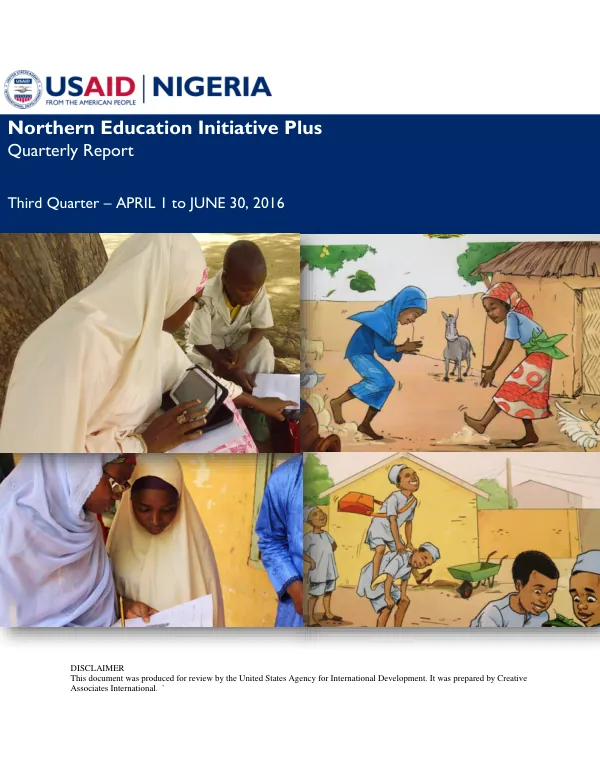
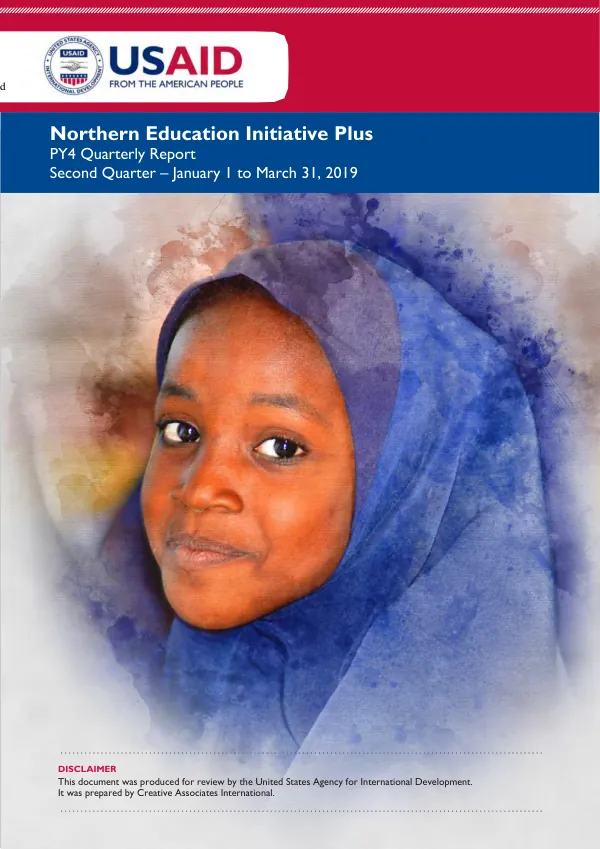
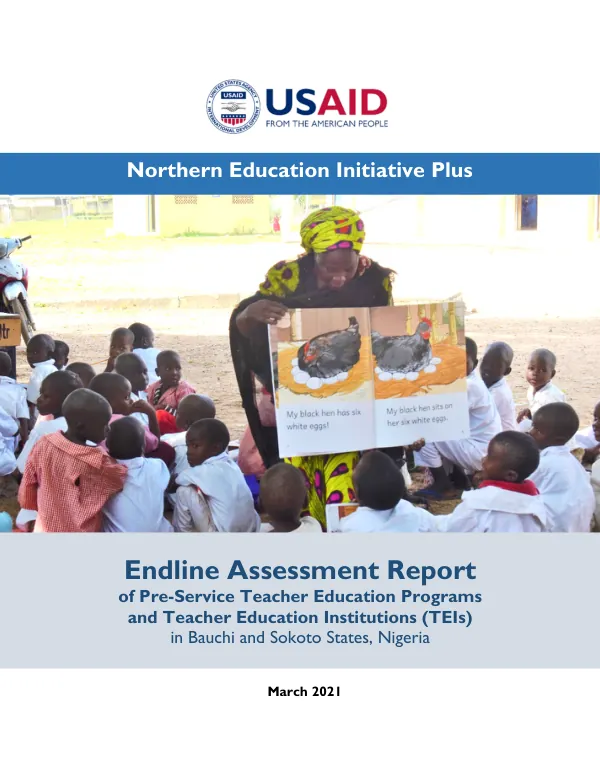
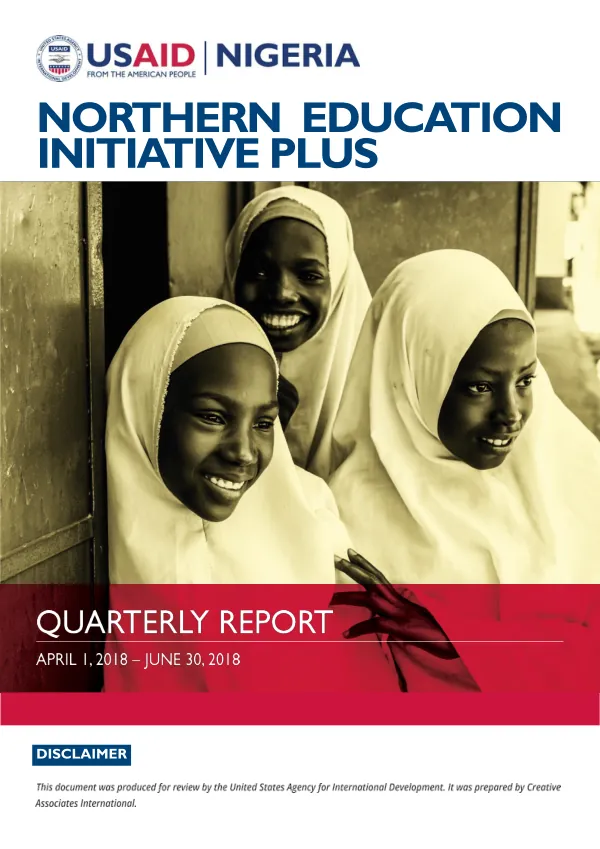
The Northern Education Initiative Plus (NEIP) is a program aimed at improving education outcomes in Bauchi and Sokoto states in Nigeria.
2018 · 125 pages
Sign in to readA free account is required to download.
Abstract
The program began on October 26, 2015, and is set to conclude on October 25, 2020. The program is funded by the United States Agency for International Development (USAID) through contract number AID-620-C-15-00002. The program's primary objective is to strengthen government systems to increase the number of students enrolled in appropriate, relevant, and approved educational options, particularly for girls and out-of-school children (OOSC) in target locations. To achieve this goal, the program focuses on increasing the number of educational options that meet school quality and safety benchmarks, strengthening systematic approaches to school management and supervision, and ensuring education for vulnerable children and youth through a standardized non-formal learning center (NFLC) model. The program also aims to improve reading outcomes for primary grade learners in target locations. To achieve this goal, the program focuses on improving state and local government education authority (LGEA) policies, timetables, and standards for reading instruction and performance, as well as improving state and LGEA systems for development, approval, and distribution of decidable readers, teacher guides, and supplementary materials for early grade reading (EGR) instruction. The program's implementation challenges include ensuring the adoption of evidence-based reading materials, addressing equipment costs for irrigation techniques, and increasing the number of educational options that meet school quality and safety benchmarks. To address these challenges, the program has implemented various interventions, including farmer training programs, infrastructure development, and market linkage facilitation. The program's monitoring and evaluation framework includes regular progress updates, quarterly reports, and annual reports. The program's performance monitoring and evaluation plan (PMEP) is used to track progress towards program objectives and identify areas for improvement. The program's cross-cutting issues and USAID forward priorities are also integrated into the program's implementation and monitoring framework. The program has made significant progress in achieving its objectives, including increasing the number of educational options that meet school quality and safety benchmarks, improving reading outcomes for primary grade learners, and strengthening government systems to support education in Bauchi and Sokoto states. The program's success stories include the establishment of non-formal learning centers, the training of teachers in evidence-based reading materials, and the improvement of reading outcomes for primary grade learners. The program's geographic coverage includes Bauchi and Sokoto states, with a focus on improving education outcomes for girls and OOSC in target locations. The program's major counterpart organizations include the Federal Ministry of Education (FMoE), the Nigerian Educational Research and Development Council (NERDC), the National Commission for Colleges of Education (NCCE), and the Universal Basic Education Commission (UBEC). The program's implementation is led by Creative Associates International, with subcontractors including Education Development Center (EDC), Florida State University (FSU), Overseas Strategic Consulting (OSC), and Value Minds. The program's monitoring and evaluation framework is led by the program's monitoring and evaluation team, with support from the program's implementing partners and counterpart organizations.
Related documents