FLORIDA INTERNATIONAL UNIVERSITY
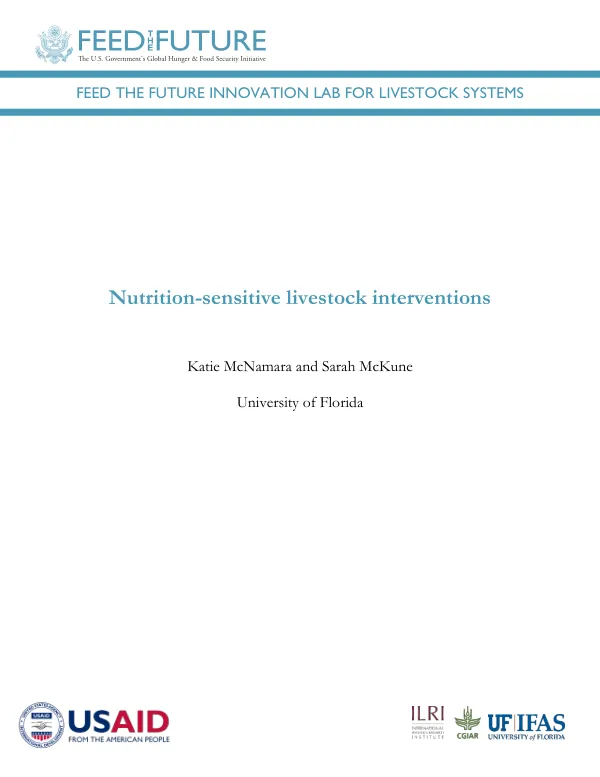
Nutrition-sensitive livestock interventions
Sustainably intensifying smallholder livestock systems to improve human nutrition, health, and incomes is a key objective of the Feed the Future Innovation Lab for Livestock Systems.
2018 · 14 pages
Sign in to readA free account is required to download.
Abstract
Nutrition-sensitive livestock interventions (NSLPs) have been identified as a promising strategy for improving household dietary diversity and local production of agricultural products. These interventions focus on the underlying determinants of malnutrition, such as access, availability, and quality of food, rather than addressing the immediate causes of malnutrition. Livestock-oriented interventions have traditionally focused on livestock transfers for income generation and poverty reduction, with secondary benefits for nutritional improvement through consumption of animal source food (ASF). However, recent impact evaluations of livestock transfer programs in Nepal and Rwanda have demonstrated the potential for more specific targeting of nutrition outcomes in livestock projects. Livestock ownership is connected to human health and nutrition through economic gains via livestock sale, own-consumption of ASF, and nutrient cycling of livestock waste into food crop production. The underlying determinants of malnutrition include a vast range of factors that influence the availability of and access to diverse, nutritious food, as well as appropriate consumption of food. Nutrition-sensitive interventions in livestock target various underlying determinants, including poor livestock production efficiency, intrahousehold inequality in access to livestock and ASF, and lack of knowledge and/or lack of traditional knowledge and practice regarding preparation of nutritious foods. Three primary approaches for NSLPs were identified: capacity building, creating or improving the enabling environment, and targeting the food chain. Capacity building refers to technical skill-building or education that improves the knowledge and practice of intervention participants surrounding livestock production and nutrition. Gender considerations are particularly key to these approaches, as the involvement of both men and women in health education and interventions is shown to be an important determinant of their successful uptake. Interventions that seek to create or improve the enabling environment for NSLPs target improvements in intersectoral collaboration and policy change that support the needs of local smallholders from both a production and consumption standpoint. Understanding the existing political and institutional environment and how institutions interact and coordinate their efforts are critical factors. The third approach aims to address needs within the livestock value chain at each stage of livestock rearing from breeding, production, through marketing and consumption. The potential target areas for nutrition-sensitive interventions in livestock are diverse, and NSLPs often focus on several underlying determinants of malnutrition simultaneously. Effective tailoring to the socio-cultural, economic, agro-ecological, and political context of the project site is critical to achieving the desired outcomes and impact associated with nutrition-sensitive interventions.
Related documents