USAID DEC
Observaciones Electorales en el Municipio de Meta
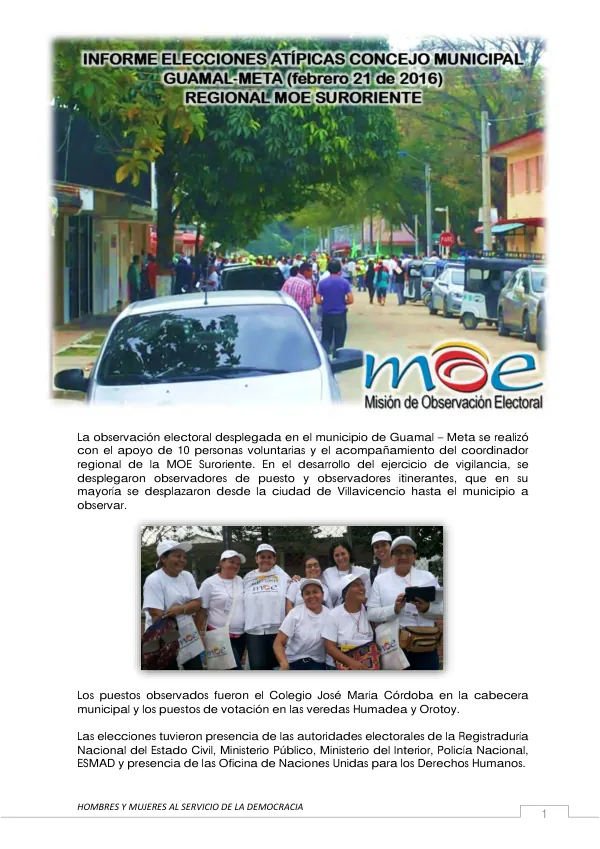
The electoral observation in the municipality of Guamal – Meta was conducted with the support of 10 volunteers and the accompaniment of the regional coordinator of the MOE Suroriente.
2016 · 5 pages
Sign in to readA free account is required to download.
Abstract
The observation involved both fixed observers and itinerant observers, who primarily traveled from Villavicencio to the municipality to observe. The observed polling stations were located at the José María Córdoba College in the municipal capital and at the polling stations in the Humadea and Orotoy hamlets. The elections were attended by electoral authorities from the National Civil Registry, the Public Ministry, the Ministry of the Interior, the National Police, ESMAD, and representatives from the United Nations Office for Human Rights. The entrance to the municipality was secured by the Army and the National Police through control points. In the municipal capital and at the polling station, there was a permanent presence of National Police antidisturbance personnel. According to information provided by the electoral observers, the police informed them that gatherings were prohibited to prevent disruptions to public order. The Police National antidisturbance squadron cordoned off the polling station 30 minutes before the voting deadline to prevent disruptions to the counting and scrutiny process. In the park located behind the municipality's parish, people were found engaging in political proselytism in favor of Radical Change and Conservative Party candidates. Two "information points" were found at the entrance to the polling station, and additional points were installed in the park. Political advertising was also found on the sides of buses, which are a common mode of transportation in the municipality. The polling stations observed were equipped with biometric control, with a total of 10 machines, following the protocol established by the National Civil Registry. The polling stations in the Orotoy and Humadea hamlets presented a calm atmosphere, with the presence of Registraduría personnel who had been transferred from other municipalities to cover the atypical elections. However, the polling station in Humadea did not have any electoral witnesses present at the time of the observation. The polling stations observed were not suitable for people with disabilities. In 33% of the polling stations observed, the six jurors were not present at the time of the opening of the polls. The remaining jurors were replaced by the substitutes designated by the Registraduría. None of the jurors wore any political campaign identifiers. In 22% of the polling stations observed, there was no presence of electoral witnesses. In the polling stations where witnesses were present, there were no reports of them wearing campaign identifiers or propaganda materials. According to the reports from the observers, 22% of the polling stations observed were not suitable for the conduct of the elections. Additionally, 100% of the observers' reports indicated that the polling stations were not suitable for people with disabilities. The development of the elections was characterized by a tense calm, with few reports of electoral irregularities. However, there were reports of people entering the polling stations and manipulating cell phones by electoral witnesses and jurors. In 11% of the polling stations observed, the total number of voters was not read from the format E-11, and in the same percentage of polling stations, the number of votes did not match or was less than the number of voters. Itinerant observers reported that people associated with the campaign of Radical Change candidate Henry Rozo were distributing meals at a restaurant owned by him. They also reported that Henry Alvarado, a candidate from the ASI party and the brother of the elected mayor, was distributing meals at the office of his brother, who was accompanied by Lina Calderon, the campaign manager of the elected candidate. The polling station had difficulties in mobilizing people with disabilities, as there were no ramps. There were also reports of the use of cell phones by voting jurors during the electoral process.
Related documents