AGA KHAN RURAL SUPPORT PROGRAMME
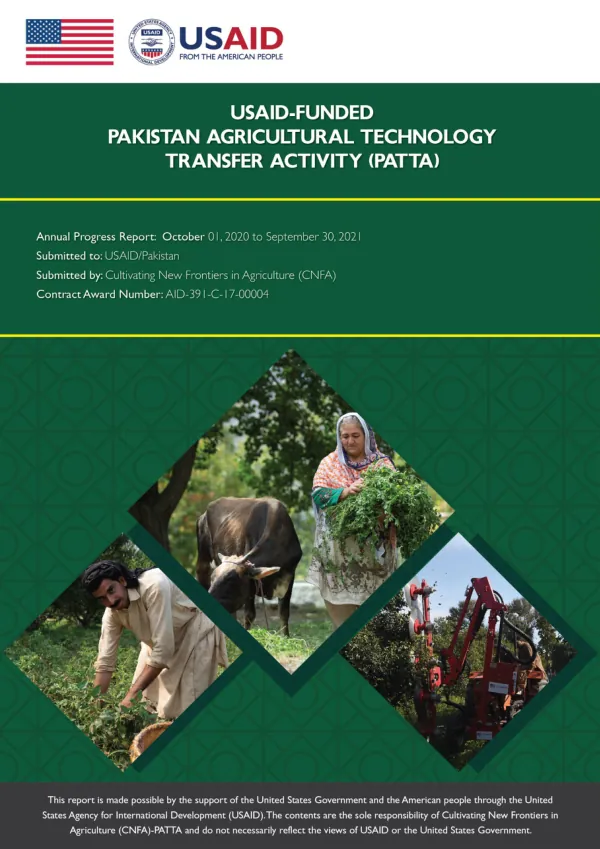
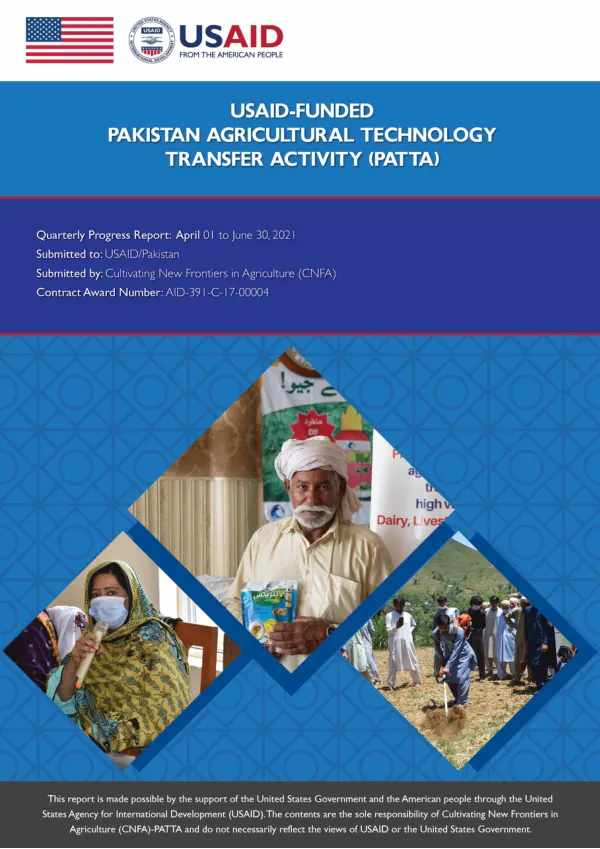
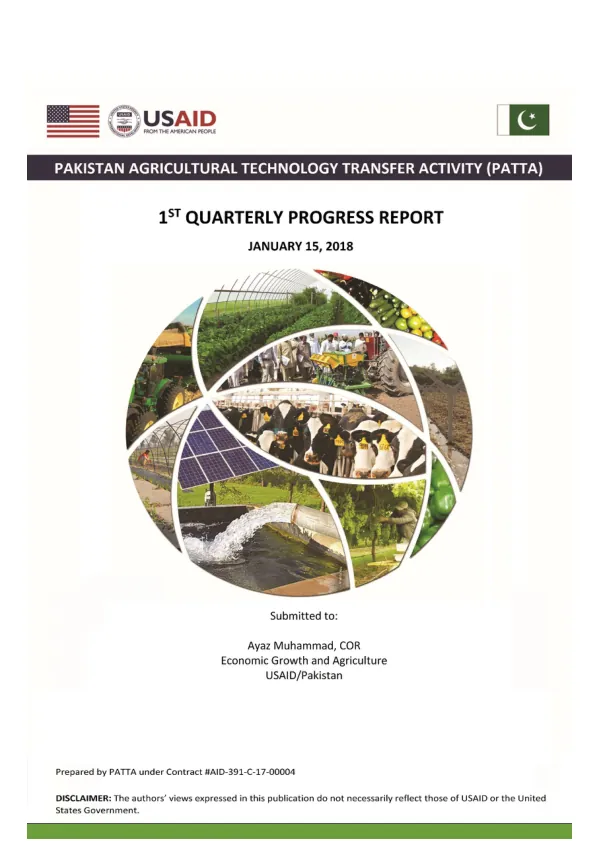
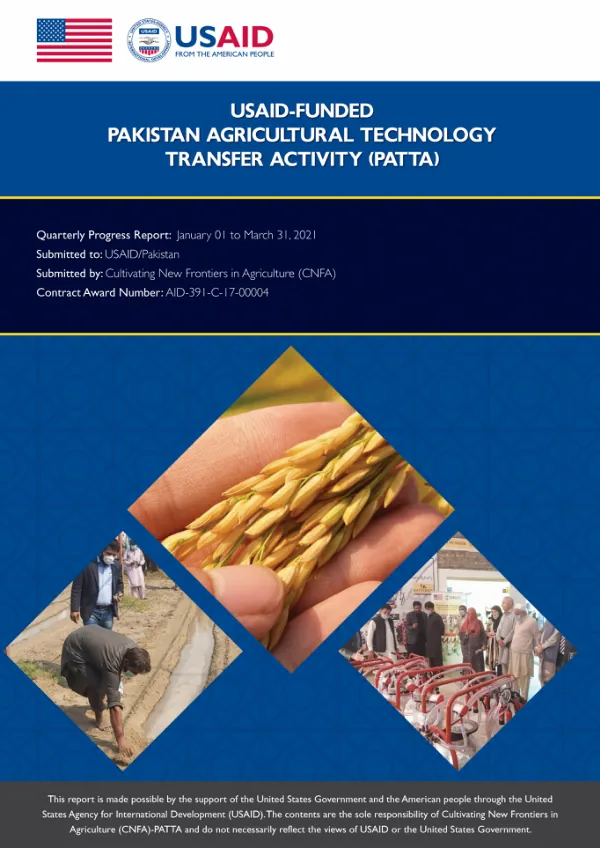
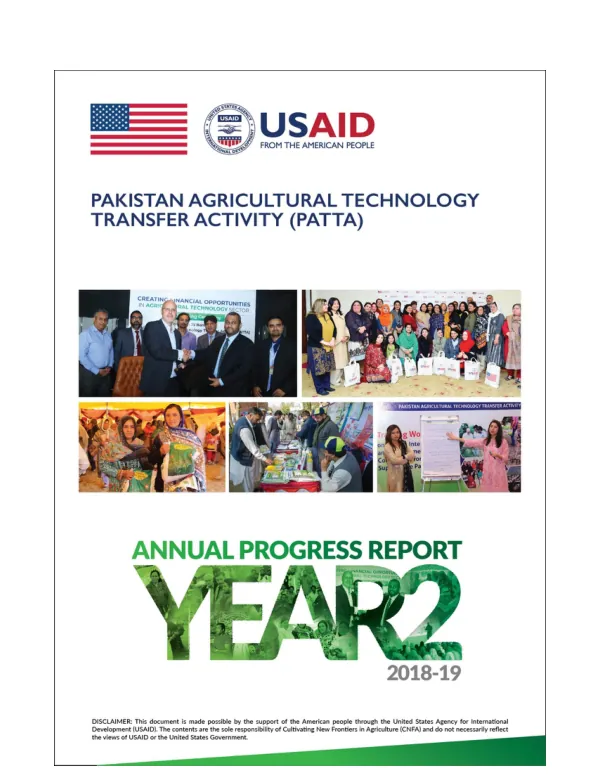
Pakistan Agricultural Technology Transfer Activity (PATTA) Annual Progress Report
The Pakistan Agricultural Technology Transfer Activity (PATTA) is a four-year, USAID-funded project aimed at increasing incomes and employment opportunities for beneficiaries in Pakistan's agricultural technology sector.
2019 · 118 pages
Sign in to readA free account is required to download.
Abstract
PATTA's core components include Agricultural Technology and Business Development and Marketing Services, which contribute to the overall project goal of increasing sales and employment opportunities for recipients of this unique technical assistance package. During Year 2 (October 1, 2018 - September 30, 2019), PATTA facilitated the commercialization of 161 agricultural and livestock technologies in Gilgit Baltistan, Punjab, Khyber Pakhtunkhwa, and Sindh provinces. This brought the total number of unique agricultural technologies commercialized in designated districts to 226. A total of 43,677 farmers applied the new technologies and practices, resulting in the incremental sale of technologies worth $10,122,304. These farmers have now achieved a cumulative increased incremental sales of their produce totaling up to almost $5,073,866. PATTA has also successfully facilitated the generation of 1,488 new Full-Time Equivalent (FTE) jobs. The project has continued engaging and partnering with its 10 Supply-Side Partners (SSPs) in the agri-business sector, and successfully signed Memorandum of Understanding (MOU) with an additional 27 new SSPs for a total of 37. Key initiatives in Year 2 included a Grapevine Canopy Management Training in Mardan, Selling Skills and Business Management Training for Demand-Side-Partners (DSPs), financial management training for SSPs' accounting staff, business plan development for 15 SSPs, marketing plan development for 10 SSPs, and development of Social and Behavior Change Communication (SBCC) campaigns. PATTA also placed strong emphasis on advocating for best practices and application of improved management practices at the SSP-level. For example, PATTA developed a comprehensive manual on health and safety to create awareness among SSPs on compliance with USAID's environmental guidelines and Pakistani environmental regulations. The capacity of SSPs was also built on environmental compliance through tailor-made training workshops. The project's collective efforts to nurture relationships with key agriculture sector stakeholders such as provincial agriculture departments and facilitating partners have been a highlight of this year. A Commitment of Collaboration (CoC) was signed with the Agriculture Departments of GB, Khyber Pakhtunkhwa, and Balochistan to jointly organize agricultural technology demonstrations and promote the uptake of affordable, new technologies among mobilized farmers. Partnerships were initiated with the World-Wide-Fund (WWF), the FAO ThAzA project, the Department of Agricultural Supply and Prices of the Government of Sindh, the Agha Khan Rural Support Program (AKRSP), and the Livestock Farmers Association Khyber Pakhtunkhwa. PATTA achieved other milestones, including increasing engagement between SSPs and DSPs to improve their overall business performance, management practices, and marketing. The project also organized five, two-day trainings for the sales force of SSPs to help private sector agricultural technology companies enhance their marketing and sales tactics to reach new farmers and territories and grow their ag technology portfolio. The project's focus on building tangible connections between SSPs and DSPs has been successful, with key initiatives including a Grapevine Canopy Management Training in Mardan, Selling Skills and Business Management Training for DSPs, financial management training for SSPs' accounting staff, business plan development for 15 SSPs, marketing plan development for 10 SSPs, and development of SBCC campaigns. The project's emphasis on advocating for best practices and application of improved management practices at the SSP-level has also been successful, with the development of a comprehensive manual on health and safety and tailor-made training workshops on environmental compliance. Overall, PATTA's efforts in Year 2 have been focused on promoting the commercialization of agricultural technologies, building capacity among SSPs and DSPs, and increasing engagement between the two groups to improve their overall business performance, management practices, and marketing. The project's collective efforts to nurture relationships with key agriculture sector stakeholders have also been successful, with the signing of a Commitment of Collaboration with provincial agriculture departments and the initiation of partnerships with various organizations.