CNFA, INC.
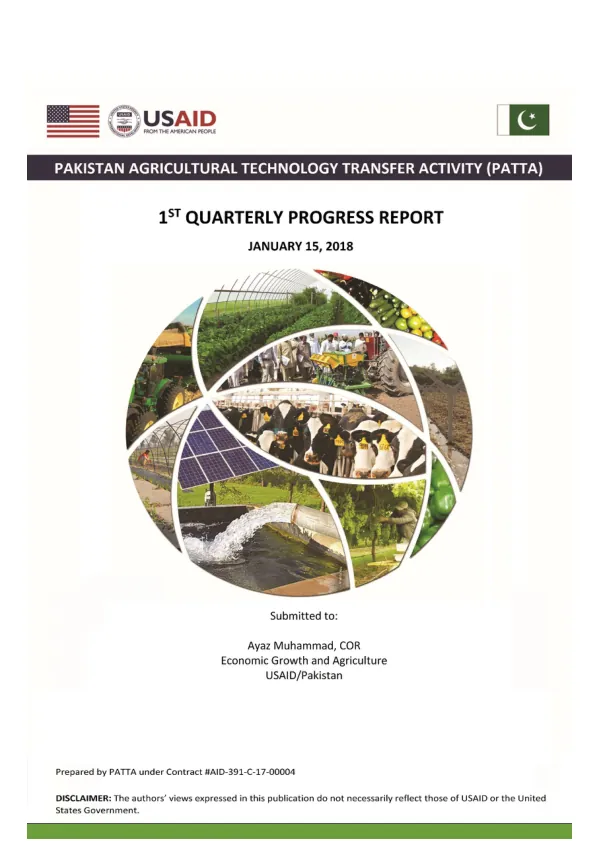
Pakistan Agricultural Technology Transfer Activity (PATTA) QPR Y1Q2
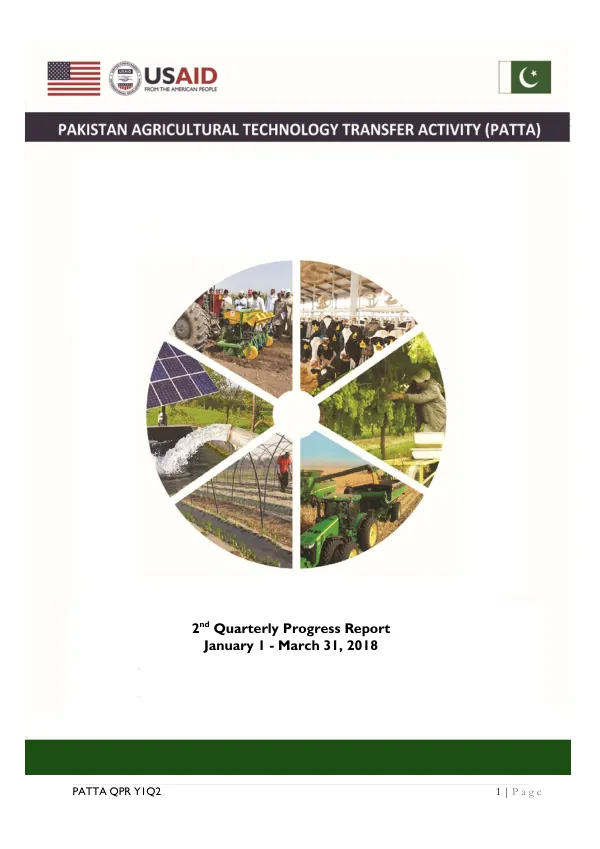
The Pakistan Agricultural Technology Transfer Activity (PATTA) project aims to improve agricultural productivity in Pakistan through a four-year activity.
2018 · 24 pages
Sign in to readA free account is required to download.
Abstract
The overall goal of the project is to contribute to the USAID development objective of improving the economic status of the focused population and sectors, with the purpose of increasing income and employment opportunities for project beneficiaries. To achieve this overarching goal, PATTA seeks to increase the capacity of agricultural technology-related businesses to commercialize technologies and practices, and increase the adoption of agricultural technologies by small farmers. The project expects to increase the adoption of at least five hundred technologies, practices, and practices by small farmers, with a focus on women, and benefit over 100,000 farmers, 20 percent of whom will be women. PATTA also aims to create at least USD 4.8 million in private sector capital investment and create 3,400 jobs. The project will target the commercialization of at least five hundred technologies, practices, and practices, and will implement a diverse range of cross-cutting activities, including marketing campaigns, demonstration activities, and dissemination of information. Since project inception, the project management team has organized activities in consultation with the USAID Contracting Officer (COR). During March 2018, the project team delivered briefings to potential business partners, other donor projects, and USAID programs, including the Secretary Agriculture Punjab, Federal Ministry of National Food Security and Research, and USAID officials. As a result of these meetings, the Federal Secretary has extended his support to the PATTA team and agreed to have further follow-up meetings. The project has also successfully acquired No Objection Certificates (NOCs) from the Government of Khyber Pakhtunkhwa (KP) on December 11, 2017, and from the Government of Gilgit Baltistan (GB) on March 22, 2018. The project is expecting NOC approvals from the governments of Sindh and Baluchistan within the next quarter. During this quarter, several key activities were carried out. A team of STTA consultants was engaged to compile the Agriculture Technology Baseline and Prioritization Study to capture the agricultural landscape in Pakistan across its major sectors, including the crop sector, horticulture sector, and livestock sector. The study aims to identify available agricultural technology-related businesses that manufacture, sell, and supply agricultural technologies for small commercial farmers. A rapid assessment activity was also carried out for Farm Service Centers (FSCs) in selected districts of Khyber Pakhtunkhwa, including Mardan, Peshawar, and Mansehra districts. The assessment aimed to identify technology and management gaps in livestock and horticulture/crop sectors, and to assist the project in creating a significant impact. Based on the findings of this assessment, the PATTA program team has planned to upgrade the technology of 16 FSCs in selected districts. The project has also implemented a Cost-Benefit Analysis (CBA) framework, which will be used to support technology prioritization and identify business cases for sustained private sector investments in technology transfer, adaptations, and outreach of these specific technologies to increase the income and yields of small farmers. The CBA will be conducted during the project life cycle to identify specific technologies and create business cases for sustained private sector investments.