CNFA, INC.
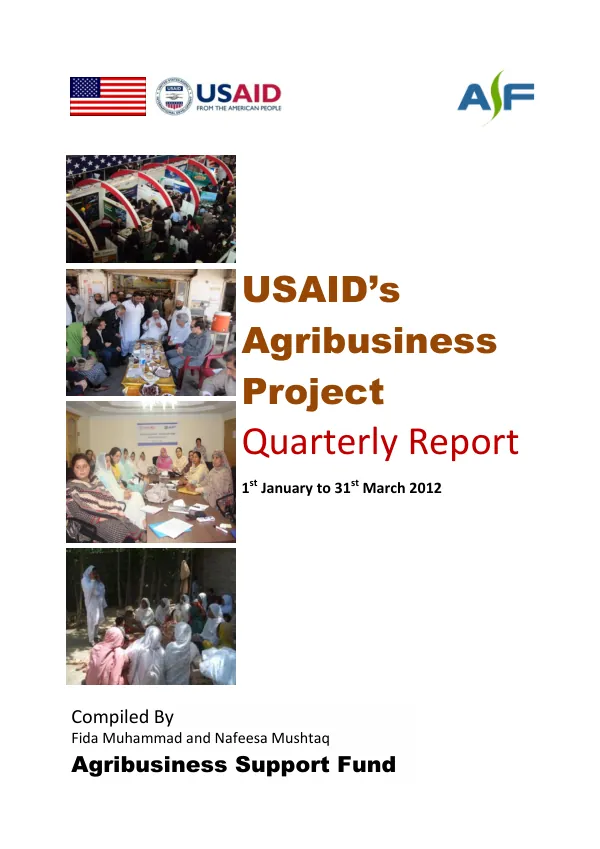
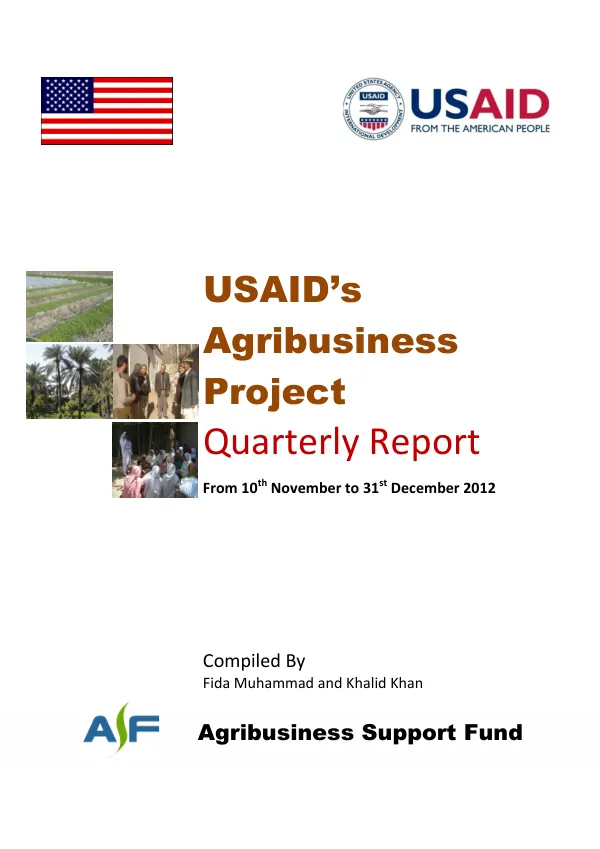
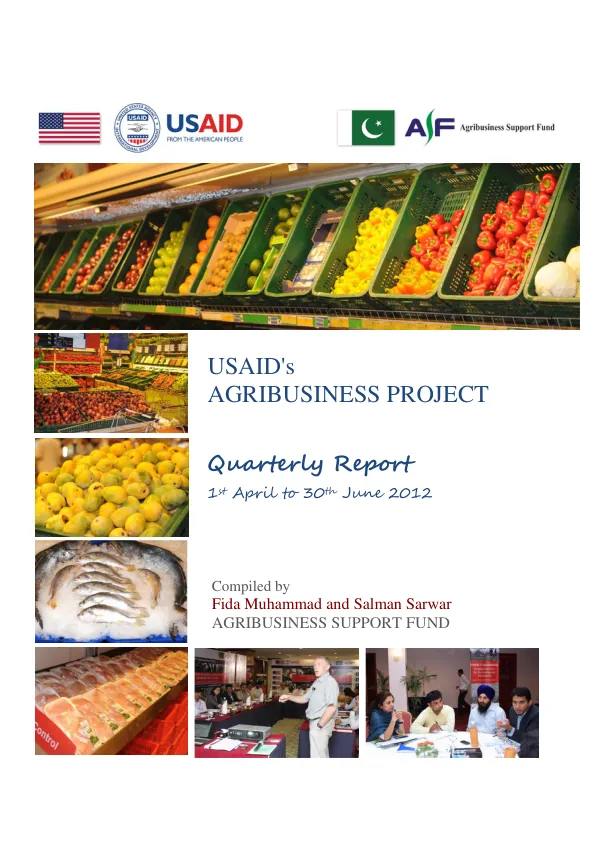
USAID’s Agribusiness Project Quarterly Report 1st April to 30th June 2012
The USAID's Agribusiness Project is a five-year initiative implemented by USAID in collaboration with the Agribusiness Support Fund (ASF).
2012 · 12 pages
Sign in to readA free account is required to download.
Abstract
The project commenced on November 10, 2011, and aims to strengthen the capacity in horticulture and livestock value chains to increase sales to domestic and foreign markets. The project targets the horticulture and livestock sub-sectors, including dairy and fisheries, and focuses on improving and strengthening off-farm and on-farm activities. The project's overall goal is to support improved conditions for broad-based economic growth, create employment opportunities, and contribute to poverty alleviation through increased competitiveness of horticulture and livestock value chains. The specific objectives of the project are to strengthen the capacity of smallholders and farmer enterprises to operate autonomously and effectively, increase agriculture efficiency and productivity through adoption of new farming techniques and technological innovation, and strengthen the capacity in horticulture and livestock value chains to increase sales to domestic and foreign markets. The project activities are organized under two components: technical assistance (TA) for capacity building and program support, and partnership window-cost-sharing grants. Component-1 encompasses four sub-components, including international technical assistance and program delivery support, international market linkages development, Kissan Field Schools (KFS), and capacity building, training, and awareness. Component-2 involves launching a national cost-sharing grants program to provide customized and demand-based matching grant products to all players within the selected priority value chains. During the quarter from April 1 to June 30, 2012, major activities undertaken included mobilization of human resources for the start-up phase, recruitment of staff, establishing or renting office premises, mobilization of staff of CNFA, development of a plan for conducting public consultations for scoping statement regarding environmental assessment, conducting participatory rapid horticulture and livestock appraisals, and launching of the first grant cycle. A total of 158 staff positions were filled out by the end of the quarter, including 130 male and 28 female incumbents. The project has made significant progress in staffing, with 27 persons recruited during the quarter, including 7 female candidates. The project has also made progress in work planning and progress review, which provides an opportunity to review and adjust project activities as needed. The project has also launched the first grant cycle, which aims to provide customized and demand-based matching grant products to all players within the selected priority value chains. The project has incurred a total of $2,020,967 in accrued expenditures during the quarter, bringing the cumulative total to $2,933,673. The estimated expenditures for the next quarter are $2,500,000. The project has also made progress in developing management processes and mechanisms, particularly for grant appraisal and approval. Overall, the USAID's Agribusiness Project has made significant progress in its first year of implementation, with a focus on strengthening the capacity in horticulture and livestock value chains to increase sales to domestic and foreign markets. The project has also made progress in staffing, work planning, and grant implementation, and has incurred significant expenditures during the quarter.
Related documents