USAID DEC
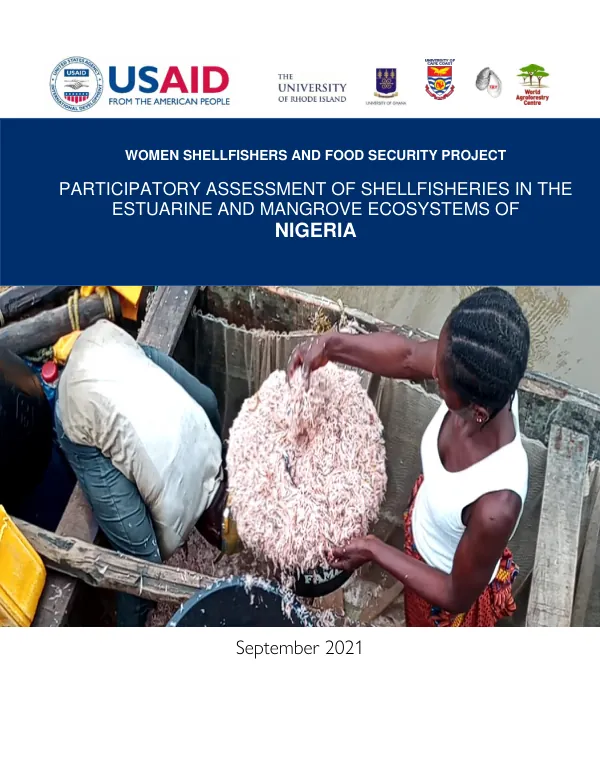
Participatory Assessment of Shellfisheries in the Estuarine and Mangrove Ecosystems of Nigeria
Sign inCOASTAL RESOURCES CENTER
Participatory Assessment of Shellfisheries in the Estuarine and Mangrove Ecosystems of Nigeria
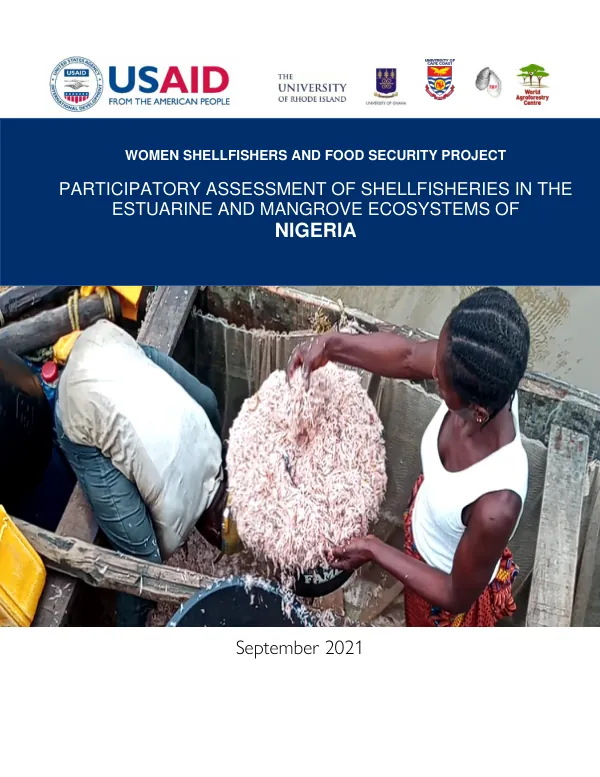
The Women Shellfishers and Food Security Project in Nigeria aimed to assess the status of shellfisheries in the estuarine and mangrove ecosystems of the country.
2021 · 28 pages
Sign in to readA free account is required to download.
Abstract
The project was conducted in collaboration with various partners, including the Centre for Coastal Management (CCM), the Coastal Resources Center (CRC), and the University of Ghana. The study sites included several communities along the Nigerian mangrove coast, where shellfishers were surveyed to gather information on their activities, catch, and revenue. The survey revealed that shellfish exploitation was a significant source of income for many households, with an estimated 10,000 shellfishers involved in the industry. Women played a crucial role in shellfish exploitation, with 70% of respondents indicating that women were involved in the activity. The study found that shellfishing was a primary occupation for many households, with 60% of respondents indicating that it was their main source of income. The shellfish value chain was complex, involving multiple stakeholders, including fishermen, processors, and traders. The most commonly harvested species were Penaeus notialis, Penaeus atlantica, and Thalassoma fuscatus. The study also highlighted the importance of mangrove ecosystems in supporting shellfisheries. Mangroves provided habitat for shellfish species, and their degradation could have significant impacts on the industry. The government and management regimes in place for shellfisheries were found to be inadequate, with limited enforcement of regulations and lack of coordination among stakeholders. Climate risk mitigation was identified as a critical issue for shellfisheries in Nigeria. The study found that climate change was affecting shellfish populations, with changes in water temperature and salinity impacting the distribution and abundance of species. The study recommended the development of climate-resilient shellfisheries management plans and the implementation of measures to reduce the impacts of climate change on the industry. The study concluded that shellfisheries in Nigeria were facing significant challenges, including overfishing, habitat degradation, and climate change. However, with effective management and conservation efforts, the industry had the potential to contribute significantly to food security and poverty reduction in the country. The study recommended the development of a national shellfisheries management plan, the establishment of marine protected areas, and the implementation of measures to promote sustainable fishing practices.