USAID DEC
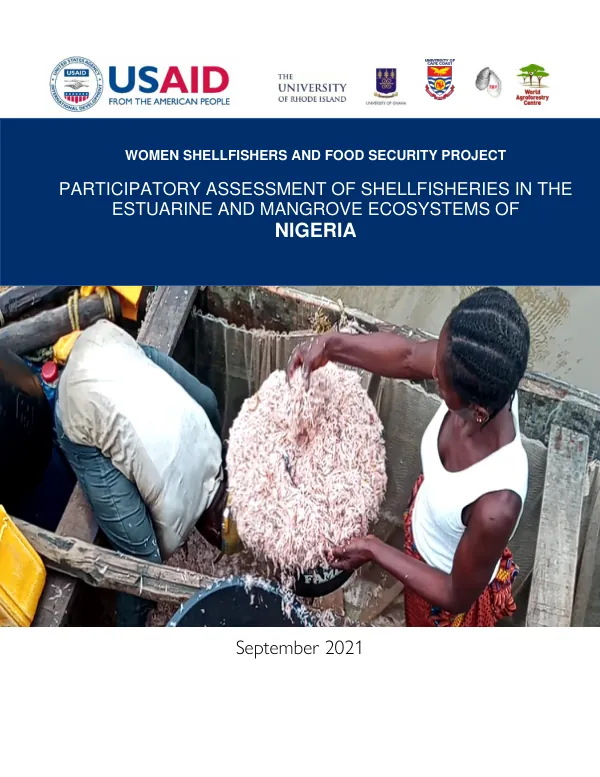
Participatory Assessment of Shellfisheries in the Estuarine and Mangrove Ecosystems of Nigeria
Sign inCOASTAL RESOURCES CENTER
Participatory Assessment of Shellfisheries in the Estuarine and Mangrove Ecosystems of Nigeria
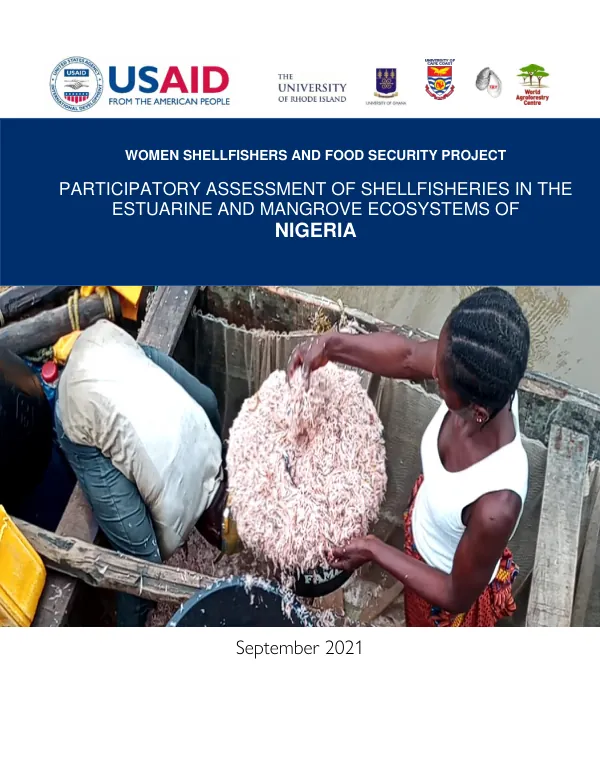
The Women Shellfishers and Food Security Project in Nigeria aimed to assess the status of shellfisheries in the estuarine and mangrove ecosystems of the country.
2021 · 26 pages
Sign in to readA free account is required to download.
Abstract
The project was conducted in collaboration with the Centre for Coastal Management (Africa Centre of Excellence in Coastal Resilience) at the University of Cape Coast, Ghana, and the Coastal Resources Center at the Graduate School of Oceanography, University of Rhode Island. The study sites included various fishing communities along the Nigerian mangrove coast, where shellfishers engage in the exploitation of shellfish resources. The research methodology involved a field survey and data collection, which included estimation of catch and revenue, as well as summarized background data on the shellfisheries. The study aimed to provide insights into the status of shellfisheries, including the number of shellfishers, gender dynamics, and the value chain of shellfish exploitation. The results of the study indicated that shellfish exploitation is a significant activity in the Nigerian mangrove coast, with an estimated 10,000 shellfishers engaged in the industry. The study found that women play a crucial role in shellfish exploitation, with 70% of women participating in the activity. The most common shellfish species harvested were Penaeus notialis, Penaeus atlantica, and Trachysoma fuscatus. The study also found that the shellfish value chain is complex, involving various stakeholders, including fishermen, processors, and traders. The study highlighted the importance of mangrove ecosystems in supporting shellfisheries, with the mangrove forests providing habitat for various shellfish species. However, the study also noted that the mangrove ecosystems are under threat due to climate change, pollution, and overfishing. The study recommended the implementation of sustainable management practices to mitigate the impacts of climate change and ensure the long-term sustainability of shellfisheries. The study also found that the shellfish industry has the potential to contribute significantly to the food security of communities along the Nigerian mangrove coast. The study recommended the development of value-added products from shellfish, such as dried and smoked products, to increase the income of shellfishers and improve food security. The study concluded that the shellfisheries in the Nigerian mangrove coast are facing significant challenges, including overfishing, habitat degradation, and climate change. However, the study also highlighted the potential of the shellfish industry to contribute to food security and economic development in the region. The study recommended the implementation of sustainable management practices and the development of value-added products from shellfish to ensure the long-term sustainability of the industry. The study was conducted in collaboration with various stakeholders, including the Centre for Coastal Management, the Coastal Resources Center, and the University of Cape Coast. The study was funded by the United States Agency for International Development (USAID) under the BAA-AFR-SD-2020 Addendum 01.