USAID DEC
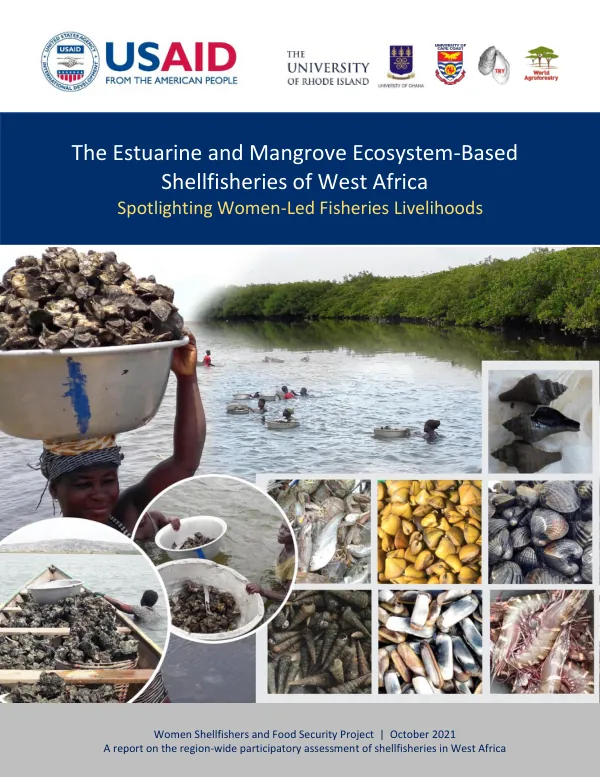
The Estuarine and Mangrove Ecosystem-Based Shellfisheries of West Africa: Spotlighting Women-Led Fisheries Livelihoods
Sign inCOASTAL RESOURCES CENTER
The Estuarine and Mangrove Ecosystem-Based Shellfisheries of West Africa: Spotlighting Women-Led Fisheries Livelihoods
The Estuarine and Mangrove Ecosystem-Based Shellfisheries of West Africa: Spotlighting Women-Led Fisheries Livelihoods is a report on the region-wide participatory assessment of shellfisheries in West Africa.
2021 · 67 pages
Sign in to readA free account is required to download.
Abstract
The assessment was conducted in 2021 and aimed to provide insights into the shellfisheries sector, with a focus on the role of women in this industry. The report highlights that shellfisheries are a significant source of income for many communities in West Africa, with an estimated 1.3 million people engaged in shellfish harvesting and processing. The sector is dominated by women, who make up 70% of shellfish harvesters and 80% of shellfish processors. Women's involvement in shellfisheries is crucial, as they play a key role in harvesting, processing, and marketing shellfish products. The report notes that shellfisheries in West Africa are characterized by a high level of diversity, with over 100 species of shellfish harvested. The most common species include oysters, mussels, and clams. Shellfisheries are also highly seasonal, with peak harvesting periods occurring during the dry season. Mangrove ecosystems play a critical role in supporting shellfisheries, providing habitat for shellfish species and protecting coastal communities from erosion and storm damage. However, mangrove ecosystems are under threat from deforestation, pollution, and overfishing, which can have negative impacts on shellfisheries. The report highlights the importance of improving shellfisheries livelihoods of women, who are often the primary beneficiaries of shellfisheries income. Women's involvement in shellfisheries is not only economically important but also socially and culturally significant, as it provides a source of income and food security for many families. The assessment identified several challenges facing shellfisheries in West Africa, including overfishing, habitat degradation, and lack of access to markets and credit. The report recommends several strategies to improve shellfisheries livelihoods, including the establishment of community-based management systems, the development of sustainable fishing practices, and the provision of training and capacity-building programs for women shellfishers. The report concludes that the shellfisheries sector in West Africa has significant potential for growth and development, particularly if women's involvement is supported and empowered. The assessment provides a valuable contribution to the understanding of shellfisheries in West Africa and highlights the need for further research and action to improve the livelihoods of women shellfishers. The report was prepared by a team of researchers from the University of Rhode Island, the University of Ghana, and the World Agroforestry Centre, with funding from the United States Agency for International Development (USAID). The report is available electronically and can be accessed through the USAID Development Clearing House and the Coastal Resources Center at the University of Rhode Island.