MERCY CORPS INTERNATIONAL
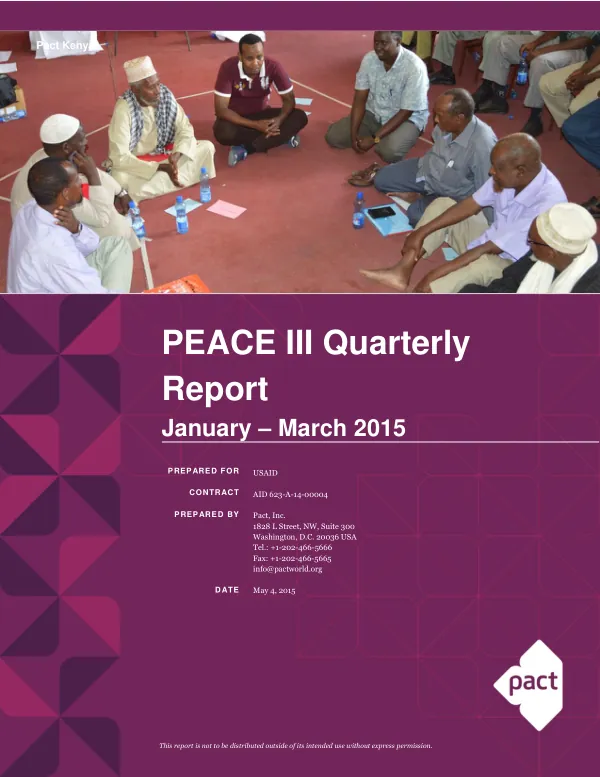
PEACE III Quarterly Report January – March 2015
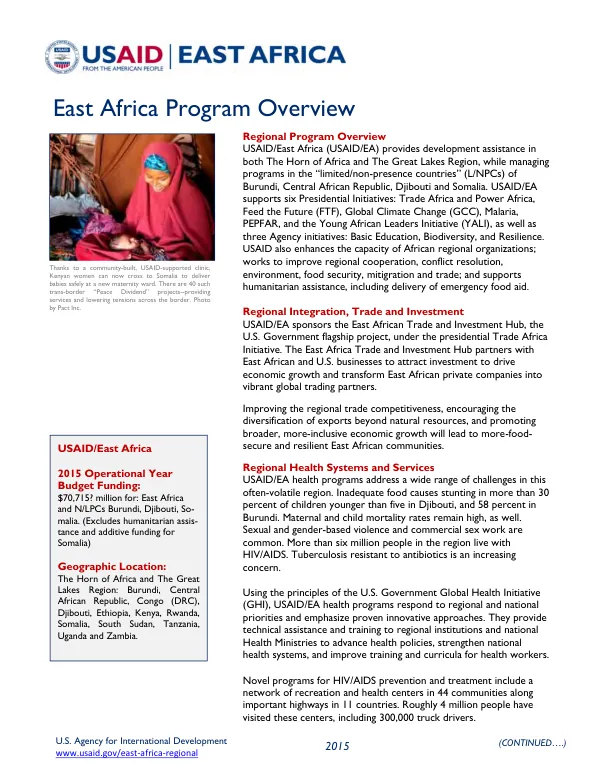
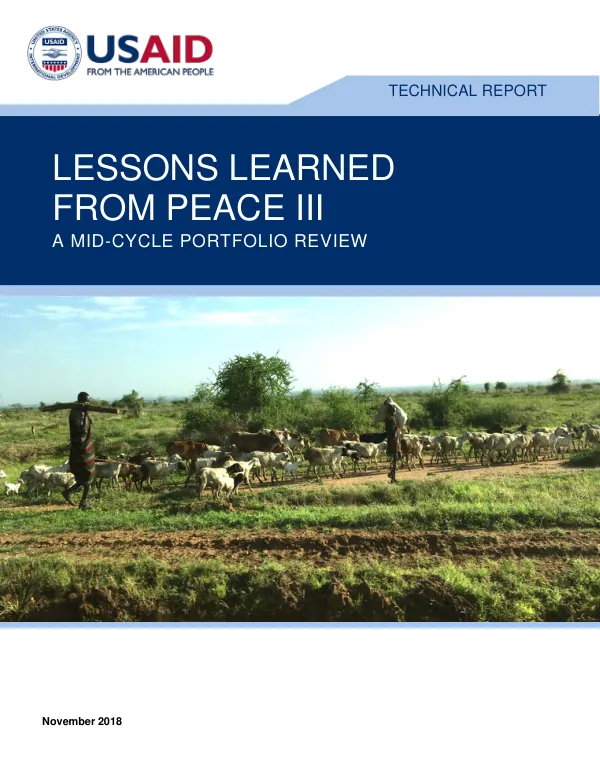
The PEACE III program is a USAID-funded initiative aimed at strengthening local cross-border conflict management systems and improving the responsiveness of regional and national institutions to cross-border conflict.
2015 · 34 pages
Sign in to readA free account is required to download.
Abstract
The program's objectives are twofold: to scale up successful conflict management mechanisms and relationships, and to create a critical mass of individuals and networks that will stand against conflicts. Local Community Based Organizations (CBOs) play an active role in creating this critical mass, and in this reporting period, 21 CBO partners were competitively selected to implement cross-border initiatives in the two clusters. The selection process was completed in January 2015, and the program received complaints regarding two shortlisted organizations, which were thoroughly investigated and reported to USAID. As part of the program's efforts to promote social reconciliation processes between conflicting communities, six Participatory Learning and Action (PLA) activities were completed to identify peace dividends. These activities were conducted in four zones in the Somali cluster and four zones in the Karamoja cluster. The PLA activities aimed to bring together conflicting communities to discuss and identify peace dividends, which are tangible benefits that can be achieved through peace. The Somali cluster continues to be volatile due to security threats caused by continued violence and killing by armed militants. The government of Kenya has announced plans to construct a wall along its border with Somalia in an effort to reduce terrorism. However, this move is likely to worsen the already volatile security situation, and the program will continue to monitor the situation closely. In the Karamoja cluster, some areas of operation are becoming increasingly inaccessible due to insecurity. The ongoing violence in South Sudan has led to an increased proliferation of small arms and light weapons, which has emboldened the antagonists. The program is working to provide cross-border rapid response support to local governments in Kenya, Uganda, and South Sudan. Climate change and natural resource management discussions came up during the PLA activities, and participants emphasized the importance of including climate change mitigation as part of overall peace-building activities. The program intends to strengthen linkages with other USAID-funded programs to explore a consolidated approach to the conflicts. In the next quarter, most activities will be aimed at supporting funded local CBOs to launch and implement activities in the corridors, validate and implement peace dividends, train on trauma healing, and select a Prime NGO partner. The program will continue to monitor the security situation in both clusters and build systems to routinely and proactively deal with causes of conflict collaboratively with other actors.
Related documents