MERCY CORPS INTERNATIONAL
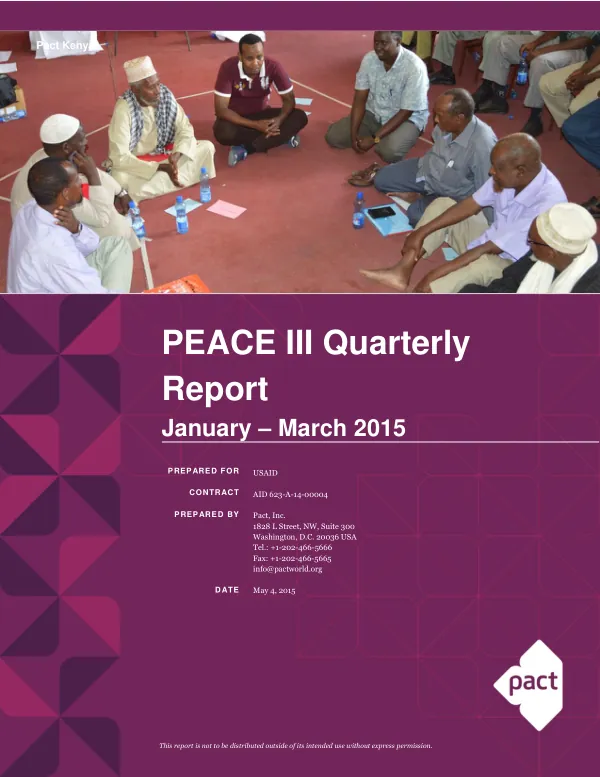
USAID KENYA AND EAST AFRICA PEACE III PROGRAM QUARTERLY PERFORMANCE REPORT
The PEACE III program is a five-year, USAID-funded regional conflict transformation program awarded to Pact in partnership with Mercy Corps in April 2014.
2016 · 38 pages
Sign in to readA free account is required to download.
Abstract
The program aims to contribute to stability in the Horn of Africa region by strengthening horizontal and vertical linkages within and between local, national, and regional communities. The program operates in eight zones, including Somali, Garissa Lower Juba, Wajir upper Jubba, Mandera – Gedo, Moyale Kenya – Moyale Ethiopia, Lake Turkana – South Omo, Kaabong-Oropoi / Loki- Kapoeta, and Moroto- Loima/West Pokot Amudat. The program has made significant strides in engaging in countering violent extremism (CVE) programming, with the Chief of Party speaking on a CVE panel at a USAID partners meeting about the importance of regional programming and peace building approaches within CVE. Partners in the Somali region received support from the BRAVE network in furthering their CVE efforts, targeting youth at risk from radicalization and those who influence youth such as religious leaders, government, and women. The program is also linking with others operating in the same locations to provide an integrated approach that builds knowledge, changes attitudes, strengthens relations, and provides opportunities to engage productively within society. In Karamoja, the program has made important strides in understanding the role of trauma healing in reconciliation processes. Through developing extensive integrated programming, it has changed the lives of former warriors, reconciled them with their communities, and provided opportunities for them to engage productively and positively in their societies. The program has also continued to support intergovernmental and intercommunity cross-border engagement, even in the most fragile and tense moments. The relationships that PEACE III partners have with local administrations in many places provide opportunities for the program to play effective mediation and networking roles. The program is working more proactively and more intentionally with women, with the Gender strategy providing a framework and guide for implementation. The recent Women's forum in Kitale was an example of the strength and commitment of women as peace builders, and the power of networks in motivating their members and generating collective voice. The program has also submitted its Annual Report for 2015-2016 and its Annual Workplan for 2016-2017 this quarter, and has been engaging in discussions to ensure that it is better articulating what it is achieving and designing the program to achieve the strongest, most tangible results. However, the program is experiencing significant challenges with regards to funding, which is restricting its ability to focus on long-term planning and engage with some partners. Delays in approvals for the program to engage security personnel in program activities are also holding up activities on both sides of the program, particularly in South Sudan. The program continues to liaise with USAID on this issue. Additionally, the program has experienced personnel changes, including the resignation of the Deputy Chief of Party and a failed recruitment of a Communications Officer.
Related documents