USAID DEC
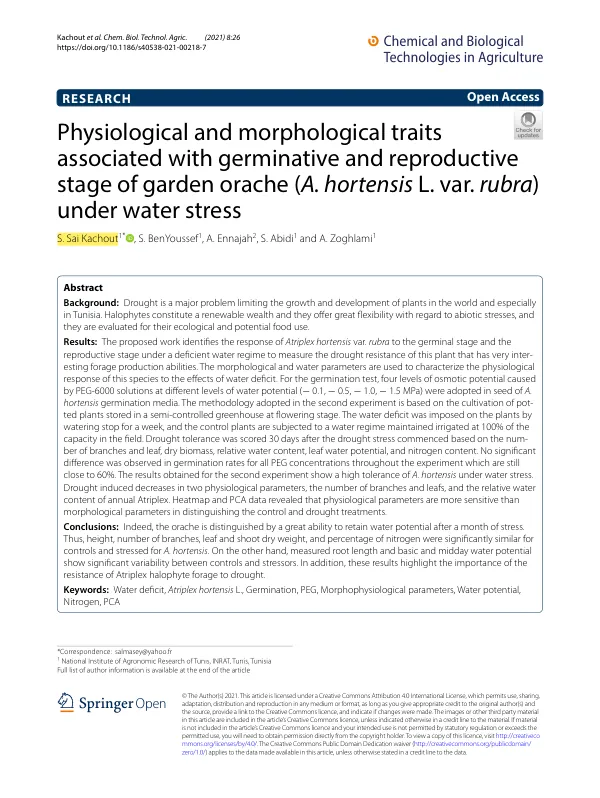
Physiological and morphological traits associated with germinative and reproductive stage of garden orache (A. hortensis L. var. rubra) under water stress
Sign inUSAID DEC
Physiological and morphological traits associated with germinative and reproductive stage of garden orache (A. hortensis L. var. rubra) under water stress
The environmental stress caused by salinity and drought is a significant obstacle for horticulture and field crops in arid and semiarid regions.
2021 · 16 pages
Sign in to readA free account is required to download.
Abstract
Water-deficit stress is a major problem in agriculture, and most crop plants show high sensitivity to this stress. Drought is caused by reduced precipitation and increased temperature, and it is considered a major threat limiting growth and yield of plants. Water stress affects germination rate and early seedling growth of the plant, resulting in a significant reduction in germination, hypocotyl length, root and shoot fresh, and dry weight. Atriplex hortensis L. var. rubra, also known as garden orache, is a halophyte that can tolerate harsh conditions such as cold, drought, and high salinity. This species belongs to the Chenopodiaceae family and is characterized by a high content of flavonoids, vitamin C, mineral components, and amino acids. Garden orache is a rich source of protein and has been recognized for its medicinal properties, which include improving digestion, increasing circulation, and boosting the immune system. Additionally, A. hortensis has been used in land rehabilitation projects due to its ability to establish well, grow rapidly, reduce soil erosion, and compete with native plants. The aim of the experiment was to estimate physiological and morphological traits associated with germinative and reproductive stages of annual Atriplex under water stress. A pot experiment with a randomized block design was conducted for garden orache to assay the physiological response to drought tolerance during flowering stage. Germination analysis was performed using six replicates of 20 seeds set in Petri dishes containing three germitest papers moistened with different polyethylene glycol (PEG-6000) solutions to simulate drought stress at different water potential levels. Distilled water was used as the control. The amounts of PEG used in the experiment were calculated following Villela et al. (1991). The results of the germination test showed that no significant difference was observed in germination rates for all PEG concentrations throughout the experiment, which were still close to 60%. The results obtained for the second experiment showed a high tolerance of A. hortensis under water stress. Drought-induced decreases in two physiological parameters, the number of branches and leaves, and the relative water content of annual Atriplex. Heatmap and PCA data revealed that physiological parameters are more sensitive than morphological parameters in distinguishing the control and drought treatments. The study highlights the importance of the resistance of Atriplex halophyte forage to drought. The results obtained for the second experiment show that A. hortensis is distinguished by a great ability to retain water potential after a month of stress. Height, number of branches, leaf, and shoot dry weight, and percentage of nitrogen were significantly similar for controls and stressed for A. hortensis. On the other hand, measured root length and basic and midday water potential showed significant variability between controls and stressors.
Related documents
Documents in this collection
 2023
2023USAID DEC
Comparison of Novel Hybrid and Benchmark Machine Learning Algorithms to Predict Groundwater Potentiality: Case of a Drought-Prone Region of Medjerda Basin, Northern Tunisia
Open record 2023
2023USAID DEC