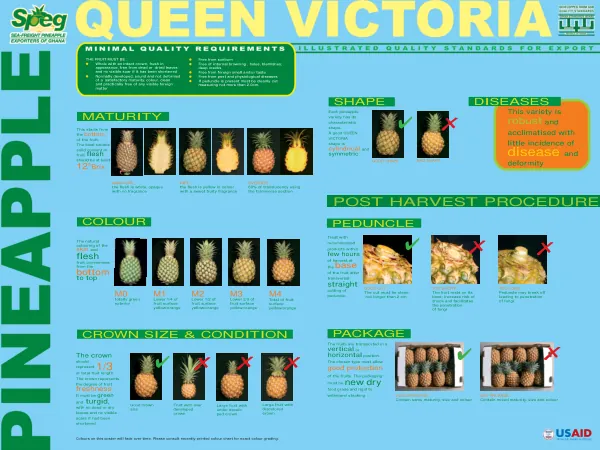
USAID DEC
Pineapple Grading Standards
Pineapple quality assessment is a critical factor in determining the fruit's suitability for transportation and consumption.
2009 · 1 pages
Sign in to readA free account is required to download.
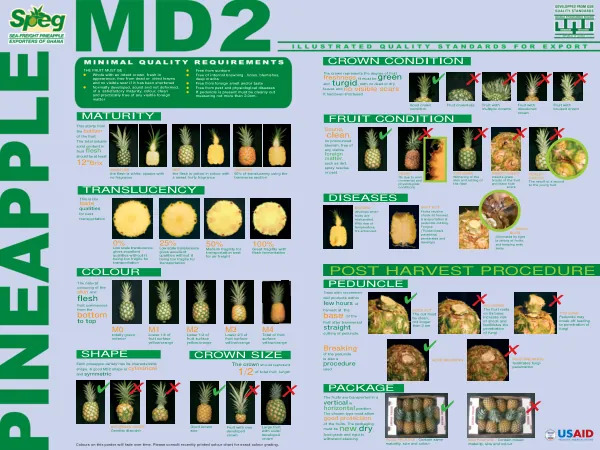
Abstract
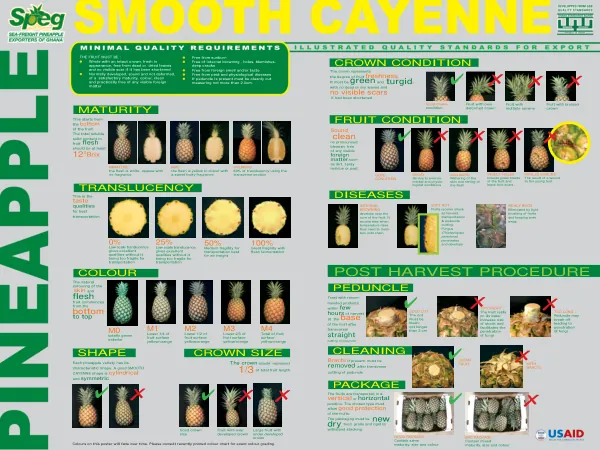
The flesh of an immature pineapple is white and opaque, with no fragrance. As the pineapple ripens, the flesh turns yellow, and a sweet, fruity fragrance develops. The ripeness of a pineapple is evaluated based on its colour and translucency. The colour classification system ranges from M0, where the exterior is totally green, to M4, where the entire fruit surface is yellow or orange. Translucency is measured on a scale of 0 to 100%, with 0% indicating low scale translucence and 100% indicating great fragility with flesh fermentation. The total soluble solid content in the fruit flesh should be at least 12°Brix. The natural colouring of the skin and flesh of the pineapple commences from the bottom to the top. Each pineapple variety has its characteristic shape, with a good Smooth Cayenne shape being cylindrical and symmetric. The crown size and condition are also critical factors in evaluating pineapple quality. A sound, clean fruit with no pronounced blemish, free of any visible foreign matter, is considered ideal. The crown should represent one-third of the total fruit length, and it must be green and turgid, with no dead or dry leaves and no visible scars. Pineapples are susceptible to various diseases and disorders, including sunburn, insect holes, healed cracks, and internal browning. Soft rot, caused by the fungus Thielaviopsis paradoxa, can develop near the core of the fruit, particularly when the temperature rises. Mealy bugs can be eliminated by light brushing of the fruits and keeping ants away. Proper packaging and handling are essential to maintain the quality of pineapples during transportation. The packaging must be new, dry, food-grade, and rigid to withstand stacking. The fruits should be transported in a vertical or horizontal position, allowing good protection of the fruits. The chosen type of packaging must allow for good protection of the fruits, and the packaging must contain fruits of the same maturity, size, and colour. The post-harvest procedure involves treating the fruits with recommended products within a few hours of harvest at the base of the fruit after transversal straight cutting of the peduncle. The fruits must be handled carefully to prevent shock and facilitate the penetration of fungi.