JSI RESEARCH & TRAINING INSTITUTE, INC
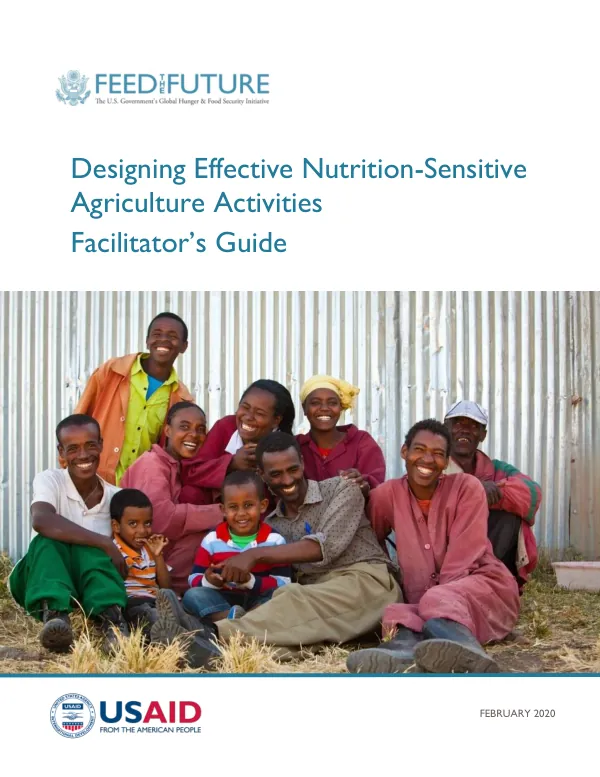
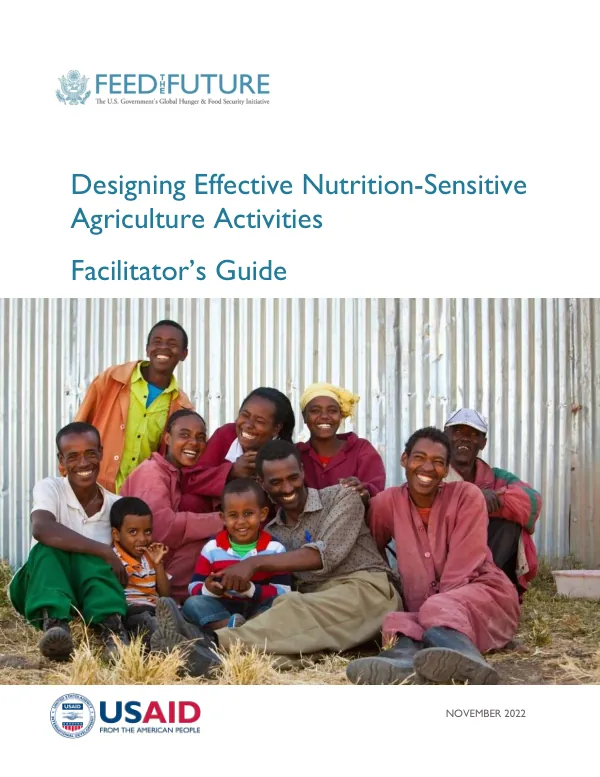
Designing Effective Nutrition-Sensitive Agriculture Activities. Facilitator’s Guide
The Nutrition-Sensitive Agriculture Design Guide Workshop is a three-day facilitation process designed to guide activity teams through the establishment of contextually appropriate, nutrition-sensitive agriculture outcomes, interventions, and indicators.
2022 · 90 pages
Sign in to readA free account is required to download.
Abstract
The workshop is intended for anyone involved in designing, implementing, monitoring, and managing agriculture-led economic growth activities that aim to increase production, income, resilience, and/or market competitiveness, while also seeking to improve the nutrition of low-income households vulnerable to malnutrition. The workshop is designed to be a participatory process that guides teams to examine six activity-level nutrition-sensitive agriculture outcomes and think through specific interventions that fit within their existing scope. Exercises in the workshop focus on actions that are practical and feasible, and that leverage an activity team's existing strengths. The goal is to ensure agricultural market systems development activities can document and explain their contributions to nutrition goals. The workshop is most useful after the team has completed an initial context assessment and identified agricultural value chain crops or livestock products. Design all activities based on a solid understanding of the context, needs, and challenges in the activity area. This workshop does not explore approaches for conducting a context assessment. The facilitators of the workshop should have significant advance preparation, a good understanding of the context in which the activity is working, understanding of the activity objectives and program structure, and knowledge of the technical capacities of the participants. At least two facilitators are needed due to the highly participatory nature of the workshop and extensive small group work. The workshop is designed to be conducted with a multi-disciplinary team, including a nutritionist or a person familiar with the nutrition situation in the activity's target area, leaders such as the activity manager or the chief of party, senior technical staff, the activity's monitoring and evaluation (M&E) lead, agricultural advisor(s), and anyone involved in conducting assessments or formative research to design a behavior change strategy for the activity. Ideally, a group of 5-20 participants should be involved in the workshop. The workshop can be useful at multiple points in a program cycle, including the design stage, Year 1 or Year 2 work planning stage, iterative annual work planning process, and as part of USAID's activity review. The workshop will support identification of additional nutrition-sensitive agriculture outcomes, interventions, and indicators for value chain activities, and will help to strengthen nutrition outcomes. The workshop facilitators should be prepared to guide the team through the process of establishing contextually appropriate, nutrition-sensitive agriculture outcomes, interventions, and indicators. This includes providing detailed instructions for a facilitation team to conduct the three-day workshop, and guiding the team through the process of examining six activity-level nutrition-sensitive agriculture outcomes and thinking through specific interventions that fit within their existing scope. The workshop will provide the team with the tools and resources needed to design effective nutrition-sensitive agriculture activities, including the ability to document and explain their contributions to nutrition goals. The workshop will also provide the team with the opportunity to reassess and modify nutrition-sensitive agriculture interventions and outcomes previously chosen for their selected value chains. The workshop is designed to be a comprehensive and participatory process that guides teams to establish contextually appropriate, nutrition-sensitive agriculture outcomes, interventions, and indicators. The workshop will provide the team with the tools and resources needed to design effective nutrition-sensitive agriculture activities, and will help to strengthen nutrition outcomes.