AGENCIA DE LOS ESTADOS UNIDOS PARA EL DESARROLLO INTERNACIONAL
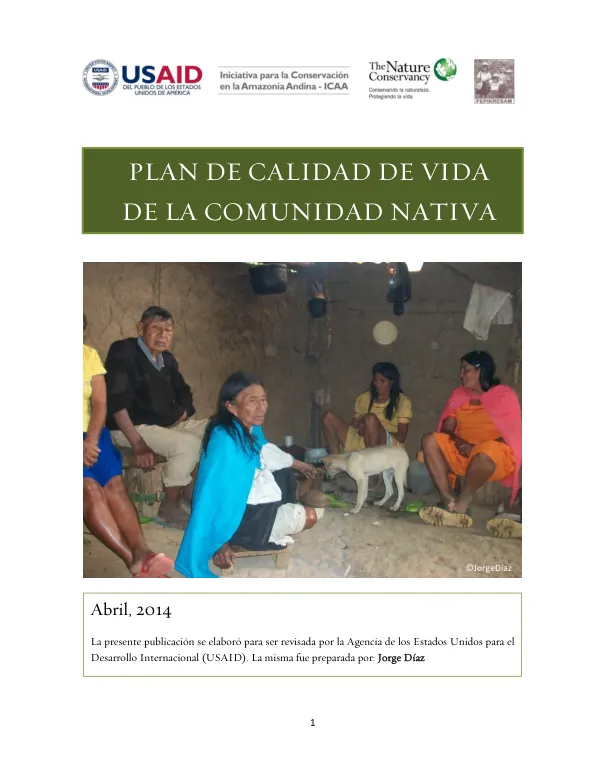
Plan de Calidad de Vida de la Comunidad Nativa Chirikyacu
The community of Chirikyacu is located in the district of San Roque, province of Lamas, department of San Martín.
2014 · 101 pages
Sign in to readA free account is required to download.
Abstract
The community is situated at an altitude of 1,150 meters above sea level and has a total area of 5,492.50 hectares. The community is bounded by the following geographical features: to the north by the Cordillera Escalera, to the south by the district of Lamas, to the east by the Chunchiwi community, and to the west by the Aviación and Yurilamas communities. The community is located in the southern part of the district of San Roque de Cumbaza, which is within the microcuenca of the Cumbaza River. The microcuenca is the primary source of water for the cities of Lamas and Tarapoto and flows into the Mayo River, covering a distance of 52 kilometers from its source. The community is surrounded by a diverse range of ecosystems, including primary and secondary forests, traditional farmland, and agricultural areas. The climate in the area is characterized as warm and humid, with a mean annual temperature of 26.7°C. The maximum temperature reaches 30°C, while the minimum temperature is 18°C. The community receives an average annual rainfall of 1,535 mm, with the highest rainfall occurring in March, April, and November, and the lowest rainfall in June, July, and August. The community has a long history, dating back to the 1920s when the founder, Wauki Moisés Tapullima Ishuiza, settled in the area. The community has since grown and developed, with the current population consisting of 137 inhabitants, representing 34 families. The community has a rich cultural heritage, with a strong emphasis on traditional practices and customs. The community has a unique geography, with a diverse range of ecosystems and a rich cultural heritage. The community is located in a remote area, with limited access to basic services and infrastructure. The community is accessible by car or on foot, with the journey taking approximately 45 minutes from the city of Lamas. The community has a strong sense of identity and community, with a deep connection to the land and their ancestors. The community has a long history of interaction with the outside world, with the first contact with outsiders dating back to the 1920s. The community has since developed a complex relationship with the outside world, with both positive and negative impacts. The community has a strong sense of resilience and adaptability, with a deep understanding of the importance of preserving their cultural heritage and traditional practices. The community has a unique relationship with the natural environment, with a deep understanding of the importance of preserving the natural resources and ecosystems. The community has a strong sense of responsibility towards the land and their ancestors, with a deep commitment to preserving the natural environment and promoting sustainable development. The community has a rich cultural heritage, with a strong emphasis on traditional practices and customs. The community has a unique language, music, and art, with a deep connection to the land and their ancestors. The community has a strong sense of identity and community, with a deep understanding of the importance of preserving their cultural heritage and traditional practices. The community has a long history of interaction with the outside world, with both positive and negative impacts. The community has a strong sense of resilience and adaptability, with a deep understanding of the importance of preserving their cultural heritage and traditional practices. The community has a unique relationship with the natural environment, with a deep understanding of the importance of preserving the natural resources and ecosystems. The community has a strong sense of community and identity, with a deep connection to the land and their ancestors. The community has a unique language, music, and art, with a deep understanding of the importance of preserving their cultural heritage and traditional practices. The community has a strong sense of responsibility towards the land and their ancestors, with a deep commitment to preserving the natural environment and promoting sustainable development.