USAID DEC
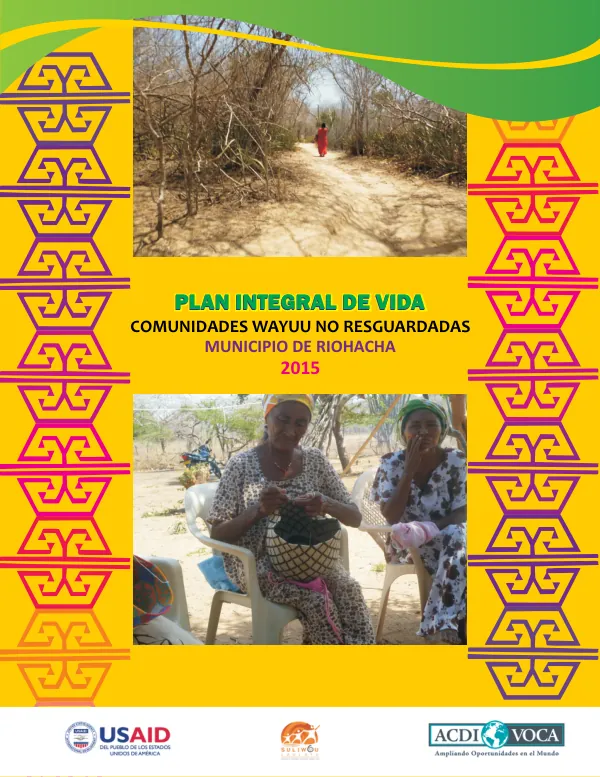
Plan Integral de Vida de las Comunidades Wayuu No Resguardadas del Municipio de Riohacha
Sign inUSAID
Plan Integral de Vida de las Comunidades Wayuu No Resguardadas del Municipio de Riohacha
The Wayuu communities in non-reserved territories of the municipality of Riohacha have a rich cultural heritage and a distinct system of governance.
2015 · 152 pages
Sign in to readA free account is required to download.
Abstract
The Wayuu people have a long history dating back to the pre-Columbian era, with their own language, customs, and traditions. According to their oral tradition, the Wayuu people originated from the eastern coast of Venezuela and migrated to the Guajira Peninsula in Colombia. The Wayuu have a complex system of governance, with a strong emphasis on community decision-making and collective ownership of land. The Alaüla, a spiritual leader, plays a crucial role in guiding the community and resolving conflicts. The Pütchipü'ü, a council of elders, is responsible for making important decisions and upholding the community's laws and customs. The E'iruku, a system of reciprocity and mutual aid, is an essential aspect of Wayuu social organization. The Colombian Constitution recognizes the rights of indigenous communities, including the Wayuu, to autonomy and self-determination. The International Labor Organization (ILO) Convention 169, ratified by Colombia in 1991, also recognizes the rights of indigenous peoples to their lands, territories, and resources. The Colombian government has enacted various laws and decrees to protect the rights of indigenous communities, including the Law 70 of 1993, which establishes the rights of indigenous peoples to their lands and territories. The Wayuu communities in Riohacha have faced significant challenges, including the loss of their traditional lands and resources, exploitation of their natural resources, and the impact of armed conflict on their communities. The communities have also experienced difficulties in accessing education, healthcare, and economic opportunities. The Wayuu people have a strong tradition of self-governance, with their own system of government and decision-making processes. The Plan Integral de Vida (Integral Life Plan) is a community-led initiative aimed at promoting the well-being and development of the Wayuu communities in Riohacha. The plan is based on the principles of autonomy, self-determination, and collective ownership of land and resources. The plan aims to address the challenges faced by the Wayuu communities, including the loss of their traditional lands and resources, exploitation of their natural resources, and the impact of armed conflict on their communities. The plan is divided into several components, including the recognition of the Wayuu people's rights to their lands and territories, the protection of their cultural heritage, and the promotion of their economic development. The plan also aims to strengthen the Wayuu communities' capacity for self-governance and decision-making, and to promote their participation in national and international forums. The implementation of the Plan Integral de Vida requires the support and cooperation of the Colombian government, international organizations, and civil society. The plan is a critical step towards promoting the rights and well-being of the Wayuu communities in Riohacha, and towards recognizing their autonomy and self-determination.
Related documents