USAID DEC
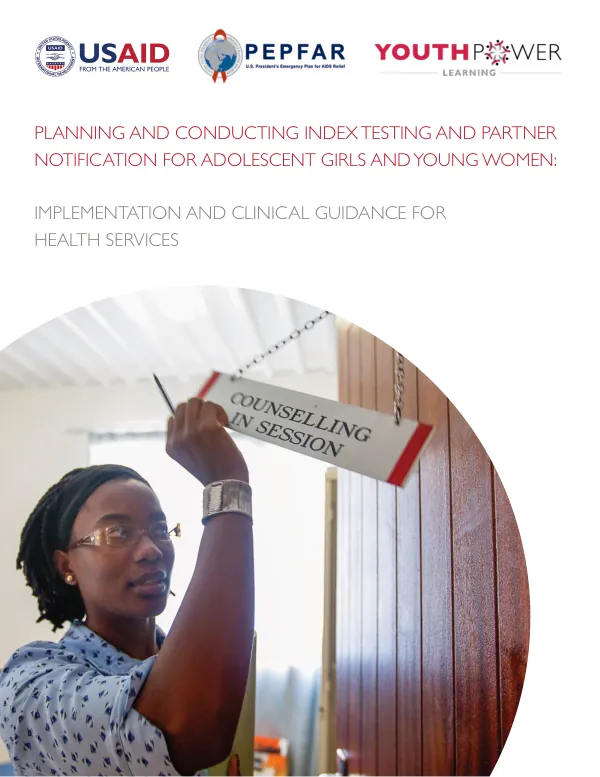
Planning and Conducting Index Testing and Partner Notification for Adolescent Girls and Young Women: Implementation and Clinical Guidance for Health Services
Sign inMAKING CENTS INTERNATIONAL
Planning and Conducting Index Testing and Partner Notification for Adolescent Girls and Young Women: Implementation and Clinical Guidance for Health Services
Adolescent girls and young women (AGYW) between the ages of 15 and 24 carry a significantly higher risk for HIV infection than their male peers or older women and men.
2019 · 17 pages
Sign in to readA free account is required to download.
Abstract
In Africa, the World Health Organization (WHO) estimates that fewer than one in five adolescent women are aware of their HIV status. Disclosure of HIV serostatus is a key concern of AGYW living with HIV, as they often face social harms due to stigma from peers, family, and community members. AGYW may experience additional social and family stigma and consequences if it becomes known that they have begun sexual activity, regardless of whether that sexual activity was consensual. Support services for AGYW living with HIV in low- and middle-income countries (LMICs) are limited, especially as girls age out of pediatric services and enter adult care and treatment services. Given the dual threat of stigmatization for both sexuality and HIV status, disclosure to even trusted friends and family is limited for AGYW living with HIV. Intimate partner violence (IPV), sexual violence, and HIV transmission or HIV stigma are of particular concern. Younger women and women with lower socio-economic status have been shown to have higher prevalence of IPV than older and more empowered women. Experiences of IPV, sexual violence, and coercion are widespread among adolescents, with 1 in 3 girls worldwide reporting that their first sex was forced or coerced, and 1 in 4 ever-partnered girls reporting experiencing physical or sexual violence from an intimate partner. Providers who are interested in supporting their AGYW clients with partner notification (PN) must also be equipped to perform IPV screening and safety checks with their clients. Providers may need support not only to address the specific needs of AGYW living with HIV, but also should be trained on how to conduct routine enquiry for IPV, including how to ask about experience or fear of sexual violence and how to respond when an AGYW discloses experience with or fear of violence. This tool provides programmatic and service delivery considerations for implementing index testing services with AGYW, including a provider job aid for index testing with AGYW, integrated service delivery steps, scripts, and tools for documentation. The tool also includes a toolbox with additional recommended training and guidance resources for providers working with adolescent clients. Providers are encouraged to use their training and best judgment in addition to this tool to make a final determination about whether and how to encourage PN for their individual clients. The programmatic and service delivery considerations complement the detailed screening for individual clients in the included Job Aid for Index Testing with AGYW. This tool offers support for providers on how to conduct routine enquiry for IPV and sexual violence with AGYW while providing HIV index testing and PN services, in addition to resources and support on ensuring such services are adolescent-friendly overall. Providers who are implementing index testing and HIV PN services with AGYW must be aware of the reality that a significant proportion of their clients will have experienced or will be currently experiencing violence in their home or in their relationship. Providers should be prepared to conduct routine enquiry for IPV and safety checks, as well as to provide referrals to appropriate violence response services. The WHO has released normative guidance for responding to IPV and sexual violence, and for ensuring quality care for adolescent survivors of violence, which providers should apply when conducting HIV index testing. The guidance included in this tool for providers is adapted from the WHO standards and quality assurance tools, but does not substitute for training on IPV and sexual violence response. All clients, and in particular AGYW, have the right to opt out of HIV partner notification and index testing services at any time and for any reason. Providers may encourage, but not force, clients to participate in services through index testing programs. Providers should have resources available that explain HIV and HIV disclosure in youth-friendly, accessible language. Many countries have different laws and regulations regarding HIV testing and disclosure, and providers should be aware of these laws and regulations in their country.