USAID DEC
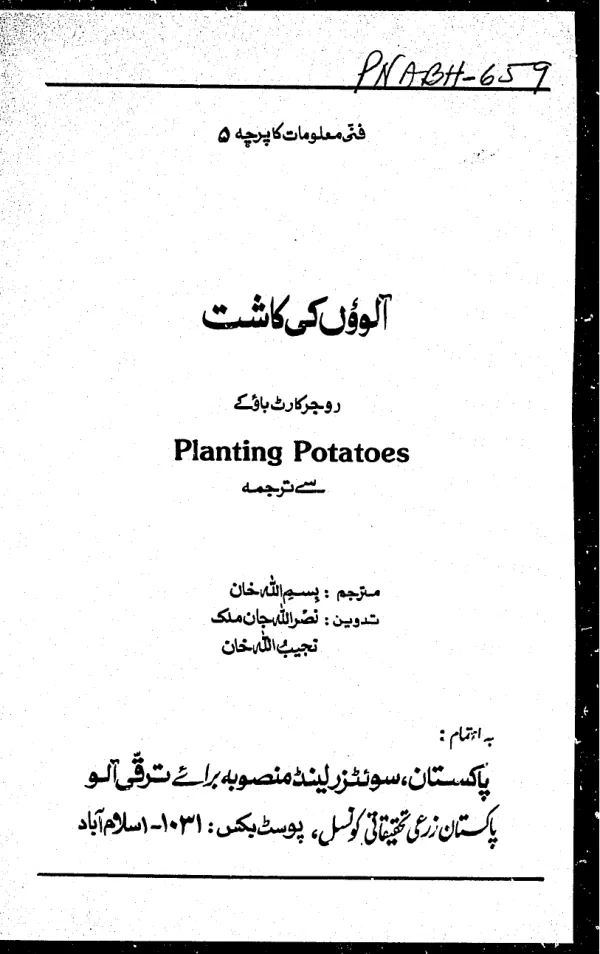
Planting Potatoes
Potato planting in the Andean region of South America dates back thousands of years, with the indigenous people developing unique techniques to cultivate this staple crop.
25 pages
Sign in to readA free account is required to download.
Abstract
The process begins with selecting suitable land, typically at high elevations where the climate is cooler and more humid. Farmers prepare the soil by removing rocks and debris, then create shallow trenches for planting. The selected potato varieties are then planted in the trenches, with the seed tubers placed 2-3 inches deep and 12-18 inches apart. The soil is then covered, and the area is mulched to retain moisture and suppress weeds. Farmers also use a technique called "terrazas," where they create stepped plots on hillsides to maximize land use and reduce soil erosion. Irrigation is a critical component of potato cultivation in this region, with farmers relying on natural water sources such as rivers and streams. In areas where water is scarce, farmers use traditional methods such as "chinampas," where they create artificial wetlands to store and conserve water. Crop rotation is also practiced to maintain soil fertility and reduce the risk of disease. The potato harvest typically occurs 70-100 days after planting, with farmers using specialized tools to carefully dig up the tubers. The harvested potatoes are then sorted and graded according to size and quality, with the best tubers sold at local markets. In some communities, potatoes are also used as a form of currency or exchanged for other essential goods. In recent years, there has been a growing interest in sustainable potato production practices in the Andean region. This includes the use of organic fertilizers, integrated pest management techniques, and agroforestry practices to promote biodiversity and reduce environmental degradation. By adopting these approaches, farmers can improve crop yields, increase their income, and contribute to the long-term sustainability of their communities.