USAID
Policy Brief: Addressing the gender digital gap in Nepal
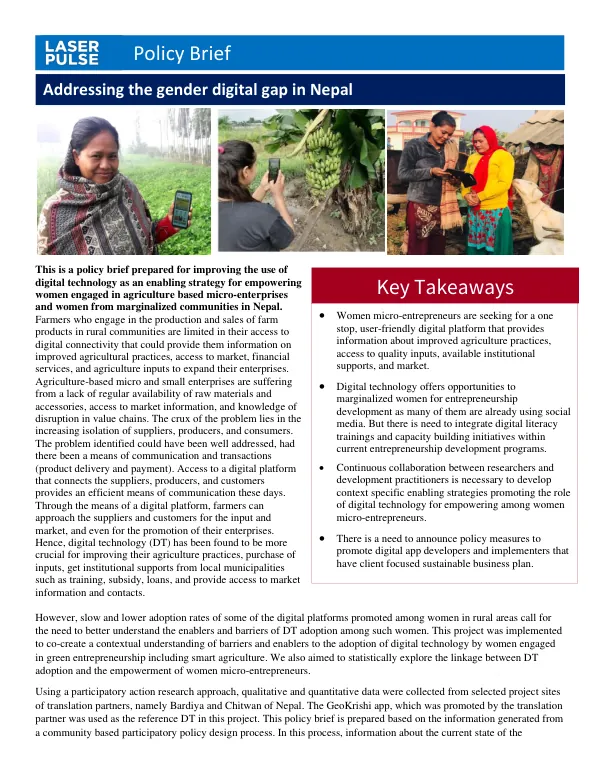
The agricultural development initiative in Nepal aimed to improve the use of digital technology as an enabling strategy for empowering women engaged in agriculture-based micro-enterprises and women from marginalized communities.
2024 · 4 pages
Sign in to readA free account is required to download.
Abstract
The project focused on addressing the challenges faced by farmers in rural communities, including limited access to digital connectivity, information on improved agricultural practices, access to market, financial services, and agriculture inputs. The project identified the need for a digital platform that connects suppliers, producers, and customers, providing an efficient means of communication and transactions. Digital technology was found to be crucial for improving agricultural practices, purchasing inputs, accessing institutional supports, and providing access to market information and contacts. However, slow and lower adoption rates of digital platforms among women in rural areas highlighted the need to better understand the enablers and barriers to digital technology adoption. A participatory action research approach was used to collect qualitative and quantitative data from selected project sites in Bardiya and Chitwan, Nepal. The GeoKrishi app was promoted by the translation partner and used as the reference digital technology in this project. The policy brief was prepared based on the information generated from a community-based participatory policy design process. Key findings from the project included the need for a one-stop, user-friendly digital platform that provides information on improved agricultural practices, access to quality inputs, available institutional supports, and market. Digital technology offers opportunities for marginalized women to develop entrepreneurship, but there is a need to integrate digital literacy trainings and capacity-building initiatives within current entrepreneurship development programs. Continuous collaboration between researchers and development practitioners is necessary to develop context-specific enabling strategies promoting the role of digital technology for empowering women micro-entrepreneurs. The policy brief highlights the need to announce policy measures to promote digital app developers and implementers with client-focused sustainable business plans. The project also identified the importance of considering the specific needs and interests of marginalized communities when developing digital technology. Women from marginalized communities face additional constraints, including limited access to smartphones, internet services, and agri-apps. Many women cannot read and understand the information available in apps and online due to low literacy and understanding of the Nepali language. The policy brief recommends that the Kalika Municipality in Chitwan and the Gulariya Municipality in Bardiya announce policy measures to develop the market of digital technology enterprises. Demand-side interventions include offering digital literacy and capacity development of women engaged in micro-enterprises to use digital technology for business purposes. Supply-side interventions include launching entrepreneurship development programs to encourage people to start and scale up digital technology companies. The municipalities need to set up a department or unit for regular monitoring, coordination, and evaluation of the digital ecosystem and its functions. The dedicated staff or outsourced organization will monitor and moderate the progress of updating information and digital transactions of those digital companies or enterprises. The municipality can generate internal revenue from e-transactions. The policy brief also recommends ensuring the quality of digital technology enterprises and its programs and offerings. The municipality should ensure that the apps include detailed lists of input suppliers, contact addresses, and e-transactions. They should also have information for process and productivity improvement.
Related documents