SOCIAL CONSULTANTS INTERNATIONAL, INC.
Pollution Prevention Assessment for a Flexible Packaging Manufacturer
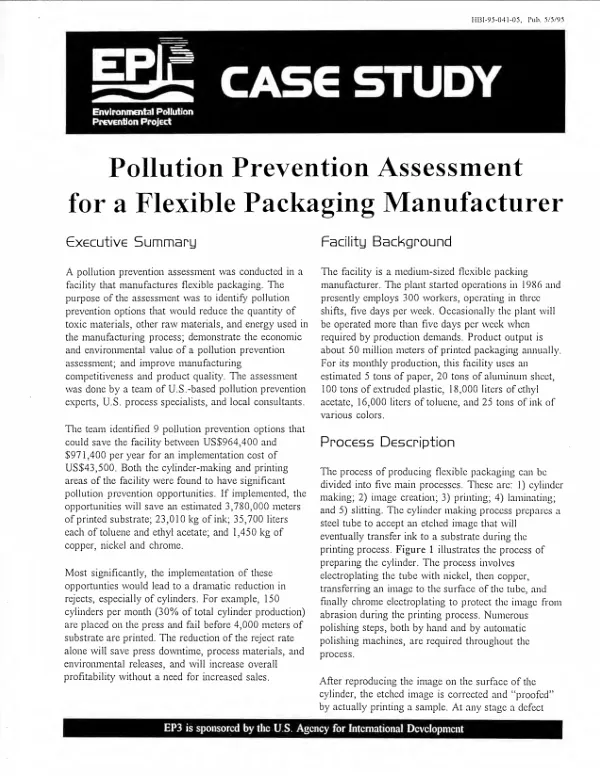
The pollution prevention assessment for a flexible packaging manufacturer identified 9 pollution prevention options that could reduce the quantity of toxic materials, other raw materials, and energy used in the manufacturing process.
2013 · 4 pages
Sign in to readA free account is required to download.
Abstract
The assessment was conducted by a team of U.S.-based pollution prevention experts, U.S. process specialists, and local consultants. The team found that the cylinder-making and printing areas of the facility had significant pollution prevention opportunities. The assessment identified opportunities to reduce releases of toxic materials, including vapors, liquid chemicals, and heavy metals. The team recommended implementing cleaner production practices, such as changing the concentrations of the plating baths, maintaining the acid copper, chrome, and nickel process solutions, and improving storage conditions. These measures would reduce problems such as cracking, corrosion, hardness, and lack of brightness on the cylinders. The assessment also identified opportunities to reduce waste and improve efficiency in the manufacturing process. The team recommended implementing an alkaline cleaning system to replace toluene, recovering copper fines from the grinding operation, and improving ink management by reducing waste ink and implementing a color matching system. These measures would reduce the need for rework, press downtime, and solvent use, and would improve product quality and reduce waste. The implementation of these opportunities would save the facility between $964,400 and $971,400 per year for an implementation cost of $43,500. The opportunities would also lead to a dramatic reduction in rejects, especially of cylinders, which would save press downtime, process materials, and environmental releases, and would increase overall profitability without a need for increased sales. The facility is a medium-sized flexible packaging manufacturer that started operations in 1986 and presently employs 300 workers, operating in three shifts, five days per week. The plant uses an estimated 5 tons of paper, 20 tons of aluminum sheet, 100 tons of extruded plastic, 18,000 liters of ethyl acetate, 16,000 liters of toluene, and 25 tons of ink of various colors for its monthly production. The process of producing flexible packaging can be divided into five main processes: cylinder making, image creation, printing, laminating, and slitting. The pollution prevention assessment identified three main types of contaminants from the facility that adversely impact the environment: vapors released from chemical solutions, liquid chemicals and heavy metals discharged from spent cylinder-making solutions, spent ink, and spent solvent, and solid waste including copper dust, sludge, spent film from the cylinder-making process, and excess substrate from slitting, printing, and laminating. The assessment recommended implementing cleaner production practices, reducing waste, and improving efficiency in the manufacturing process to reduce these contaminants and improve environmental and financial benefits.