MCHIP
Postpartum Family Planning Enables Mother of Four to Improve Life for Her Family
Postpartum Family Planning Initiatives in Ethiopia Focus on Empowering Women to Make Informed Reproductive Choices In rural villages of Northern Ethiopia, women like Birkinesh Debebe face significant challenges in managing their reproductive health and providing for their families.
2013 · 2 pages
Sign in to readA free account is required to download.
Abstract
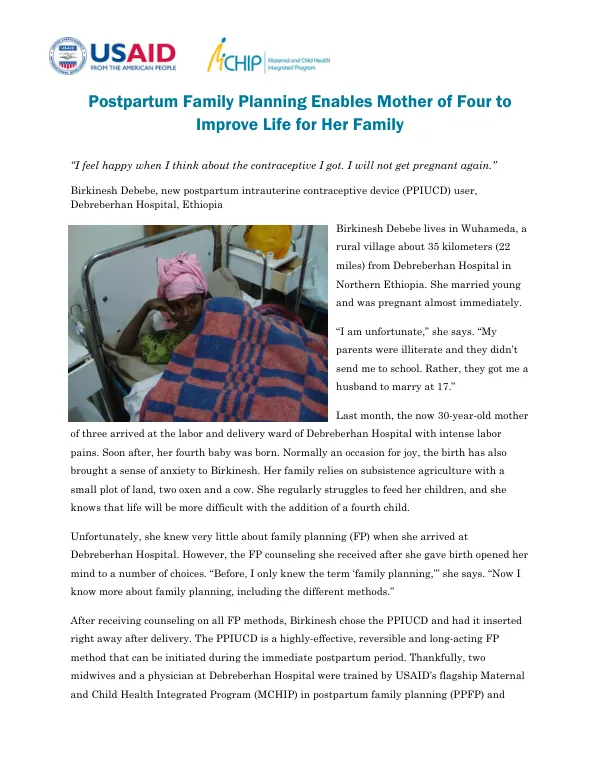
Birkinesh, a 30-year-old mother of four, recently gave birth to her fourth child at Debreberhan Hospital. Following her delivery, she received postpartum family planning (PPFP) counseling, which opened her eyes to various family planning methods, including the postpartum intrauterine contraceptive device (PPIUCD). Birkinesh chose the PPIUCD, a highly-effective, reversible, and long-acting method that can be initiated during the immediate postpartum period. The PPFP/PPIUCD program in Ethiopia is implemented by the Maternal and Child Health Integrated Program (MCHIP), a flagship program of the USAID Bureau for Global Health. MCHIP has been operating in Ethiopia since 2010 and launched its PPFP/PPIUCD program in 2012. The program is currently implemented in 18 health facilities throughout the country. Trained service providers, including midwives and physicians, have performed 65 PPIUCD insertions since March 2013. The program has provided hospitals with necessary equipment, including PPIUCD insertion kits, drapes, aprons, chlorine, soaps, gloves, and infection prevention buckets. Birkinesh's experience highlights the importance of PPFP counseling and access to family planning methods, particularly in rural areas where women often lack information and resources. By choosing the PPIUCD, Birkinesh is able to space her children and plan her family's future. She plans to educate her neighbors and relatives about the benefits of family planning and hopes to provide her family with more support and care now that she is safe from future pregnancies. The PPFP/PPIUCD program in Ethiopia aims to empower women like Birkinesh to make informed reproductive choices and improve their overall well-being. By increasing access to family planning methods and providing PPFP counseling, the program seeks to reduce unintended pregnancies, improve maternal and child health outcomes, and promote women's empowerment. In addition to PPFP/PPIUCD, MCHIP supports a range of maternal, newborn, and child health (MNCH) programs, including immunization, family planning, malaria, nutrition, and HIV/AIDS. The program also focuses on health systems strengthening, water, sanitation, hygiene, urban health, and cross-cutting technical areas. By addressing these critical areas, MCHIP aims to improve the health and well-being of women, children, and families in Ethiopia and around the world. The success of the PPFP/PPIUCD program in Ethiopia demonstrates the impact of targeted interventions in improving reproductive health outcomes. By expanding access to family planning methods and providing PPFP counseling, the program has empowered women like Birkinesh to take control of their reproductive health and plan their families' futures.
Related documents