USAID DEC
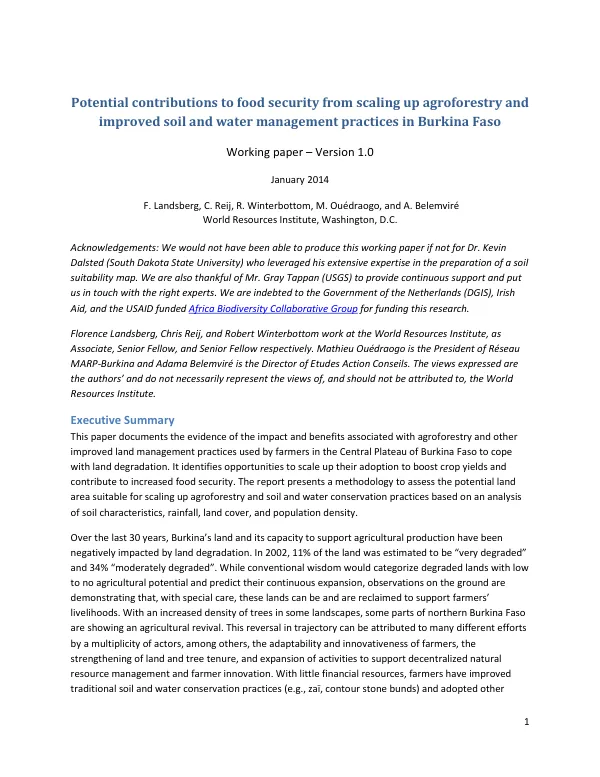
Potential contributions to food security from scaling up agroforestry and improved soil and water management practices in Burkina Faso
Sign inAFRICAN BIODIVERSITY COLLABORATIVE GROUP
Potential contributions to food security from scaling up agroforestry and improved soil and water management practices in Burkina Faso
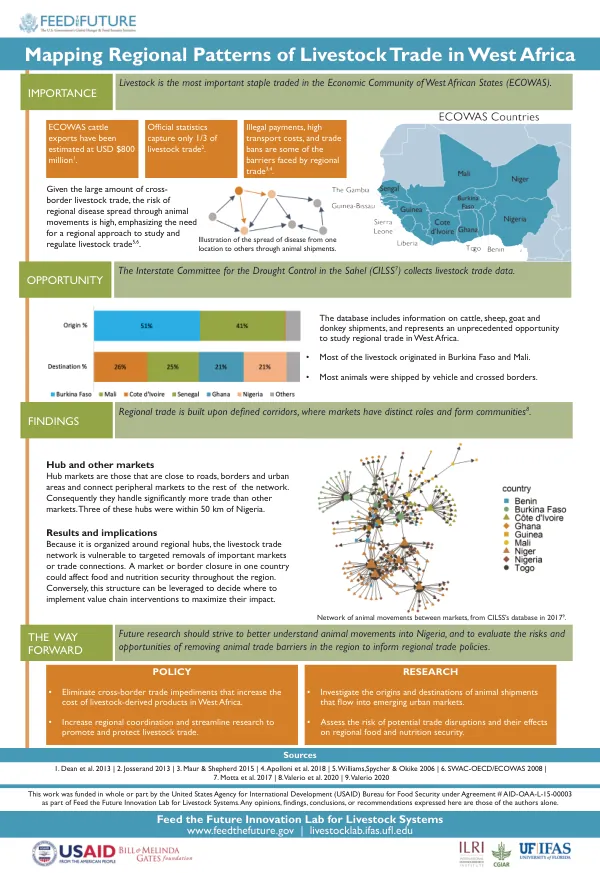
The agricultural development initiative in Burkina Faso has been impacted by land degradation over the last 30 years.
2014 · 49 pages
Sign in to readA free account is required to download.
Abstract
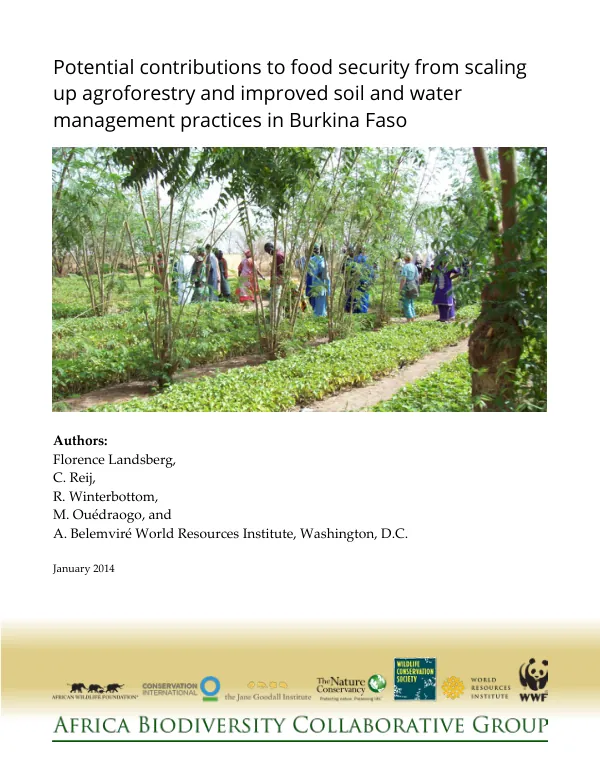
In 2002, 11% of the land was estimated to be "very degraded" and 34% "moderately degraded". However, observations on the ground have demonstrated that with special care, these lands can be reclaimed to support farmers' livelihoods. The increased density of trees in some landscapes has led to an agricultural revival in parts of northern Burkina Faso. Farmers have improved traditional soil and water conservation practices, such as zaï and contour stone bunds, and adopted innovative techniques to restore the productivity of the land. These efforts have slowed down the rate of land degradation by recovering tens of thousands of hectares of degraded land deemed lost to agricultural production. To achieve decisive gains in agricultural production and productivity at the national level, there is a need to accelerate and scale up the implementation of practices that have been adopted by farmers and proven effective in reclaiming degraded cropland and boosting agricultural productivity. The current uptake of these practices in the Central Plateau has been assessed, and the potential for scaling them up at the national level has been evaluated based on readily available data. Using GIS analysis, the authors estimate that 4.9 million ha of land are highly suitable for the adoption of zaï, and 7.5 million ha of land are highly suitable for the adoption of agroforestry using farmer-managed natural regeneration. Based on the observed impacts on crop yields by farmers using these practices in Burkina, the widespread adoption of these two improved practices at this scale could contribute an estimated 2.7 million additional tons of cereal each year. Implementation of these practices has been hindered by several constraints, including the need for a supportive policy and legal framework with clear property rights to foster implementation of agroforestry and improved soil and water management practices. Financial support to farmers implementing these practices is also necessary, as well as the capacity-building of farmers, government, and civil society groups. A community of practice should be fostered to promote the sharing of knowledge and best practices among farmers and other stakeholders. The authors recommend providing a supportive policy and legal framework with clear property rights to foster implementation of agroforestry and improved soil and water management practices. Financial support to farmers implementing these practices is also necessary, as well as the capacity-building of farmers, government, and civil society groups. Fostering a community of practice and building the capacity of farmers, government, and civil society groups will be essential to scaling up the adoption of these practices and achieving decisive gains in agricultural production and productivity at the national level.