USAID
POUNDS OF PREVENTION - DISASTER RISK REDUCTION: KENYA
Rainwater harvesting initiatives in Kenya aim to reduce the country's vulnerability to drought conditions.
2012 · 1 pages
Sign in to readA free account is required to download.
Abstract
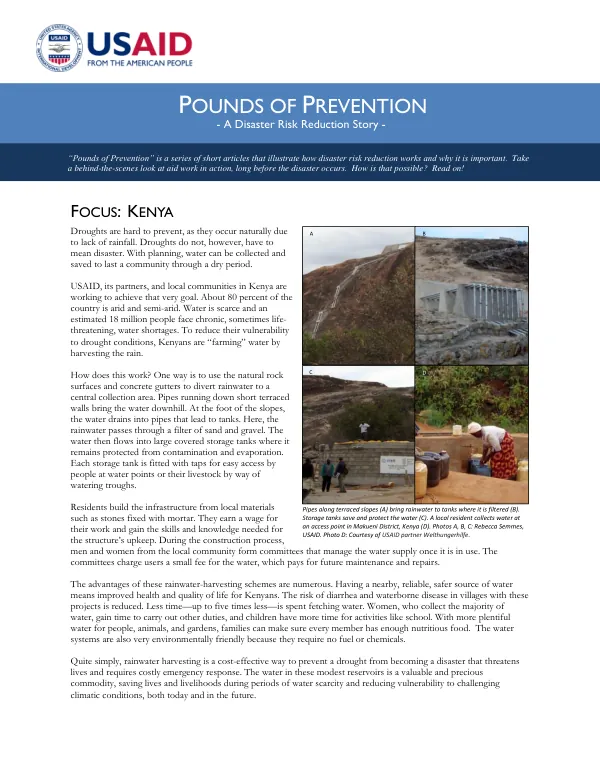
Approximately 80 percent of Kenya is arid and semi-arid, resulting in scarce water resources and chronic shortages affecting an estimated 18 million people. To mitigate this issue, local communities, USAID, and its partners are implementing rainwater harvesting systems. These systems involve diverting rainwater from natural rock surfaces and concrete gutters to a central collection area. The water then flows through pipes down short terraced walls, draining into larger pipes that lead to storage tanks. The rainwater passes through a filter of sand and gravel before entering the storage tanks, where it remains protected from contamination and evaporation. Each storage tank is equipped with taps for easy access by people and livestock. Residents construct the infrastructure using local materials such as stones and mortar, earning a wage for their work and gaining the skills and knowledge needed for the structure's upkeep. During the construction process, local community members form committees that manage the water supply once it is in use. The committees charge users a small fee for the water, which pays for future maintenance and repairs. The advantages of these rainwater-harvesting schemes are numerous. Having a nearby, reliable, and safer source of water improves health and quality of life for Kenyans. The risk of diarrhea and waterborne disease in villages with these projects is reduced. Additionally, less time is spent fetching water, allowing women to engage in other activities and children to attend school. With more plentiful water for people, animals, and gardens, families can ensure every member has access to nutritious food. Rainwater harvesting is a cost-effective way to prevent droughts from becoming disasters that threaten lives and require costly emergency responses. The water in these modest reservoirs is a valuable and precious commodity, saving lives and livelihoods during periods of water scarcity and reducing vulnerability to challenging climatic conditions, both today and in the future.
Related documents