TETRA TECH
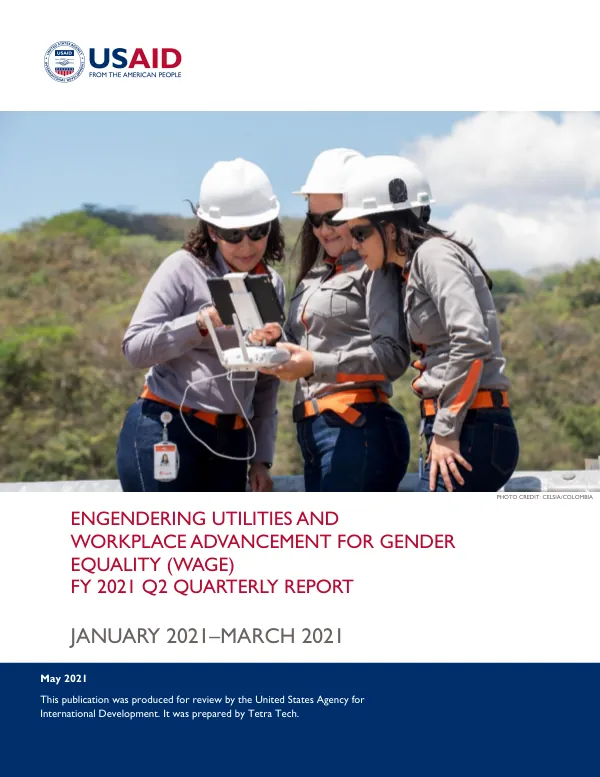
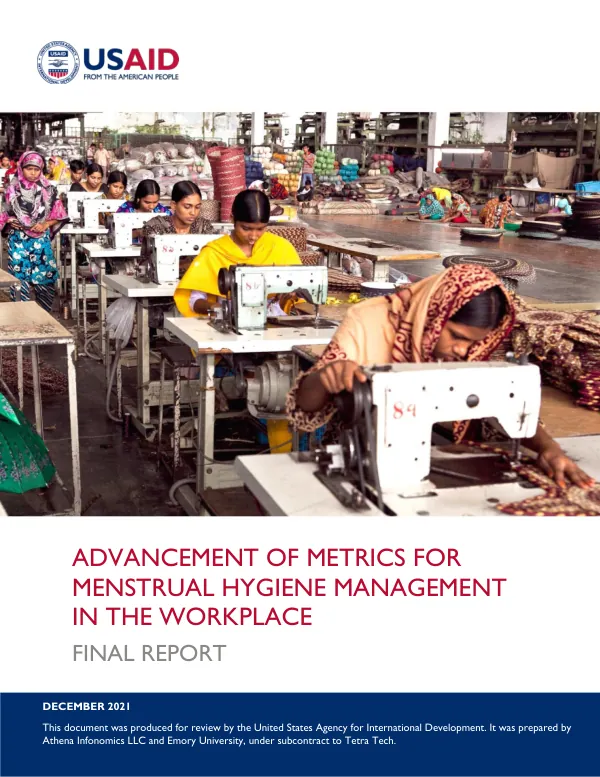
Advancement of Metrics for Menstrual Hygiene Management in the Workplace
The advancement of metrics for menstrual hygiene management in the workplace is a critical area of focus for improving the health and well-being of women in the workforce.
2021 · 184 pages
Sign in to readA free account is required to download.
Abstract
Menstruation-related issues can have a significant impact on a woman's experience at work, including her ability to perform her job duties, her overall well-being, and her employment outcomes. Research has identified several primary menstruation-related themes relevant to the workplace, including the experience of menstruation at work, determinants of menstruation-related issues, and outcomes associated with these issues. The experience of menstruation at work can be influenced by a range of factors, including the availability of menstrual products, access to clean and private facilities, and the social and cultural norms surrounding menstruation. A study conducted in Kenya and Nepal aimed to identify potential indicators for menstrual hygiene management in the workplace. The study used a mixed-methods approach, combining both quantitative and qualitative data collection and analysis methods. The survey was developed and refined through a series of iterative processes, including proposed indicator identification, survey development, survey refinement, and data analysis. The survey findings indicate that menstruation-related issues are a significant concern for women in the workplace. The study found that 71% of participants reported experiencing menstrual cramps, 64% reported experiencing heavy bleeding, and 56% reported experiencing anxiety or depression related to menstruation. The study also found that women who experienced menstruation-related issues were more likely to experience absenteeism, presenteeism, and turnover intentions. The study identified several determinants of menstruation-related issues, including lack of access to menstrual products, inadequate facilities, and social and cultural norms surrounding menstruation. The study also found that women who experienced menstruation-related issues were more likely to experience negative employment outcomes, including reduced productivity, absenteeism, and turnover intentions. The study's findings have important implications for the development of metrics for menstrual hygiene management in the workplace. The study suggests that metrics should focus on the availability of menstrual products, access to clean and private facilities, and the social and cultural norms surrounding menstruation. The study also suggests that metrics should be developed in collaboration with women in the workforce, to ensure that they are relevant and effective. The study's findings also highlight the need for further research on the impact of menstruation-related issues on women's health and well-being in the workplace. The study suggests that future research should focus on the development of effective interventions to address menstruation-related issues, including the provision of menstrual products, the development of clean and private facilities, and the promotion of positive social and cultural norms surrounding menstruation. In conclusion, the advancement of metrics for menstrual hygiene management in the workplace is a critical area of focus for improving the health and well-being of women in the workforce. The study's findings highlight the need for metrics that focus on the availability of menstrual products, access to clean and private facilities, and the social and cultural norms surrounding menstruation. The study's findings also highlight the need for further research on the impact of menstruation-related issues on women's health and well-being in the workplace.