ПРЕДСТАВИТЕЛЬСТВО МЕЖДУНАРОДНОГО ДЕТСКОГО ФОНДА В РЕСПУБЛИКЕ БЕЛАРУСЬ
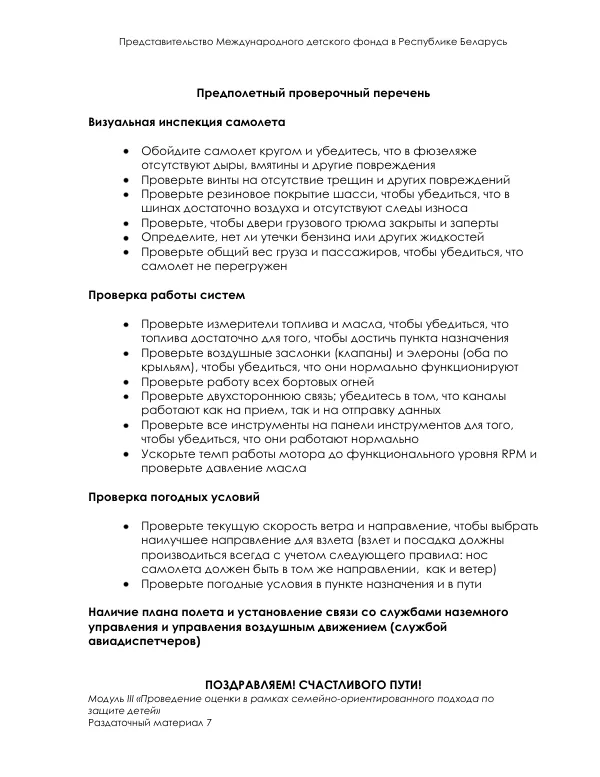
Pre-Flight Check List
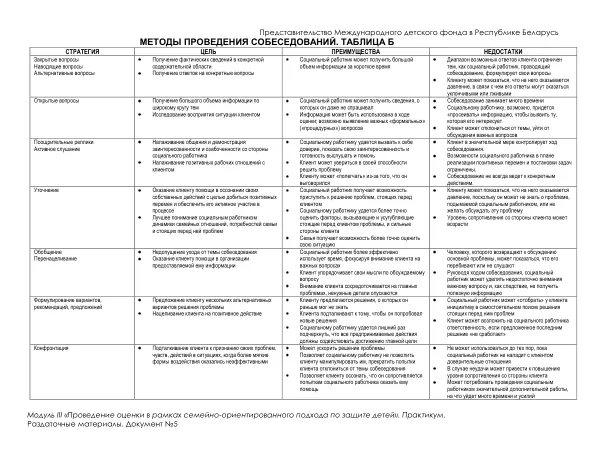
The International Children's Fund Representative Office in the Republic of Belarus has developed a module titled "Conducting an Assessment within a Family-Oriented Approach to Child Protection."
1 pages
Sign in to readA free account is required to download.
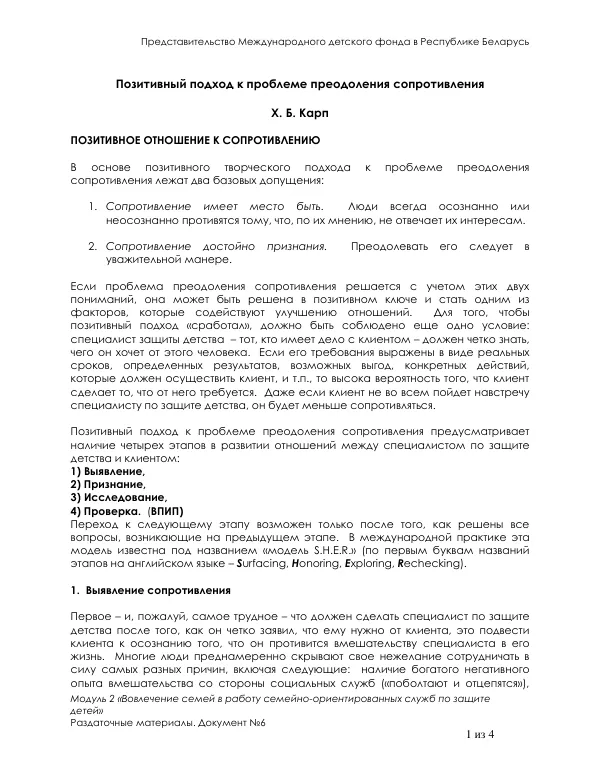
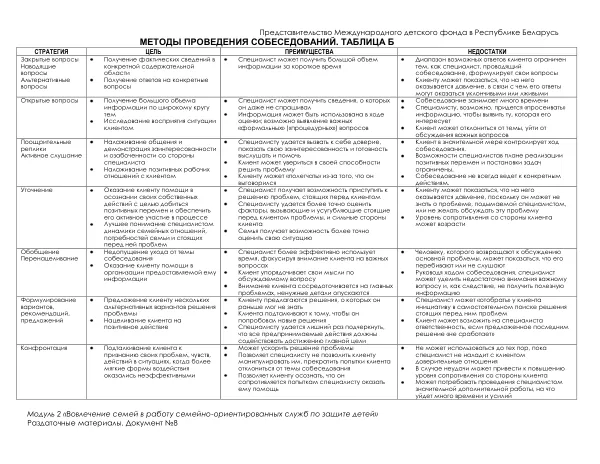
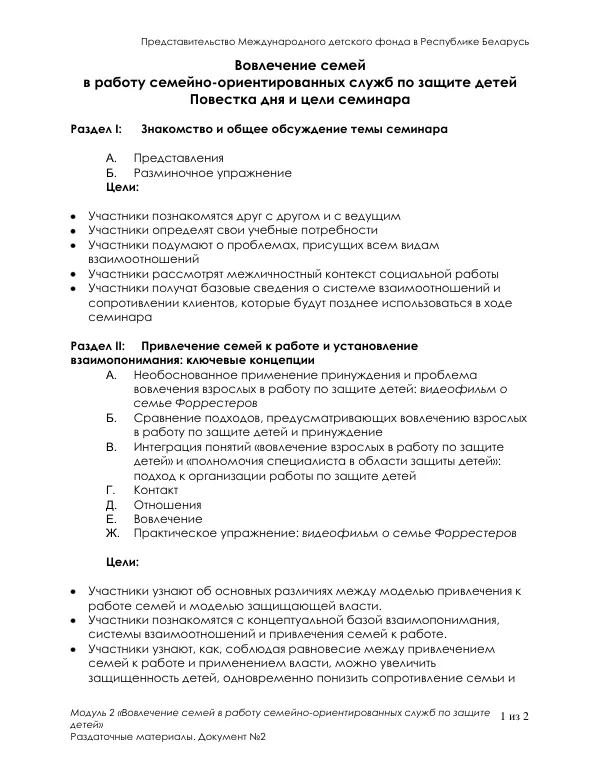
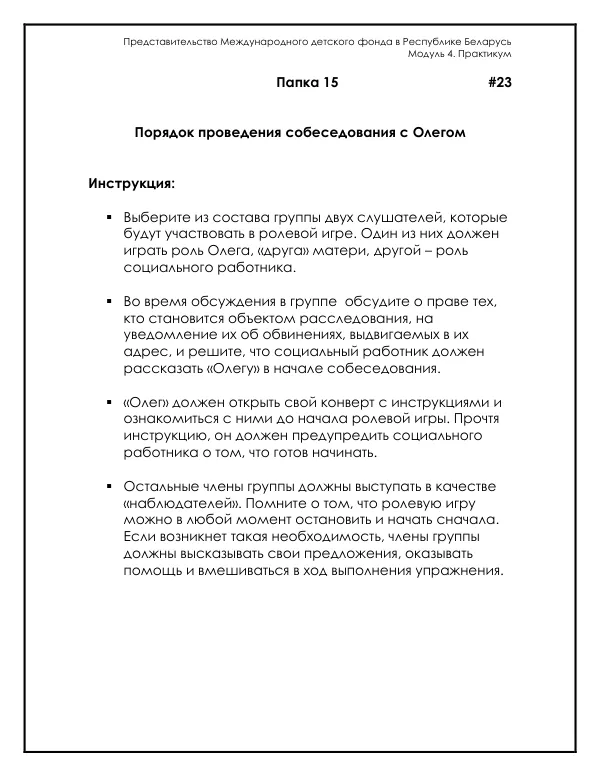
Abstract
This module is part of a comprehensive program aimed at protecting children and promoting their well-being. The module focuses on conducting a thorough assessment of a child's situation, taking into account the family's dynamics and the child's individual needs. The assessment process involves gathering information from various sources, including the child, their family members, and other relevant stakeholders. This information is then used to identify the child's strengths and vulnerabilities, as well as the family's capacity to provide care and support. The assessment process is guided by a set of criteria, which includes the child's physical and emotional well-being, their educational and social development, and their family's stability and support system. The assessment also takes into account the child's cultural and linguistic background, as well as any potential risks or challenges they may face. The module emphasizes the importance of a family-oriented approach to child protection, which prioritizes the child's relationship with their family and community. This approach recognizes that children are an integral part of their families and communities, and that their well-being is closely tied to the well-being of those around them. The module provides a comprehensive framework for conducting assessments, including a checklist of key areas to consider and a set of guidelines for collecting and analyzing data. It also includes examples of assessment tools and resources that can be used to support the assessment process. The module is designed to be used by professionals working in the field of child protection, including social workers, psychologists, and other healthcare professionals. It is intended to provide a practical and effective tool for conducting assessments and developing strategies to support children and families. The module's recommendations are based on best practices in child protection and are informed by research and expert knowledge in the field. It is designed to be adaptable to different cultural and contextual settings, and can be used in a variety of settings, including community-based programs, schools, and healthcare facilities. Overall, the module provides a comprehensive and practical guide for conducting assessments within a family-oriented approach to child protection. It is a valuable resource for professionals working in the field of child protection, and can help to ensure that children receive the support and care they need to thrive.