USAID DEC
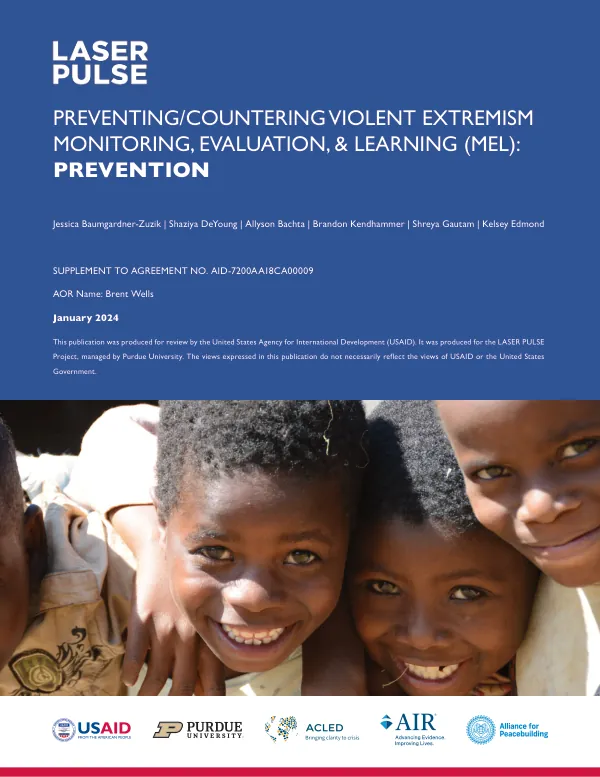
Preventing/Countering Violent Extremism Monitoring, Evaluation & Learning (MEL): Prevention
Sign inCATHOLIC RELIEF SERVICES ORGANIZATION
Preventing/Countering Violent Extremism Monitoring, Evaluation & Learning (MEL): Prevention
The research aims to better understand the current state of measurement with regards to prevention (PV) programming across the broader preventing/countering violent extremism (P/CVE) landscape.
2023 · 33 pages
Sign in to readA free account is required to download.
Abstract
The report explores the general characteristics of PV studies, including explicit indicators, common measurement trends, and indicator examples, to determine what PV programs are seeking to change. The studies analyzed for this research were curated from a P/CVE systematic mixed method review that contained 115 PV-related studies, of which 93 (81%) contained explicit indicators. In total, 1,268 indicators were extracted for analysis. These indicators depict that PV is not merely a preventive measure against violent extremism (VE), but a broader initiative aimed at fostering community social cohesion, promoting inclusivity, building resiliency, and nurturing shared values and trust. Findings from the PV studies reveal a broad spectrum of measures that resonate with varied themes, predominantly focused on measuring changes in attitudes and behaviors. The trends suggest the field is taking a holistic approach that transcends merely addressing the root causes of radicalization. The emphasis is on promoting cohesive communities, reinforcing societal bonds, and empowering individuals to resist extremist ideologies. The research highlights the importance of measuring PV outcomes in a comprehensive and nuanced manner, taking into account the complex and multifaceted nature of violent extremism. By examining the characteristics of PV studies and the indicators used to measure PV outcomes, this research provides a foundation for the development of more effective PV programming and evaluation strategies. The report identifies several key themes and trends in PV studies, including: * Measuring changes in attitudes and behaviors, such as increased tolerance and reduced support for extremist ideologies * Fostering community social cohesion and promoting inclusivity * Building resiliency and empowering individuals to resist extremist ideologies * Nurturing shared values and trust within communities * Addressing the root causes of radicalization, such as poverty, inequality, and social exclusion These themes and trends suggest that PV programs are seeking to create a more cohesive and resilient society, where individuals and communities are empowered to resist extremist ideologies and promote peaceful coexistence. The report concludes by emphasizing the need for continued research and evaluation in the field of PV, in order to better understand the effectiveness of PV programming and to identify areas for improvement. By working together to develop more effective PV programming and evaluation strategies, we can create a more cohesive and resilient society, where individuals and communities are empowered to resist extremist ideologies and promote peaceful coexistence.